
Blooming
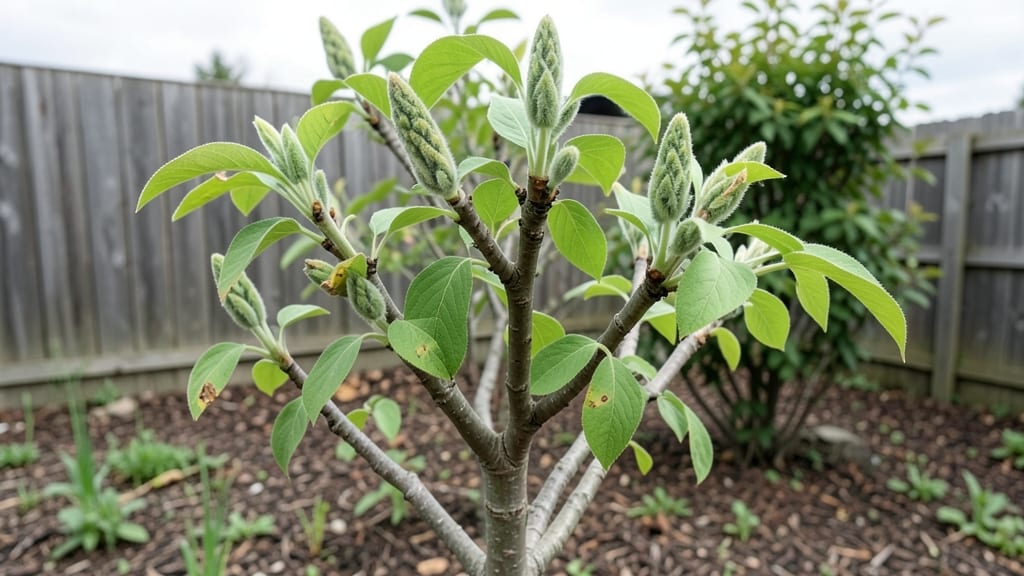
Lilacs before bloom appear as dense, upright shoots with smooth, oval-shaped buds clustered along woody stems. Their leaves are glossy, dark green, and lance-shaped, often emerging after buds swell but before fragrant flowers unfold in spring.
These early-stage lilacs are all about potential—their compact, woody structure stores energy for the vibrant blooms ahead, while the glossy leaves act like tiny solar panels, soaking up sunlight to fuel growth. 🌱 What many gardeners miss is that the buds’ tight clusters signal the plant’s readiness to burst into color, but pruning too early can accidentally remove next year’s flowers.
I’ve learned to wait until after blooming to trim, giving the plant time to recover and store up energy for another spectacular spring show.
💡 In This Article
- Recognizing Lilac Buds and Growth Stages
- Pruning and Nurturing Young Lilac Plants
Recognizing lilac buds and growth stages
Lilac buds form in late summer on the previous year's growth, developing as small, tightly packed clusters along the woody stems. These buds are actually modified stems called flower buds, containing all the necessary components for next spring's blooms—petals, stamens, and pistils—already packed inside.
The buds measure about 1/4 to 1/2 inch long when fully formed, with a smooth, slightly waxy surface that helps protect them from winter's harsh conditions.
The buds' positioning is key to identification: they grow in dense, spiral patterns along the stems, typically spaced about 1/2 to 1 inch apart.
This arrangement maximizes sunlight exposure while conserving energy. 🌿 Unlike privet shrubs, which have buds that form in pairs along the stems, or mock orange (Philadelphus), whose buds are more elongated and pointed, lilac buds maintain this distinctive clustered formation.
The buds' color shifts from green to a purplish-brown as they mature, signaling their readiness to bloom.
Leaf emergence follows a predictable pattern tied to temperature cues. Lilac leaves typically appear after the buds have swollen but before they fully open, emerging from the leaf axils (where leaves meet stems).
These leaves are 2-4 inches long, with a glossy, dark green surface that helps reflect excess sunlight and conserve moisture. The leaves' lance-shaped form—tapered at both ends—distinguishes them from the broader, oval leaves of privet or the serrated edges of mock orange foliage.
Seasonal timing plays a critical role in bud development. Lilacs begin forming flower buds in late summer (August-September), with growth accelerating as daylight shortens. Cold temperatures (40-50°F) trigger dormancy, while spring's warming air and longer days stimulate the buds to swell.
This process is influenced by the plant's internal clock, called vernalization, where exposure to cold helps break dormancy and prepare for blooming.
Environmental factors can dramatically affect bud formation. Lilacs thrive in full sun (6-8 hours daily) but can tolerate partial shade, though buds may develop more slowly in low-light conditions.
Well-draining soil with a slightly alkaline pH (7.0-7.5) supports robust bud formation, while poor drainage or acidic soil can stunt growth. The plant's roots also play a role—deep, fibrous roots anchor the shrub and absorb nutrients that fuel bud development.
Here's how to distinguish young lilac shoots from look-alikes like privet or mock orange:
- Bud shape: Lilacs have smooth, oval buds clustered in tight groups, while privet buds are paired and more elongated.
- Leaf texture: Lilac leaves are glossy and lance-shaped; privet leaves are duller with rounded tips.
- Growth habit: Lilacs grow in upright, multi-stemmed shrubs, whereas mock orange has a more rounded, single-stemmed form.
The buds' tight clusters are nature's way of ensuring survival—they protect delicate flower structures from frost and pests while storing energy for the blooming spectacle ahead. 🌸