
Blooming
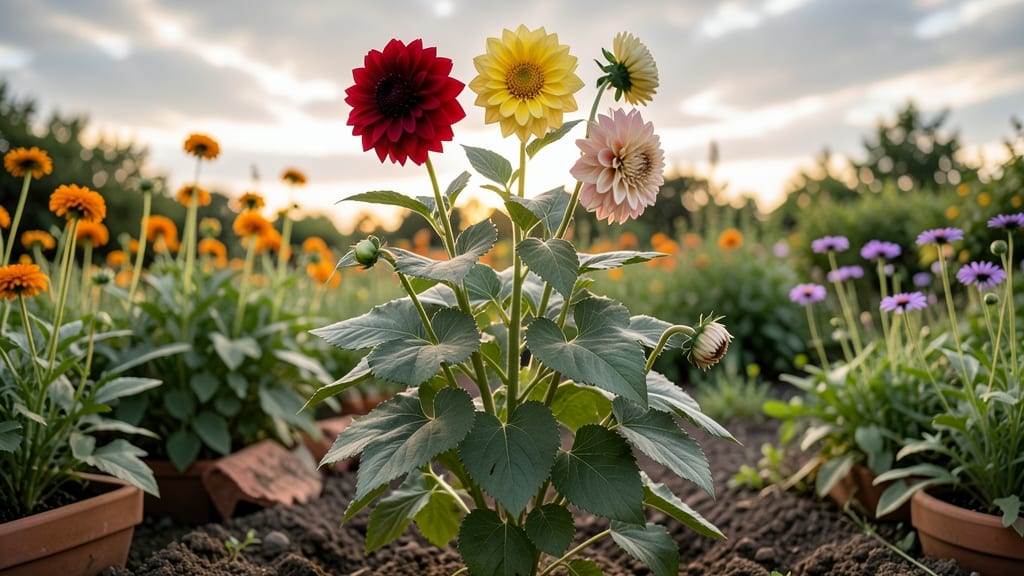
Dahlias bloom all summer only if they're reblooming varieties, which produce multiple flower cycles after their first bloom. Single-bloom types, however, put all their energy into one spectacular display before fading.
Not all dahlias keep blooming throughout summer—it depends on their genetic programming.
Reblooming varieties like 'Café au Lait' or 'Thomas Edison' store energy in their tubers, allowing them to produce new flowers after deadheading. 🌸 Single-bloom types, such as 'Karma Choc' or 'Galaxy,' focus their energy on one big show before going dormant.
The key difference lies in how they allocate nutrients: rebloomers prioritize continuous growth, while one-time bloomers save everything for that initial burst.
To encourage extended blooming in rebloomers, I recommend cutting back stems to just above a strong leaf set after each flower fades. This redirects energy to side shoots, producing more blooms. Fertilizing with a balanced 10-10-10 mix every 4-6 weeks also helps maintain vigorous growth.
Water consistently at the base (not the leaves) to prevent disease, which can stress the plant and reduce flowering.
💡 In This Article
- Reblooming Dahlias vs One-Time Bloomers: Key Differences
- How to Maximize Summer Blooms in Dahlias
Reblooming dahlias vs one-time bloomers: key differences
The fundamental difference between dahlias lies in their tuber development and energy storage. Reblooming varieties like 'Kabuki Oso' or 'Bishop' allocate nutrients to both their initial bloom and future growth, storing excess energy in their tubers.
This biological adaptation allows them to produce multiple flower cycles throughout summer. In contrast, single-bloom types such as 'Black Narcissus' or 'Arabian Night' direct all their resources toward one spectacular display, then enter dormancy.
Scientifically, rebloomers maintain active cambium layers (growth tissue) in their stems, enabling continuous shoot production. Their tubers develop multiple buds that can sprout new stems after deadheading. Single-bloomers, however, develop a single dominant stem that exhausts the plant's energy reserves after flowering.
The key difference is in their photoperiod sensitivity - rebloomers respond to day length changes more flexibly, while single-bloomers are more rigid in their seasonal programming. 🌱
This distinction affects garden planning significantly. Reblooming varieties create a cascading effect when properly maintained - each deadheaded bloom triggers new side shoots that produce additional flowers. Single-bloomers, while stunning in their initial display, require different garden placement strategies since they won't provide continuous color.
Their one-time bloom often occurs between late summer and early fall, making them ideal for seasonal focal points rather than long-term displays.
Another critical factor is their response to temperature fluctuations. Rebloomers tolerate wider temperature ranges (typically 60-85°F) for continuous growth, while single-bloomers often require more stable conditions to produce their single spectacular bloom.
The tuber size also differs - rebloomers develop larger, more complex tuber structures capable of supporting multiple growth points, while single-bloomers develop simpler tuber systems optimized for one-time energy expenditure.
Gardeners often notice this difference in the plant's overall vigor. Rebloomers maintain lush foliage throughout the season, while single-bloomers may show rapid decline after their initial bloom.
The leaf structure differs too - rebloomers typically have more compact, bushier growth habits, while single-bloomers often develop taller, more linear stems designed to support their single massive flower head. 🌿
Understanding these differences helps explain why some dahlias seem to "give up" after their first bloom while others continue producing flowers until frost.
The genetic programming determines whether a dahlia will be a marathon runner or a sprinter in the garden - and this knowledge helps gardeners select varieties that match their seasonal display goals.