
How To
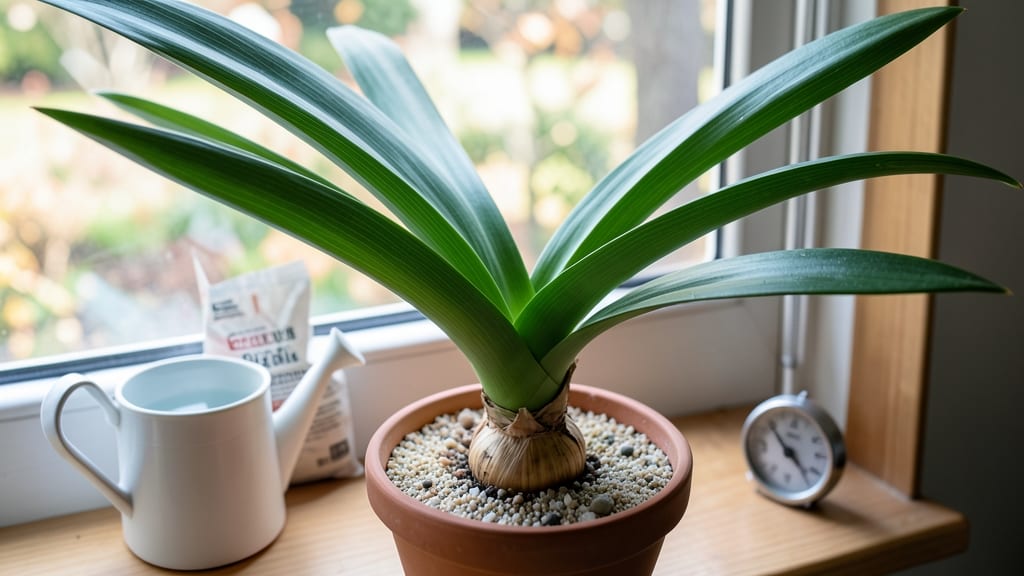
How do I get my amaryllis to bloom after it grows long leaves? The secret lies in light exposure and temperature cues that mimic its natural cycle—not just water or fertilizer. Most growers miss this key step between leafy growth and those dramatic flower stalks.
Amaryllis blooms need 12-14 hours of bright, indirect light daily—not the dim corner where it’s just surviving. Too little light = all leaves, no flowers. Then, after leaf growth slows, you’ll reduce water and cool it down to trigger dormancy, the real bloom signal.
I’ve revived stubborn plants this way after years of frustration.
You’ll see flower buds form within 6-8 weeks of proper light and dormancy. The blooms arrive in clusters, each lasting 7-10 days with proper care. No more leafy stalks—just bold, showstopping color when it counts.
Works for indoor amaryllis in winter or outdoor plants in spring. Here’s the exact light-temperature sequence that forces blooms—no guesswork.
Why it happens
If your amaryllis has grown tall, lush leaves but refuses to produce flowers, don’t panic—this is a common issue with a few key causes. Understanding why your plant is holding back is the first step to coaxing those stunning blooms. Here’s what’s likely going on:
🌱 Insufficient Light Exposure
Amaryllis bulbs need bright, indirect light (6–8 hours daily) to trigger flowering.
If your plant is tucked away in a dim corner, it defaults to leaf growth instead of blooming. Why? Amaryllis bulbs rely on photosynthesis to build energy reserves, but low light starves the bulb of the glucose it needs to produce flower buds.
Without enough light, the plant prioritizes leafy growth to maximize energy absorption—even if it means delaying blooms for months.
💡 Pro Tip: Move your amaryllis near an east- or west-facing window, or use a grow light (12–14 hours/day) if natural light is lacking. South-facing windows can work, but avoid harsh midday sun, which can scorch leaves.
🌡️ Temperature Mismatches
Amaryllis bulbs are temperature-sensitive, and their blooming cycle is tightly linked to seasonal changes.
If your home stays too warm year-round (above 75°F/24°C), the bulb may never receive the cool-down signal it needs to trigger flower formation. Why? In their native habitat, amaryllis bulbs experience cooler nights (50–60°F/10–15°C) after a period of warmth, which mimics autumn conditions and prompts budding.
Without this contrast, the bulb stays in a vegetative state.
🌡️ Key Insight: Aim for 60–65°F (15–18°C) at night for 4–6 weeks before expecting blooms. If your home is consistently warm, try placing the bulb in a cooler room (like a basement or garage) for a few weeks to break dormancy.
💧 Overwatering or Poor Drainage
Too much water—or worse, soggy soil—can suffocate an amaryllis bulb and prevent flowering. Why? Bulbs store nutrients and energy in their scales, but excess moisture rots the bulb or forces it to divert energy toward repairing damage instead of blooming.
Additionally, waterlogged conditions can stress the plant hormonally, delaying the production of florigen (the flowering hormone).
🚰 Actionable Fix:
- Let the top 2–3 inches of soil dry out between waterings.
- Ensure pots have drainage holes and use a well-draining mix (cactus/succulent soil + perlite).
- Avoid watering the bulb itself—aim for the soil around it.
⏳ Lack of Dormancy Period
Amaryllis bulbs require a rest period (dormancy) to recharge before blooming again. Without it, the bulb becomes energy-depleted and may produce leaves but skip flowers. Why? During dormancy, the bulb stores carbohydrates and resets its biological clock.
Skipping this step is like running a marathon without training—your plant burns out without the fuel it needs for flowers.
⏳ How to Induce Dormancy:
- After blooming, reduce watering and stop fertilizing.
- Move the bulb to a cool, dark spot (60–65°F/15–18°C) for 8–10 weeks.
- Check the bulb monthly—water only if shriveling occurs.
- Resume care in spring with bright light and warm temps.
🌿 Nutrient Imbalance (Too Much Nitrogen)
If your amaryllis is getting too much nitrogen (common with leaf-focused fertilizers), it will prioritize foliage over flowers. Why? Nitrogen fuels leafy growth, but phosphorus and potassium are the real blooming triggers. A heavy nitrogen diet throws the plant’s priorities off-balance, leaving it with lush leaves but no buds.
📊 Fix the Ratio:
- Switch to a balanced fertilizer (10-10-10 or 5-10-10) or one higher in phosphorus (e.g., 10-20-10).
- Fertilize only during active growth (spring–summer)—stop 6–8 weeks before expected blooming.
- Avoid compost-heavy soils, which can over-fertilize with nitrogen.
🏠 Bulb Age or Stress
Young bulbs (under 2 years old) or those recovering from transplant shock, pests, or disease may focus on survival rather than blooming. Why? The bulb’s energy is diverted to root and leaf repair until it’s stable.
Even mature bulbs can skip a year if they’re under stress (e.g., root-bound, improper repotting, or pest damage).
🔄 Revitalization Steps:
- Check for root-bound bulbs—repot if roots circle the container.
- Inspect for pests (aphids, mealybugs, or mites) and treat with neem oil if needed.
- Give the bulb 6–12 months of ideal care before expecting blooms again.
Revive Your Amaryllis Blooms Now
If your amaryllis has sprouted long, lush leaves but refuses to bloom, don’t panic! With a few targeted adjustments, you can coax those stunning flowers into action. Below, we’ve mapped out the most common causes—and the practical fixes to get your plant back on track.
Plus, we’ll share prevention tips to keep future blooms coming.
Your amaryllis thrives on bright, indirect light—think of it as a sun-worshipper with a touch of shade. If it’s tucked away in a dim corner, it’ll focus all its energy on leaf growth instead of flowering.
🌿 Fix: Move It to the Perfect Spot
- 🔥 Step 1: Place your amaryllis near a south- or west-facing window (or under grow lights if natural light is lacking).
- 🍳 Step 2: Rotate the pot every few days so all sides get even light exposure.
- 👨🍳 Step 3: If leaves start yellowing, it’s getting too much direct sun—move it back slightly.
💡 Prevention Tip:
Use a light meter (or the back of your hand—if it feels warm but not scorching, it’s ideal). Amaryllis can handle up to 6–8 hours of bright light daily.
Amaryllis blooms are seasonal—they need a cool-down period to signal flowering. If your home stays too warm year-round, your plant might skip the bloom phase entirely.
❄️ Fix: Simulate the Right Conditions
- 🔥 Step 1: Move your amaryllis to a cooler spot (60–65°F / 15–18°C) for 4–6 weeks before you want blooms.
- 🍳 Step 2: If your home is too warm, place it near a window with cooler drafts (but avoid cold blasts).
- 👨🍳 Step 3: Once buds form, bring it back to warmer temps (70–75°F / 21–24°C) to encourage blooming.
🎯 Prevention Tip:
Set a reminder 8–10 weeks before your desired bloom time (e.g., holidays) to start the cooling phase. Consistency is key!
Too much water (or the wrong kind) can drown your amaryllis’ roots, leaving it too weak to produce flowers. Even worse? Root rot can be fatal.
🚰 Fix: Adjust Your Watering Habits
- 🔥 Step 1: Let the top 2–3 inches of soil dry out between waterings (stick your finger in to check!).
- 🍳 Step 2: Use room-temperature water (cold water shocks the roots).
- 👨🍳 Step 3: Ensure the pot has drainage holes—if not, repot it ASAP.
✨ Prevention Tip:
Use a well-draining potting mix (like a blend of peat, perlite, and sand) and avoid saucers that trap excess water. Yellow leaves? That’s a red flag for overwatering!
Amaryllis needs nutrients to bloom, but too little (or the wrong kind) can stunt flower production. If your plant is all leaves and no flowers, it might be starving.
🥗 Fix: Feed It Right for Blooms
- 🔥 Step 1: Use a balanced, water-soluble fertilizer (like 10-10-10) once a month during active growth.
- 🍳 Step 2: Switch to a low-nitrogen, high-phosphorus fertilizer (like 5-10-10) when buds form to boost flowering.
- 👨🍳 Step 3: Stop fertilizing once blooms fade—let the plant rest.
💪 Prevention Tip:
Flush the soil every 3–4 months with plain water to avoid salt buildup from fertilizers. Brown leaf tips? That’s a sign of over-fertilizing!
If your amaryllis bulb has been in the same pot for years, it may have outgrown its space—or smaller "pups" (baby bulbs) are stealing its energy. Time for a refresh!
🔪 Fix: Repot or Divide the Bulb
- 🔥 Step 1: Gently remove the bulb from its pot and separate any pups (smaller bulbs attached to the main one).
- 🍳 Step 2: Repot the main bulb in fresh, well-draining soil, leaving half of it above the soil line.
- 👨🍳 Step 3: Plant the pups in separate pots and wait 1–2 years before expecting blooms from them.
⏰ Prevention Tip:
Repot your amaryllis every 2–3 years or when you see roots circling the pot. Pro tip: Use a pot that’s only 1–2 inches wider than the bulb to encourage blooming (not leafy growth).
Need flowers fast? Try these express methods to jumpstart blooming:
- 🌡️ Chill Therapy: Place the potted bulb in a paper bag and refrigerate (not freezer!) for 8–10 weeks at 40–50°F (4–10°C). Then, bring it back to warm light—blooms should follow in 4–6 weeks.
- 💧 Stress Watering: Let the soil completely dry out for 2–3 weeks, then water normally. This "stress" can trigger blooming.
- ☀️ Sunlight Shock: Move the plant to a sunnier spot for 2–3 days—sometimes a sudden light boost does the trick!
With these fixes, your amaryllis should be bursting with blooms in no time. Remember: patience and consistency are key—just like training a picky eater, your plant needs the right conditions to perform its best! 🌸
Frequently asked questions
How long does it take for an amaryllis to bloom after adjusting light and temperature?
With proper light (6-8 hours of bright indirect light daily) and temperature adjustments, you’ll typically see flower buds form within 6-8 weeks. The blooms themselves usually appear 2-3 weeks after buds emerge. Consistency is key—don’t rush the process by overwatering or moving the plant too frequently.
Can I use artificial grow lights if my home doesn’t have good natural light?
Amaryllis thrive under grow lights (12-14 hours/day) placed 6-12 inches above the plant. Use full-spectrum LED bulbs (2000-6500K) for best results. Rotate the plant daily to ensure even light exposure. Just avoid placing lights too close—they can overheat the leaves.
What’s the best way to simulate dormancy if I live in a warm climate?
Place your potted amaryllis in a cool, dark location (60-65°F/15-18°C) for 8-10 weeks—like a garage, basement, or even a paper bag in the fridge (not freezer!). Water only enough to prevent the bulb from shriveling. After this period, return it to bright light and warmth to trigger blooming.
Why did my amaryllis bloom last year but not this year?
Most likely, it’s missing its dormancy period or getting too much nitrogen. Last year’s blooms may have exhausted the bulb’s energy reserves. Try this: reduce watering after blooming, move to cooler temps for 8 weeks, then resume care in spring. Also check your fertilizer—switch to a low-nitrogen, high-phosphorus formula.
Can I cut back the leaves to encourage blooms?
No—never prune healthy leaves! The leaves are the bulb’s energy source for flowering. Only remove brown or damaged leaves. If your plant has too many leaves (6+), it may be getting too much nitrogen. Switch to a phosphorus-rich fertilizer instead of cutting back.