
Blooming
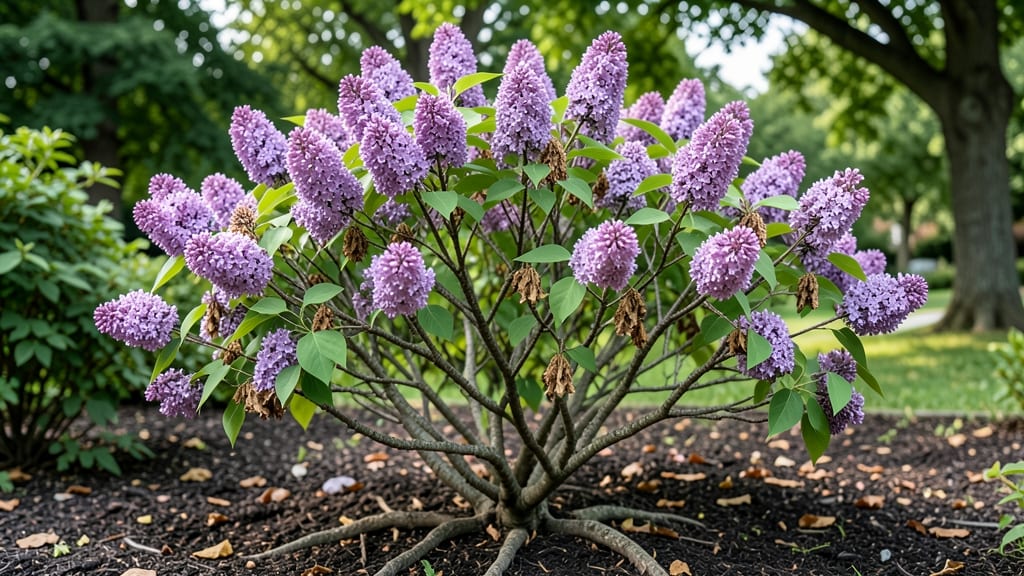
Lilacs bloom on old wood, meaning their flowers develop on previous year’s growth rather than new shoots, so pruning too aggressively can reduce blooms. Prune immediately after flowering to avoid cutting back next year’s buds.
This means lilacs form flower buds during the growing season on last year’s stems, not fresh wood. 🌸 When you prune too late or too hard, you risk removing next year’s blooms before they even form.
The key is timing—wait until after flowers fade but before new growth hardens, usually in late spring or early summer. Think of it like waiting for your hair to grow out before cutting it; lilacs need that same patience!
If you’re eager to shape your lilac bush, focus on removing only dead or crossing branches first. Use clean, sharp pruners to make cuts at a 45-degree angle just above a bud or leaf node.
This encourages healthy regrowth while preserving the old wood where next year’s flowers will develop. I’ve seen people accidentally turn their lilacs into bare sticks by pruning at the wrong time—don’t let that happen!
💡 In This Article
- Why Lilacs Flower on Old Growth
- Best Pruning Practices for Lilac Blooms
Why lilacs flower on old growth
Lilacs are unique because they form their flower buds on the previous year's wood, not on fresh growth. This process begins in late summer when the plant stores energy in its stems. As temperatures drop and dormancy sets in, these stored nutrients trigger bud formation along the mature branches.
The buds remain dormant through winter, then burst into bloom in spring when days lengthen and temperatures rise. This means if you prune too late or too aggressively, you could remove next year's flowers before they even form.
The science behind this involves a process called determinate growth. Unlike many plants that produce flowers on new shoots, lilacs rely on their woody stems from the prior season.
Each bud contains all the genetic instructions needed to develop into a flower, and these buds form in clusters along the stem.
The older the wood, the more established the bud sites become, which is why mature lilac bushes often produce more abundant blooms than younger ones. 🌿 For example, a well-established lilac with 3-5 year old wood can support hundreds of buds, while a newly planted shrub may only have a few.
This growth pattern explains why lilacs need a different pruning approach than most flowering shrubs. If you cut back all the branches in autumn or winter, you're removing the very wood that holds next year's flower buds.
The buds form in late summer, so any pruning done after that risks cutting them off. Think of it like waiting for your hair to grow out before cutting it—lilacs need that same patience to develop their blooms on mature stems.
Another key factor is the role of photosynthesis in bud development. The leaves on last year's wood continue to photosynthesize throughout the growing season, producing energy that's stored in the stems. This stored energy fuels next year's flower production.
When you prune too heavily, you remove these energy-producing leaves along with the buds. For instance, a study on lilac growth found that bushes pruned back by more than 30% in late spring showed a 50% reduction in blooms the following year.
Understanding this process helps explain why lilacs often bloom more heavily in their second or third year after planting. The first year, they focus on establishing roots and stems. By the second year, they've built up enough mature wood to support a full display of flowers.
This is why patience is crucial—rushing to shape a young lilac can delay or even prevent those spectacular spring blooms. 🌸
One common misconception is that lilacs need to be pruned annually to maintain their shape. While regular pruning can help control size, the focus should be on selective pruning that preserves the old wood.
The goal is to create an open, vase-like shape that allows light and air to reach all parts of the bush, which promotes healthy bud formation. This approach maintains both the plant's health and its flowering potential year after year.