
Blooming
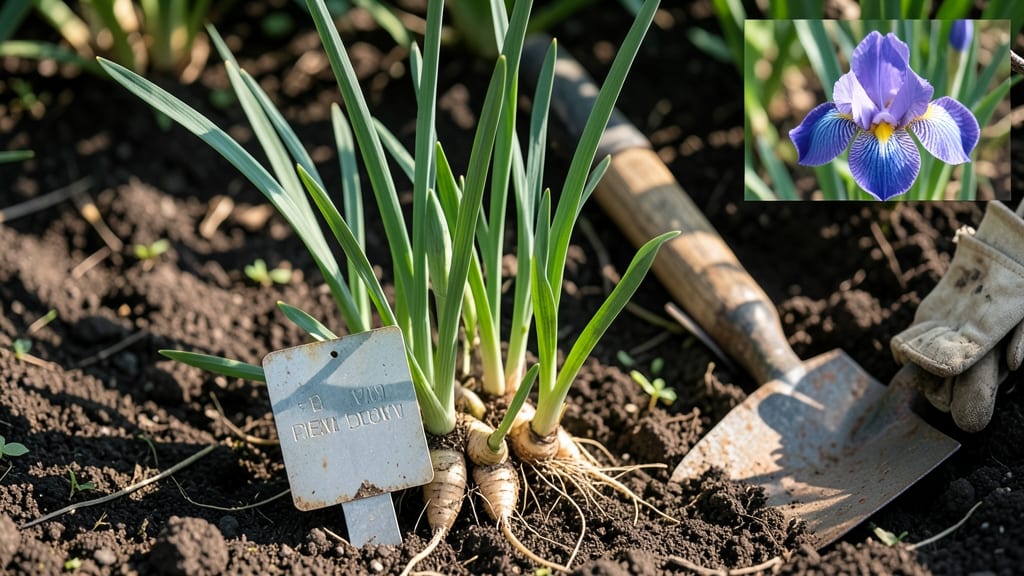
Iris blooms usually don't appear during the first year after planting, as they prioritize building a robust root network and leaf growth before producing flowers. Most varieties need 2-3 years to bloom, with some taking even longer in cooler regions or when grown from seed instead of rhizomes.
This delayed flowering is actually a smart survival strategy for irises. 🌱 They store energy in their rhizomes (the thick, horizontal roots) during their first growing season, which gives them the strength to produce those stunning blooms in subsequent years.
Think of it like a plant version of saving for retirement—all that early growth sets the stage for future floral displays.
The method you use to plant them makes a big difference too: rhizomes (the bulb-like roots) often bloom faster than seeds, which can take 3-5 years before their first flowers appear.
What's interesting is how climate plays a role.
Irises planted in cooler zones might need an extra year or two compared to those in warmer areas, where the growing season is longer. 💫 For example, Louisiana irises often bloom within 2 years, while some Siberian varieties might take 3-4 years in northern climates.
Patience really is a virtue when growing these beauties!
💡 In This Article
- Why Iris Plants Delay Flowering in Early Years
- Speeding Up Iris Blooms: Expert Tips for Faster Flowering
Why iris plants delay flowering in early years
Irises follow a biological growth pattern called monocarpic succession, where they prioritize root and foliage development before flowering. During the first year, up to 80% of their energy goes into expanding their rhizome system—those thick, horizontal roots that store nutrients.
This underground growth can extend 3-6 inches per year, creating a dense network that anchors the plant and stores carbohydrates for future blooms. 🌱 The rhizome acts like a biological battery, converting sunlight into stored energy through photosynthesis in the leaves.
The delay isn't just about size—it's about survival strategy. Irises native to temperate climates evolved to wait until they've built sufficient reserves before flowering, which increases their chances of producing healthy blooms in subsequent years.
For example, a 1-year-old iris rhizome might weigh just 5-10 grams, while a mature, flowering rhizome can reach 50-100 grams. This weight difference reflects the massive energy investment required for bloom production.
The plant's hormonal balance also shifts during this period, with higher levels of auxin (a growth hormone) promoting root expansion while suppressing flower development.
Planting method dramatically affects bloom timing. Rhizomes—those chunky, fleshy roots—contain pre-stored energy, allowing them to produce flowers within 1-2 years under ideal conditions. In contrast, seeds take 3-5 years to bloom because they must first develop a complete root system from scratch.
The difference is like comparing a sapling to a fully grown tree: one starts with a head start, while the other builds everything from the ground up. 💫 Even within rhizome plantings, cooler climates can extend the wait—some gardeners in Zone 4 report first blooms at 3-4 years compared to 1-2 years in Zone 7.
Dormancy cycles also play a crucial role. Many iris varieties experience a period of winter dormancy, where growth slows dramatically. During this time, the plant focuses on root development rather than above-ground growth.
For instance, bearded irises often enter dormancy in late fall, only to resume vigorous rhizome expansion in spring. This seasonal pause ensures the plant has enough energy reserves to support both foliage and eventual blooms.
The trade-off is clear: skipping the flower stage in year one means more robust growth and better bloom quality in subsequent seasons.
What most gardeners don't realize is how soil conditions influence this timing. Irises planted in well-draining, slightly alkaline soil (pH 6.0-7.0) tend to establish faster than those in heavy clay or acidic soils.
Poor drainage can force the plant to divert energy toward root aeration rather than storage, delaying flowering by 6-12 months. The same goes for nutrient availability—plants in nutrient-poor soils may take an extra year to build sufficient reserves.
This is why experienced growers often amend planting sites with compost or sand to create optimal conditions from the start.
Consider the case of Louisiana irises, which often bloom within 1-2 years even from seed. Their tropical origins mean they don't experience the same dormancy cycles as northern varieties, allowing them to allocate energy differently.
Meanwhile, Siberian irises—native to colder climates—may take 3-4 years to bloom when grown from seed because they've evolved to conserve energy during harsh winters. These differences highlight how climate and native habitat shape an iris's growth strategy. 🌿