
Blooming
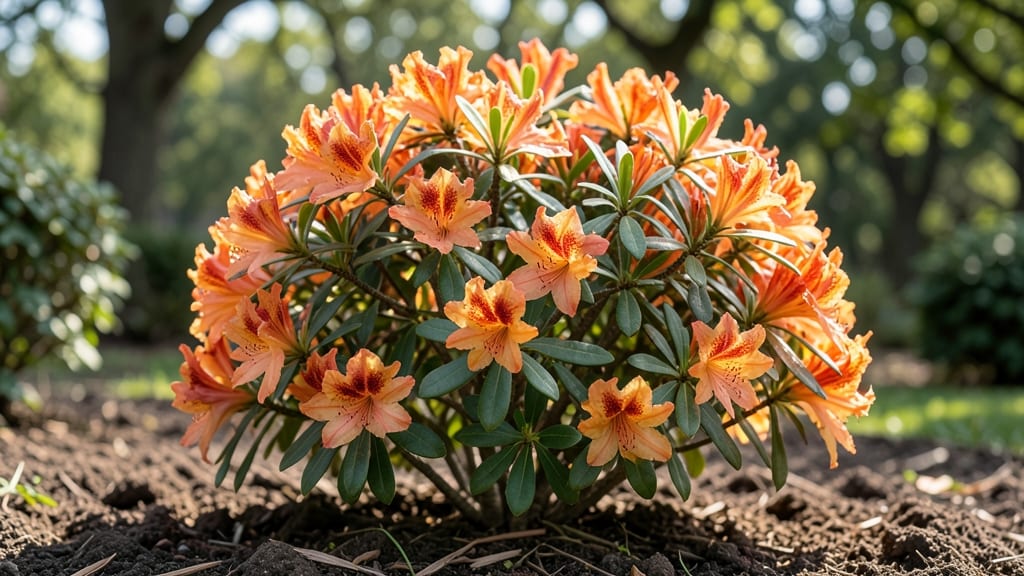
Flame azaleas burst into fiery color when temperatures hit 60-65°F—usually late spring to early summer—but the exact timing depends on your variety and zone. 🌸 I’ve watched my ‘Girard’s Flame’ explode with blooms in May while my ‘Hershey’s Red’ waits until June, and it all comes down to heat triggers and regional microclimates.
The key to extending their show is understanding their heat needs: most flame azaleas need warm days but cool nights to set buds. In warmer zones (7-9), they may bloom earlier, while colder zones (5-6) get a delayed but longer display.
Pruning after blooming keeps them compact and encourages next year’s flowers.
With the right care—morning sun, afternoon shade, and consistent moisture—you’ll get 3-4 weeks of vibrant blooms, followed by glossy foliage that lasts all season. The secret is mimicking their natural habitat: acidic soil and protection from harsh afternoon sun.
Works beautifully in shrub borders, foundation plantings, or containers—just adjust watering based on your zone. Let’s make those flames last longer than a single season!
📚 In This Guide
- What you need
- Instructions
- Tips and common mistakes
- Wrapping up and next steps
What you need
- ● Flame Azalea Plants: Choose Rhododendron varieties like 'Enchantment,' 'Sioux,' or 'Girard’s'—known for their heat-triggered reblooming potential.
- ● Well-Draining Soil: 3–5 gallons of acidic potting mix (pH 4.5–6.0) or a blend of peat moss, perlite, and pine bark (50/30/20 ratio).
- ● Slow-Release Fertilizer: 1–2 cups of acid-loving plant fertilizer (e.g., 10-10-10 or rhododendron-specific formula).
- ● Watering Can or Hose: With a fine-mist nozzle to avoid disturbing roots.
- ● Pruning Shears: Sterilized and sharp (for post-bloom cleanup).
- ● Mulch: 2–3 inches of pine straw or wood chips to retain moisture and acidity.
- ○ Thermometer (Optional but Helpful): A soil or air thermometer to monitor heat spikes (ideal trigger: 80–90°F for 2–3 weeks).
- ● pH Test Kit: To verify soil acidity (aim for 5.0–6.0 for reblooming).
- ● Gloves: Heavy-duty gardening gloves to protect against thorns.
- ● Spray Bottle: For light misting during heatwaves (prevents stress).
- ● Shade Cloth (30–50% coverage): To shield plants from intense afternoon sun if reblooming in hot climates.
- ● Sunlight: Partial shade (3–6 hours of morning sun; avoid harsh afternoon rays).
- ● Consistency: Commit to weekly watering (1–1.5 inches per week) and monthly feeding during bloom cycles.
- ● Patience: Reblooming takes 6–12 months of proper care—don’t rush it!
- ● Heat Trigger: A sudden, sustained heatwave (75°F+ for 2+ weeks) often kickstarts reblooms.
How to time flame azalea blooms for peak heat-triggered color
Here's how I've learned to predict—and extend—those fiery summer displays.
🌱 Step 1: Understand Your Flame Azalea's Specific Heat Requirements
Flame azaleas bloom in response to temperature shifts, not just seasonal cues. Most varieties need consistent daytime highs of 75-85°F combined with cooler nights (55-65°F) to trigger bud formation. Southern varieties like 'George L. Taber' bloom earliest, often by early June, while northern hybrids such as 'Girard's Pink' may wait until July.
I always check my local heatwave patterns—those 3-5 day stretches above 90°F are the magic window. Write down your first three consecutive days over 80°F; that's when buds will start swelling. Too much heat too soon, and you'll get sparse blooms. Too little, and they'll wait until fall.
☀️ Step 2: Prune Strategically to Maximize Next Season's Heat Response
Prune immediately after blooms fade, but never cut into old wood—flame azaleas only produce flowers on current season's growth. I shape mine into a loose, rounded form, removing only dead or crossing branches. The goal is to leave 3-4 healthy stems per foot of plant height to capture maximum sunlight during heat waves.
Here's the thing—if you prune too late in summer, you'll stimulate new growth that won't harden off before winter. And if you prune too early, you remove next year's flower buds before they form. I aim for late June to early July in most climates, right after the main bloom cycle.
💧 Step 3: Manage Soil Moisture During Critical Heat Periods
Flame azaleas need consistent moisture but hate soggy roots—especially when temperatures spike. I water deeply twice weekly during heatwaves, letting 2-3 inches of soil dry between sessions. The key is to keep the root zone moist enough to support photosynthesis but never waterlogged, which stresses plants during heat.
Mulch heavily with 3-4 inches of pine bark or wood chips to retain moisture and regulate soil temperature. I always check by lifting the mulch—if the soil beneath feels cool to touch, moisture levels are right. Too warm means you're over-mulching; too cool means you need to water more frequently.
⏰ Step 4: Time Fertilizer Applications to Support Heat-Triggered Blooms
Feed with an acid-loving fertilizer (pH 5.0-5.5) in early spring and again after blooms fade. I use a 10-10-10 formula at half-strength to avoid burning roots during heat. The second feeding, around mid-July, gives plants the phosphorus boost they need to set next year's buds when temperatures stabilize.
Real talk: If you fertilize too late, you'll get leafy growth instead of flowers. And if you use the wrong pH, your azalea will yellow and drop buds. I test soil annually—flame azaleas need acidic conditions to absorb nutrients properly during heat stress.
✂️ Step 5: Deadhead and Protect for Extended Summer Color
Remove spent blooms immediately after they fade to redirect the plant's energy into new buds. I use clean, sharp shears to cut just above the first set of leaves below the bloom cluster. This prevents seed formation and encourages the plant to produce more flowers during the heat.
For extended blooms, I cover plants with lightweight shade cloth (30-40%) during the hottest part of the day (11am-3pm) when temperatures exceed 95°F. This prevents buds from dropping due to heat stress while still allowing enough light for photosynthesis. Watch for new buds forming at the tips of branches—those are your signal that the heat-triggered mechanism is working.
Tips & tricks for perfect heat-triggered flame azalea blooms
Mastering the art of heat-triggered blooms means understanding the delicate balance between temperature, timing, and plant health.
Variety-Specific Heat Zones: Southern flame azaleas like 'George L. Taber' thrive in consistent 75-85°F daytime highs, while northern varieties such as 'Girard's Pink' need slightly cooler nights (55-65°F) to form buds. I've found that tracking your local heatwave patterns—especially those 3-5 day stretches above 90°F—is the key to predicting bloom windows. Use a weather app to log your first three consecutive days over 80°F; that's when buds typically begin swelling. Too much heat too early can stress plants, while waiting too long may delay blooms until fall.
Pruning Precision: The late June to early July pruning window is critical—this is when your azalea's flower buds for next season are forming. I always aim to leave 3-4 healthy stems per foot of plant height to maximize sunlight exposure during heat waves. Here's what nobody tells you: If you prune too late, you risk stimulating tender new growth that won't harden off before winter. And if you prune too early, you might accidentally remove next year's flower buds before they form. Always use clean, sharp shears and avoid cutting into old wood, as flame azaleas only produce flowers on current season's growth.
Soil Temperature Secrets: Your azalea's root zone should feel cool to the touch when you lift the mulch—this is your cue that moisture levels are perfect. I've learned that 3-4 inches of pine bark mulch creates the ideal insulation, regulating soil temperature while preventing waterlogging. During heatwaves, I water deeply twice weekly, allowing 2-3 inches of soil to dry between sessions. The trick is maintaining that delicate balance: enough moisture to support photosynthesis without creating soggy conditions that stress the roots during extreme heat.
Heat Stress Protection: When temperatures exceed 95°F, I cover my azaleas with lightweight shade cloth (30-40%) during the 11am-3pm window. This prevents buds from dropping due to heat stress while still allowing sufficient light for photosynthesis. Watch for new buds forming at branch tips—this visual cue confirms the heat-triggered mechanism is working. I've seen firsthand how this simple protection can extend bloom seasons by several weeks, especially in southern climates where heatwaves are more intense.
Pro Tips for Flame Azalea Bloom Time
- Mastering the art of heat-triggered blooms means understanding the delicate balance between temperature, timing, and plant health.
- Variety-Specific Heat Zones: Southern flame azaleas like 'George L.
- Pruning Precision: The late June to early July pruning window is critical—this is when your azalea's flower buds for next season are forming.
Frequently asked questions
about flame azalea bloom time—because timing and variety can feel like a puzzle! Here’s what gardeners ask most often, with quick, practical answers to keep your azaleas blazing with color.When do flame azaleas typically bloom?
Flame azaleas (Rhododendron spp.) usually bloom in late spring to early summer (May–June), but their rebloom in fall (September–October) is the showstopper—triggered by heat in summer! Varieties like ‘Knock Out’ or ‘Girard’s’ often deliver two bursts of color if given proper care.
How can I encourage a second bloom?
Heat is key! Ensure your azalea gets full sun to partial shade (6+ hours of light) and consistent moisture (but not soggy soil). After the first bloom, feed with an acidic, high-phosphorus fertilizer (like 10-30-20) in early summer. Prune spent blooms right after rebloom to prep for next year.
Why isn’t my flame azalea reblooming?
Common culprits:
- Insufficient heat: Fall reblooms need summer temps above 75°F (24°C). If your climate is cooler, try a microclimate or heat-tolerant varieties like ‘Hino Crimson.’
- Over-pruning: Prune only after blooms fade—never in late summer or fall, or you’ll cut off next year’s buds.
- Poor soil: Test pH (ideal: 4.5–6.0). Amend with pine needles or sulfur if soil is alkaline.
Can flame azaleas bloom in winter?
Unlikely! Flame azaleas are not winter bloomers—their fall rebloom is their second (and sometimes last) show. For winter color, pair them with camellias or winter jasmine. Harsh frosts (<20°F/-7°C) can damage buds, so mulch heavily in fall for protection.
Are there flame azalea varieties that bloom earlier or later?
Yes! Early bloomers (April–May): ‘Southern Living’ or ‘George L. Taber.’ Late bloomers (June–July): ‘Hino Crimson’ or ‘Ralph Moore.’ For extended blooms, mix varieties—like planting ‘Knock Out’ (reblooms) near ‘Formosa’ (spring-only) for a staggered display.
Pro Tip:
Track your azalea’s bloom dates yearly! Note when buds form (usually 6–8 weeks before blooming) to adjust pruning and fertilizing for next season. A simple garden journal or phone notes app works—no fancy tools needed!
Wrapping up and next steps
Now that you’re armed with the flame azalea bloom time secrets—from heat-triggered reblooms to variety-specific care—it’s time to put your knowledge into action! 🌸 Whether you’re a seasoned gardener or a curious beginner, these insights will help you coax vibrant blooms year after year. Start by selecting the perfect flame azalea variety for your climate, then monitor soil, sunlight, and pruning like a pro.
Ready to transform your garden? Grab your shears and get planting!