
Blooming
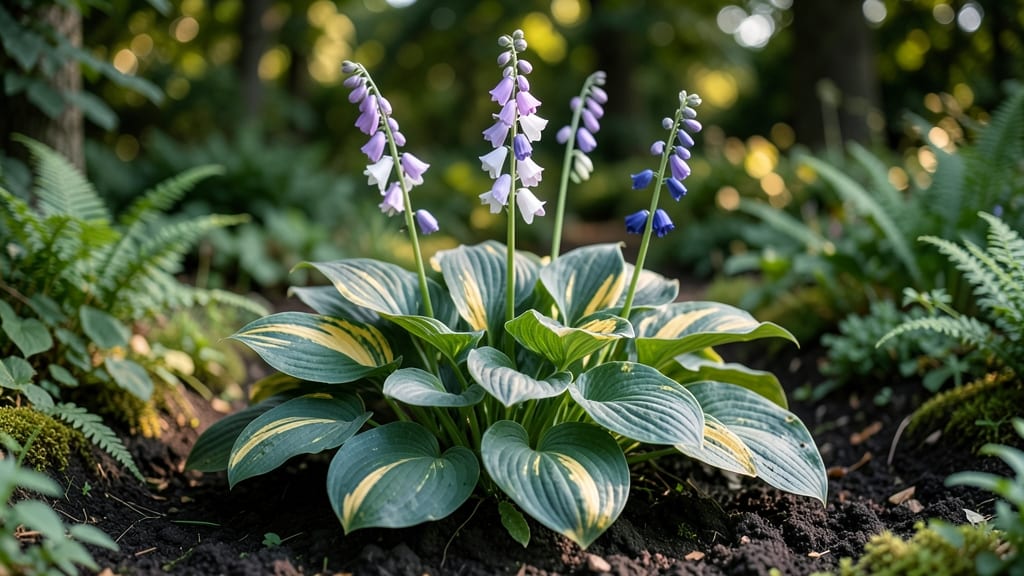
Hosta bloom colors range from delicate lavender to rich purple, pure white, and deep blue hues, often mirroring or contrasting their striking foliage. Cultivars like 'Halcyon' showcase soft lavender blooms, while 'Blue Angel' delivers intense blue-purple flowers, and 'Francee' presents elegant white with lavender accents. Environmental factors like sunlight and seasonal timing further refine these vibrant displays.
Hosta flowers are nature's way of adding unexpected drama to your shade garden, with colors that can completely transform your landscape. 🌸 The secret lies in their genetics—some varieties produce anthocyanin-rich blooms that deepen in shade, while others rely on flavonoids for their milder tones.
For example, 'June' features pale lavender flowers that harmonize beautifully with its blue-green leaves, while 'Patriot' delivers bold purple blooms that pop against its white-edged foliage.
What's fascinating is how these colors can shift slightly depending on where you plant them—more sun might intensify purples, while partial shade can bring out softer lavenders.
Beyond the colors themselves, timing matters too.
Most hostas bloom in mid-to-late summer, but there are exceptions like Hosta plantaginea, which surprises gardeners with fragrant white flowers in fall. 🌙 If you're looking to extend your bloom season, try planting varieties in different microclimates—cooler regions often get an extra month of color.
And here's a pro tip: deadheading spent blooms can encourage a second flush of flowers in some varieties, especially if you provide consistent moisture.
💡 In This Article
- How Hosta Flower Colors Vary by Species and Cultivar
- Seasonal Trends: When and Where to Spot Hosta Blooms
How Hosta flower colors vary by species and cultivar
The stunning array of hosta bloom colors stems from complex interactions between genetics and environmental factors. At the core, two key pigments drive these hues: anthocyanins (responsible for purples, blues, and deep reds) and flavonoids (creating yellows and whites).
For instance, the deep blue-purple flowers of 'Blue Angel' owe their intensity to high anthocyanin concentrations, while 'Golden Tiara' gets its rare yellow blooms from specific flavonoid compounds.
What's fascinating is how these pigments respond to light—more sunlight can actually deepen purples by increasing anthocyanin production, while shade often brings out softer lavenders.
Species like Hosta plantaginea showcase nature's contrast tricks with its fragrant white flowers that emerge on tall stems in fall, while Hosta sieboldiana varieties produce lavender blooms that perfectly complement their blue-green foliage. 🌿 The color spectrum expands dramatically when comparing cultivars: 'Halcyon' offers pale lavender blooms that harmonize with its chartreuse leaves, while 'Sum and Substance' delivers dramatic dark purple flowers that create bold garden statements.
Even within the same species, color shifts occur with maturity—young blooms might appear lighter before deepening to their full hue as they age.
What most gardeners don't realize is how pigment stability varies by variety. Anthocyanin-rich flowers like 'Patriot' maintain their vibrant colors throughout the day, while flavonoid-based yellows can fade slightly in intense afternoon sun.
This is why morning sunlight often reveals the truest colors in hosta blooms—especially for varieties like 'June' whose pale lavender flowers might appear more vibrant when viewed before noon. The color science gets even more interesting when considering hybrid varieties, where breeders intentionally cross species to stabilize desirable hues.
Consider these color categories when selecting hostas:
- Purples/Blues: Anthocyanin-heavy varieties like 'Blue Angel' (deep blue-purple) and 'Guacamole' (lavender-blue) thrive in partial shade where their colors appear most intense
- Lavenders: 'Halcyon' and 'June' produce soft lavender blooms that work beautifully in moon gardens or near white hostas for contrast
- Whites: 'Francee' and Hosta plantaginea offer pure white flowers that create striking focal points against dark foliage
- Yellows (rare): 'Golden Tiara' and 'Golden Pothos' are prized for their unusual yellow blooms that appear in late summer
The most dramatic color transformations occur in bicolor varieties like 'Francee', where white blooms develop lavender tips—a visual effect created by uneven pigment distribution in the flower petals. This phenomenon happens because anthocyanins concentrate more heavily in certain areas of the petal during development.
For gardeners, this means positioning bicolor varieties where their color shifts will be most visible, typically near pathways or garden edges where the flowers can be viewed from multiple angles.
One final botanical secret: hosta flower colors often evolve over time as cultivars are developed. What started as a simple lavender bloom in wild hostas has been refined through selective breeding to create the vibrant spectrum we see today.
The deepest purples now appear in modern hybrids like 'Halcyon' and 'Blue Angel', while the softest lavenders come from older cultivars that have been preserved for their delicate charm.
This ongoing evolution means new hosta varieties continue to push color boundaries, with breeders now working on stabilizing even more intense blues and rare pinkish-lavender hues.