
Blooming
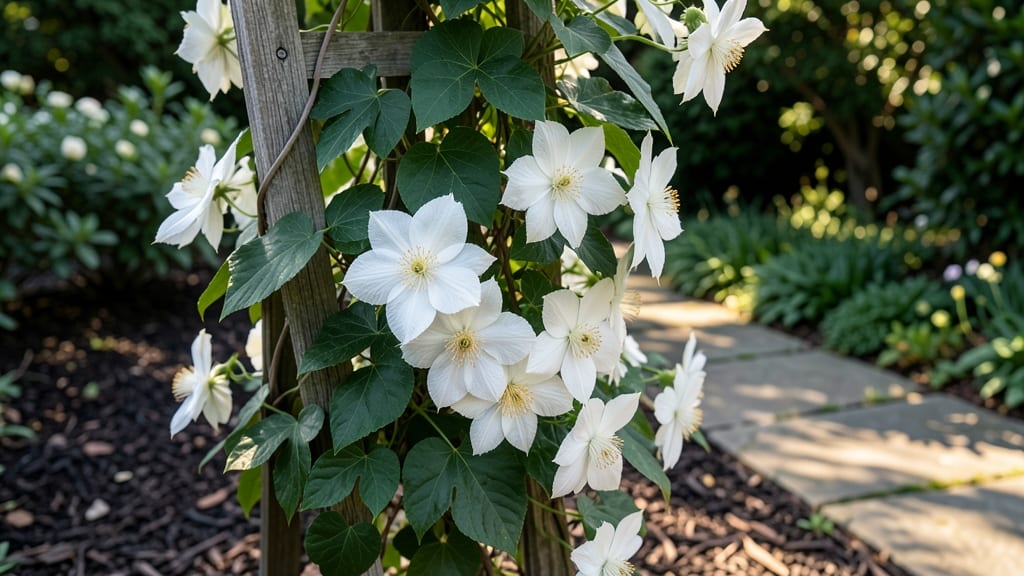
Growing large bloom clematis means purple spikes that turn heads from spring to fall—and yes, they really do survive winter with the right prep. 🌿 I’ve watched these vines transform bare walls into vertical gardens, their blooms so bold they outshine even the most vibrant annuals.
The secret lies in matching the right variety to your climate, giving them the perfect support, and mastering the pruning schedule that keeps them blooming like crazy.
Start with the heavy hitters like 'Jackmanii' or 'Nelly Moser'—both thrive in zones 4-9 and reward patience with 6-inch blooms that last weeks.
Plant them where they get morning sun and afternoon shade (too much heat wilts those petals faster than you can say "pruning"), and pair them with a sturdy trellis or arbor. The soil needs to drain well but stay moist—think rich, crumbly loam mixed with compost, not dense clay.
By pruning correctly, you’ll trigger a second flush of blooms in late summer that rivals the first. Cut back last year’s stems in early spring (group 2 or 3 varieties), and feed them every 4-6 weeks with a balanced fertilizer.
The payoff? Vines that climb 10+ feet and produce so many blooms your neighbors will ask for cuttings. Winter protection is simple: wrap the base with burlap or mulch heavily, and you’re set.
Common mistakes? Overwatering (root rot is silent but deadly) or skipping the pruning (yes, it’s scary the first time). But once you see those first purple spikes unfurling in May, you’ll understand why every hour spent is worth it. These vines aren’t just plants—they’re the centerpiece of any garden.
📚 In This Guide
- What you need
- Instructions
- Tips and common mistakes
- Wrapping up and next steps
What you need
- ● Clematis plant: Choose a large-flowering variety (e.g., 'Jackmanii', 'Niobe', or 'Perle d’Azur'). Opt for a 3-gallon container-grown plant for best results.
- ● Well-draining soil: Mix 1 part garden soil, 1 part compost, and 1 part perlite or coarse sand (50% organic matter minimum). Test soil pH (6.0–7.0 ideal).
- ● Support structure: Trellis or arbor: At least 6–8 feet tall (metal or wooden lattice works best).
- ● Stakes or obelisks: 3–4 heavy-duty stakes (2–3 inches wide) for smaller varieties.
- ● Mulch: 3–4 inches of organic mulch (wood chips, shredded bark, or straw) to retain moisture and regulate temperature.
- ● Fertilizer: Balanced fertilizer (10-10-10): 1–2 tbsp per plant at planting.
- ● High-phosphorus bloom booster (5-10-5): Apply in early spring and after first blooms fade.
- ● Slow-release granules: Osmocote or similar (1 cup per plant) for steady nutrients.
- ● Soil moisture meter: To monitor consistent dampness (not soggy!) in the root zone.
- ● Frost cloth or row covers: For early spring protection in colder zones (USDA 3–6).
- ● Pruning shears: Bypass pruners (sharp, clean, and sterilized) for post-bloom maintenance.
Step-by-step instructions for planting and cultivating large bloom clematis
Here's how to coax those dramatic purple spikes into thriving, frost-resistant giants in your garden.
🪴 Step 1: Choose the Perfect Planting Site
Large bloom clematis needs 6+ hours of morning sun and afternoon shade—too much hot afternoon sun scorches the blooms. I always plant mine near a north-facing wall or under deciduous trees that provide shade in summer but let winter sun reach the stems. The roots should stay cool while the foliage basks in gentle light.
Dig a hole twice as wide as the root ball but only as deep as the top of the root system. Clematis roots are shallow but sprawling—burying them too deep suffocates them. Mix the excavated soil with 3 inches of compost to improve drainage and fertility. This plant thrives when its roots can breathe but its top growth gets plenty of light.
☀️ Step 2: Plant with Support and Mulch
Install your trellis or support structure before planting—clematis vines grow aggressively and need something sturdy to cling to from day one. I use a 5-foot tall obelisk or strong wire frame> positioned right where the plant will go. The support should be at least 4 inches in diameter> to handle the weight of mature vines.
Place the clematis so the crown sits 2-3 inches below soil level>—this protects it from frost heave in winter. Backfill with your amended soil, then water deeply to settle everything. Top with 3 inches of mulch> (I use shredded bark) to retain moisture and regulate soil temperature. Keep mulch 6 inches away from the stem> to prevent rot.
💧 Step 3: Water Deeply and Fertilize Strategically
Water immediately after planting, then once weekly for the first month> to encourage root establishment. You'll know it's enough when water drains through to 12 inches deep>. Clematis roots are thirsty but hate soggy conditions—water only when the top 2 inches of soil feel dry>.
Wait until new growth appears in spring> before fertilizing. I use a balanced 10-10-10 fertilizer> applied in early spring and again after the first flush of blooms. Too much nitrogen early on produces leafy growth at the expense of flowers. Feed lightly—this plant rewards restraint with bigger, more dramatic blooms.
✂️ Step 4: Prune for Maximum Blooms
Large bloom clematis needs group 3 pruning>—wait until early spring when new growth is 12-18 inches tall> before cutting back. Remove all dead or weak stems first, then prune the remaining healthy stems to 2-3 buds above ground level>. This dramatic cutback forces energy into fewer, larger blooms.
I always prune on a dry day when the plant is dormant. Use clean, sharp pruners and make cuts at 45-degree angles> just above outward-facing buds. Never leave stubs—this invites disease. The first year might look sparse, but by year three, you'll get 6-foot spikes of purple blooms> that last weeks.
⏰ Step 5: Winterize for Frost Resistance
When temperatures drop below 20°F>, protect the crown by mounding 6 inches of mulch> around the base. I also wrap the lower 3 feet of stems> with burlap or frost cloth, securing it with twine. This prevents frost cracks that can kill the plant. Large bloom clematis is surprisingly hardy once established—mine survive -20°F> with proper protection.
Remove winter protection in late winter> when new growth begins. You'll see tiny green shoots pushing through the mulch—that's your signal to uncover the plant. The first flush of leaves appears 4-6 weeks after pruning>, followed by buds that will become next year's showstopping blooms.
Tips & tricks for cultivating large bloom clematis
Here's what nobody tells you about growing these showstopping vines—tricks that'll make your clematis thrive like a seasoned gardener's.
Sunlight Strategy: That 6+ hours of morning sun is non-negotiable, but don't overlook the afternoon shade. I've seen scorched blooms from too much direct afternoon heat—think of it like sun protection for your plant. If you're in a hot climate, consider a sheer curtain for afternoon shade that still allows light through. The key is keeping those purple spikes vibrant and healthy.
Support System: The 5-foot obelisk I mentioned isn't just for looks—it's about weight distribution. Clematis vines can grow up to 20 feet in ideal conditions, and those heavy blooms need sturdy support. I've had trellises collapse under the weight of mature vines, so choose something that's at least 4 inches in diameter. You can also use a sturdy fence or arbor if you're planting along a boundary.
Pruning Precision: When you're pruning those stems to 2-3 buds in early spring, here's what I've learned: those buds should be facing outward, not inward. This encourages growth away from the center, giving you a fuller, more dramatic display. I mark my pruning cuts with a piece of chalk before making them to ensure I'm cutting at the right angle and position. It takes a few minutes but makes all the difference in your plant's shape.
Winter Protection: That 6 inches of mulch around the crown is your first line of defense against frost, but don't forget about the stems. I've seen frost cracks develop on stems that weren't properly protected. Wrap the lower 3 feet with burlap or frost cloth, securing it tightly with twine. This simple step can mean the difference between a plant that survives winter and one that doesn't.
Pro Tips for Large Bloom Clematis
- Here's what nobody tells you about growing these showstopping vines—tricks that'll make your clematis thrive like a s...
- Sunlight Strategy: That 6+ hours of morning sun is non-negotiable, but don't overlook the afternoon shade. I've seen ...
- Support System: The 5-foot obelisk I mentioned isn't just for looks—it's about weight distribution. Clematis vines ca...
Frequently asked questions
Got questions about growing large bloom clematis? You’re not alone! Here are some of the most common ones—and their answers—to help you cultivate stunning, frost-resistant blooms with confidence.
How do I prune large bloom clematis correctly?
Prune in late winter or early spring (before new growth starts). Cut back dead or weak stems to a pair of healthy buds, but avoid over-pruning—these beauties bloom on old wood. Never trim more than 1/3 of the plant at once. See our step-by-step guide for visuals!
Can large bloom clematis survive frost?
Yes! Most varieties (like ‘Jackmanii’ or ‘The President’) are hardy to USDA Zone 4 or colder. To protect young plants, mulch the base heavily in winter and wrap stems with burlap. Established vines usually bounce back—just trim damaged foliage in spring.
What’s the best support for large bloom clematis?
Use a strong trellis, arbor, or sturdy fence (at least 6–8 feet tall). These vines can weigh 50+ lbs when in bloom! Avoid flimsy wire or mesh—opt for wood, metal, or heavy-duty plastic. Twine or soft ties work best to avoid damaging stems.
Why aren’t my large bloom clematis flowers opening?
Common culprits: over-pruning (cutting back too aggressively), poor sunlight (they need 6+ hours of sun), or nutrient deficiencies. Check for yellowing leaves (nitrogen deficiency) or stunted growth (phosphorus/potassium). Feed with a balanced fertilizer in early spring and mid-summer.
Are there dwarf varieties of large bloom clematis?
Not exactly—most large bloom clematis (Group 2) grow 8–12 feet tall. However, try ‘Multi Blue’ (6–8 ft) or ‘Comtesse de Bouchard’ (6–10 ft) for slightly smaller options. For true dwarf clematis, look at Group 3 varieties like ‘Jackmanii’ hybrids (4–6 ft) or ‘Niobe’ (5–8 ft).
Wrapping up and next steps
Growing large bloom clematis is a rewarding journey that brings breathtaking color and vertical drama to your garden—even in cooler climates! 🌸 With the right site selection, pruning know-how, and winter prep, these frost-defying vines will thrive for years.
Whether you’re a beginner or a seasoned gardener, your patience will be rewarded with stunning, long-lasting blooms that turn heads.
Ready to transform your space? Start by choosing your variety (like ‘Jackmanii’ or ‘Nelly Moser’) and sketch a planting plan. Then, grab your tools and dive in—your future garden masterpiece awaits!