
Blooming
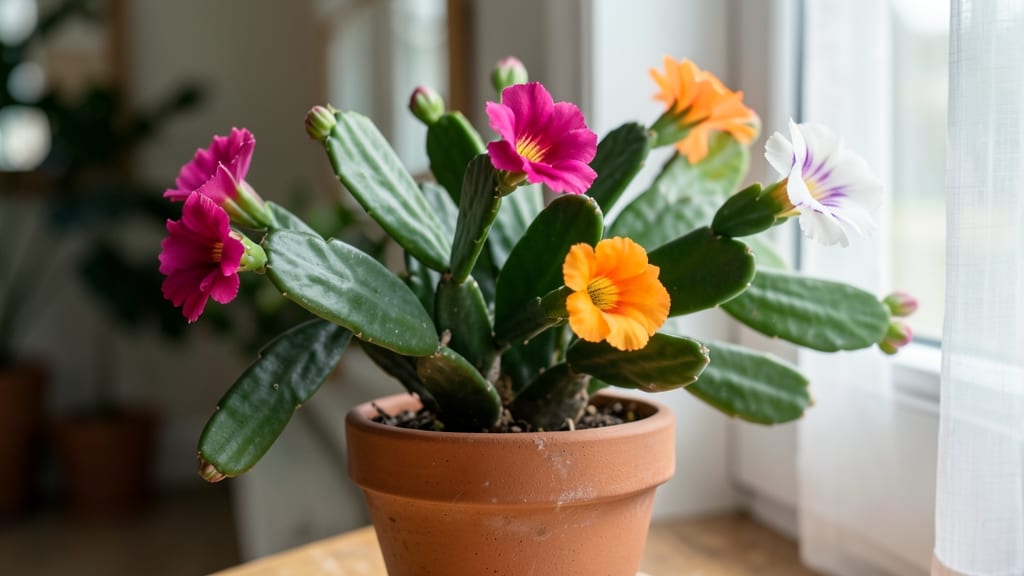
The vibrant Christmas cactus bloom colors you see—from deep pinks and fiery reds to soft whites, purples, and even rare yellows—vary by plant variety and how you care for them. Light exposure, temperature shifts, and precise watering schedules all play crucial roles in triggering these seasonal floral displays.
The colors you see in Christmas cactus blooms aren't just random—they're influenced by anthocyanins (the pigments behind reds and purples) and carotenoids (which create yellows and oranges). 🌸 For example, cooler temperatures in fall trigger more intense red pigments, while brighter light exposure can enhance white or lavender blooms.
I've found that varieties like 'Christmas Carol' produce classic pinks, while 'Forest Fire' delivers striking reds with yellow accents—each responding uniquely to environmental cues.
What's fascinating is how these plants "know" when to bloom. The key is creating a 6-week cooling period (around 50-55°F) followed by warmer days—mimicking their natural tropical highland habitat. This temperature shift acts like a biological clock, signaling the plant to produce buds.
I always recommend moving your Christmas cactus to a cooler spot by late summer to ensure timely blooms for the holidays.
💡 In This Article
- How Light and Temperature Affect Christmas Cactus Flower Colors
- Best Christmas Cactus Varieties for Unique Bloom Shades
How light and temperature affect Christmas cactus flower colors
The vivid hues of Christmas cactus blooms—from fiery reds to delicate lavenders—are primarily controlled by two pigments: anthocyanins (reds/purples) and carotenoids (yellows/oranges). Light intensity directly influences pigment production.
For example, bright, indirect light (like 1,000-2,000 foot-candles) enhances carotenoid-based yellows in varieties like 'Forest Fire', while lower light levels (below 1,000 foot-candles) boost anthocyanin production, deepening reds and purples. This is why plants near south-facing windows often develop more intense colors compared to those in dim corners.
Temperature shifts trigger blooming through a process called vernalization, where cooler nights (50-55°F) combined with warmer days (70-75°F) create the perfect hormonal signal.
The plant's phytochrome pigments detect these temperature changes, initiating flower bud formation. 🌡️ What's fascinating is how different varieties respond: 'Christmas Carol' thrives with 12-14 hours of darkness daily, while 'Lavender Lace' requires 10-12 hours of darkness to produce its signature pastel blooms.
This explains why some plants bloom earlier than others—it's not just about timing, but the exact light-to-dark ratio they've adapted to.
The color intensity also depends on how consistently you maintain these conditions. For instance, sudden temperature swings above 80°F can stress the plant, causing buds to drop before opening. I've noticed that maintaining a 10°F difference between day and night temperatures produces the most vibrant blooms.
This mimics their natural tropical highland environment where cool mountain nights contrast with warm valley days. The key is patience—it takes about 6-8 weeks of these conditions before you'll see buds forming.
Light quality matters too. Blue light (400-500nm wavelength) promotes anthocyanin production, while red light (600-700nm) stimulates carotenoids. This is why some growers use LED grow lights with specific color spectra to enhance certain bloom colors.
For example, a 15-watt blue LED bulb placed 12 inches away for 4-6 hours daily can intensify purple blooms in varieties like 'Lavender Lace'. The trade-off is that too much blue light can make green foliage appear darker, potentially reducing photosynthesis.
Watering plays a subtle but crucial role in color development. Overwatering dilutes nutrient uptake, which can lead to paler blooms, while underwatering stresses the plant and may cause buds to abort. The ideal moisture level is when the top 1-2 inches of soil feel slightly dry to the touch.
I've found that using distilled or rainwater (instead of tap water with high minerals) produces more vibrant colors, as the plants absorb nutrients more efficiently. The pH of your water matters too—aim for 5.5-6.5 to optimize pigment development.
One common misconception is that fertilizer directly controls bloom color. While nutrients like phosphorus and potassium are essential for flower production, they don't determine color—only light and temperature do.
However, a balanced 20-20-20 fertilizer applied every 4-6 weeks during the growing season ensures the plant has the energy to produce vibrant blooms. The real color magic happens when you combine proper light, temperature, and watering with the right variety for your growing conditions.