
Blooming
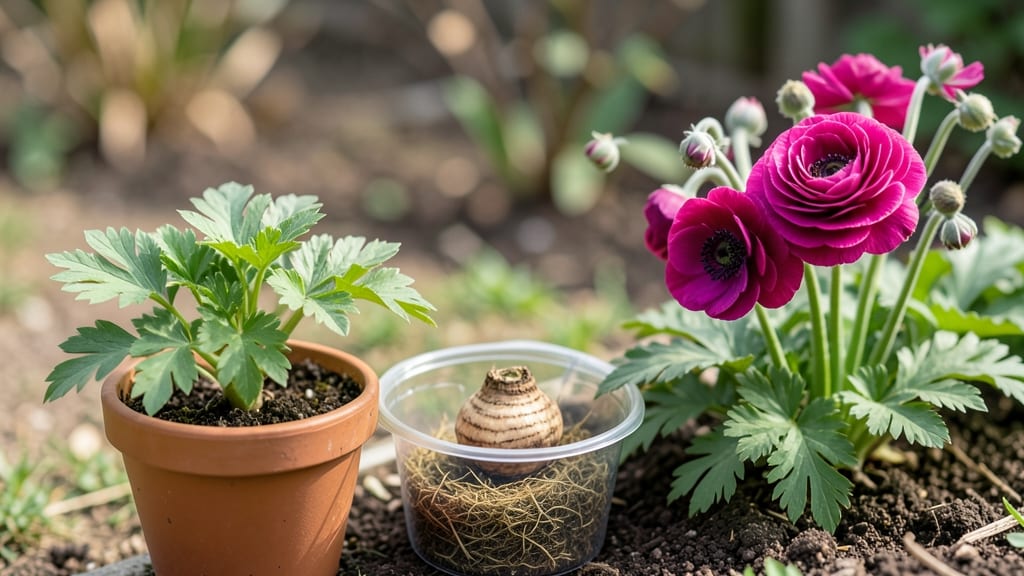
Ranunculus do not bloom every year as perennials in most climates, dying back to corms in winter and requiring replanting annually in cooler regions, though some varieties may rebloom in mild winters with proper care and well-drained soil.
Ranunculus behave more like tender perennials than true hardy plants, relying on underground corms that go dormant in freezing temperatures. 🌱 Unlike tulips or daffodils, their corms often fail to survive winter in zones below 7a without protection, forcing gardeners to replant each spring.
However, in warmer microclimates or with winter mulching, some varieties surprise you with sporadic reblooming the following season.
What sets ranunculus apart is their seasonal dependency—they need consistent warmth to trigger blooming. In colder regions, even well-established corms may rot if left unprotected, while in milder areas, they might produce a second flush of flowers if given proper care.
The key lies in soil drainage and winter insulation, which can make all the difference between a one-time bloom and a repeat performance.
💡 In This Article
- Why Ranunculus Act as Annuals in Most Gardens
- Tips to Encourage Reblooming in Ranunculus
Why ranunculus act as annuals in most gardens
Ranunculus behave like annuals because their underground corms lack the hardiness of true perennials. While tulips and daffodils store nutrients in bulbs that survive 20-30°F winters, ranunculus corms are more delicate—typically dying when exposed to prolonged below 25°F temperatures.
Their natural habitat in Mediterranean climates means they evolved for mild winters, not freezing cycles. 🌱
The corms enter dormancy when soil temps drop below 50°F, but unlike tulip bulbs, they don't have protective layers to insulate against frost. A single hard freeze can rupture their papery skins, leading to rot.
Even in USDA Zone 7b (average 5-10°F winters), unprotected corms often fail to regrow, forcing replanting each spring.
What makes this worse is their shallow root system—corms sit just 1-2 inches below soil, vulnerable to temperature fluctuations. Compare this to peonies, whose thick roots burrow 6+ inches deep, insulating them naturally.
Ranunculus also lack the energy reserves of true perennials, making them dependent on fresh spring planting for consistent blooms.
One exception is the Ranunculus asiaticus variety, which sometimes survives in Zone 8+ with winter mulching. Even then, reblooming requires perfect conditions: well-drained soil (they hate soggy roots), afternoon shade in summer heat, and protection from wind that dries out corms. Without these, they act like true annuals.
The botanical term for this is "tender perennial"—plants that can't survive freezing winters but might persist in mild climates. Think of them as the divas of the garden: stunning when happy, but requiring constant pampering to return the next season. 🌸