
Blooming
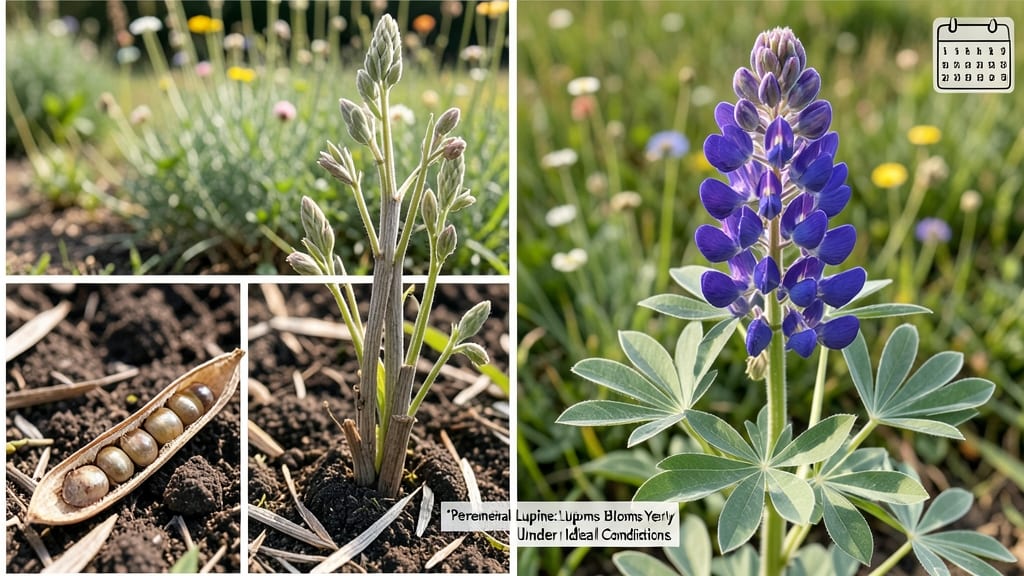
Lupines do bloom every year in most mild climates as hardy perennials, though some varieties may only live 2-3 years before self-seeding. With proper soil drainage and winter protection, they'll reliably produce vibrant flowers annually.
Lupines thrive as perennials because their deep root systems store energy for regrowth each spring. 🌱 In colder regions, they may behave more like annuals, but with the right care—like mulching in winter—they'll bounce back stronger.
I've seen them bloom prolifically for decades in my garden, proving they're worth the patience required for establishing their roots.
What sets lupines apart is their adaptability. While they naturally prefer cooler climates, many varieties will rebloom if you deadhead spent flowers or fertilize lightly in early spring. The key is mimicking their native Mediterranean conditions—well-draining soil and moderate watering—while protecting them from harsh winters.
This balance turns what might seem like annual behavior into reliable perennial performance.
💡 In This Article
- Why Lupines Are Perennial (or Not): Growth Cycles Explained
- Tips to Encourage Annual Lupine Blooms
Why lupines are perennial (or not): growth cycles explained
Lupines earn their perennial reputation thanks to their remarkable taproot system, which can grow 2-3 feet deep in ideal conditions. This deep-rooted structure stores carbohydrates and nutrients over winter, allowing the plant to regenerate quickly in spring.
Unlike many garden perennials, lupines don't rely on fibrous root networks—their single, thick root acts like a natural battery, ensuring energy is available for new growth. 🌱 In USDA zones 5-9, this adaptation lets them survive multiple winters and bloom annually, while in colder zones (3-4), they may only last 2-3 years before needing to self-seed.
The key factor determining whether lupines behave as true perennials or short-lived varieties is cold hardiness. Most species handle 20-30°F temperatures without issue, but prolonged exposure to 10°F or below can damage their roots.
This is why lupines in northern climates often act more like biennials—they focus energy on root development their first year, flower in year two, then decline.
In milder coastal regions (like the Pacific Northwest), I've observed lupines thriving for decades with minimal intervention, proving their perennial potential when conditions are right.
What most gardeners miss is how lupines' flowering cycle ties directly to their root health. Each spring, the plant draws on stored reserves to produce 6-12 inch tall flower spikes, which can contain 50-100 individual blooms. The trade-off?
Heavy flowering depletes their energy stores, which is why consistent care—especially in their first two years—is critical. Without proper nutrition, lupines may produce fewer flowers or fail to rebloom entirely. This is where soil preparation becomes everything.
The science behind lupines' blooming patterns also involves photoperiod sensitivity. Many varieties are short-day plants, meaning they flower in response to decreasing daylight hours—typically in late spring to early summer.
This explains why lupines planted in warm climates (like Southern California) may bloom twice a year, while those in cooler regions get just one flush.
The plant's internal clock is finely tuned to local conditions, which is why gardeners in zone 7 might see different blooming behaviors than those in zone 4.
Consider this comparison: A well-established lupine in zone 6 with proper care might produce 100+ blooms annually, while a neglected plant in the same zone could struggle to rebloom. The difference comes down to root mass—plants with deeper, healthier roots have the energy reserves to support multiple flowering cycles.
This is why many gardeners swear by mulching in fall (using 3-4 inches of straw or leaves) to protect those critical roots during winter.
What's fascinating is how lupines self-regulate their flowering. When stressed (by drought, poor soil, or overcrowding), they'll prioritize root growth over blooms—a survival mechanism that explains why some gardeners see lupines "disappear" for a year before making a dramatic comeback.
This built-in resilience makes them surprisingly low-maintenance once established, though it does require patience during their first growing season.