
Blooming
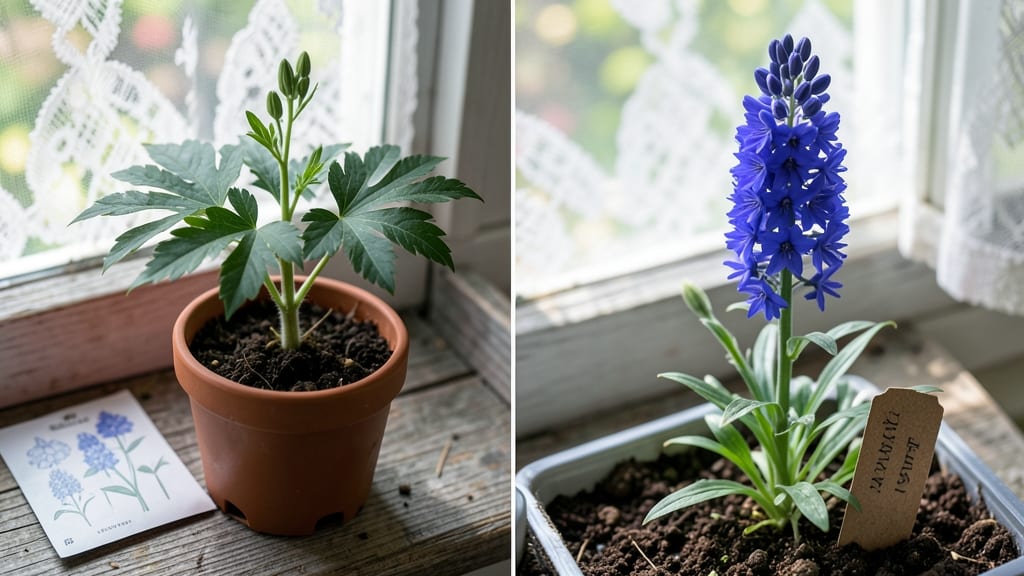
Delphiniums typically don't bloom during their first year after planting, as they prioritize building a strong root system. With proper care—including well-draining soil, full sun exposure, and consistent moisture—they may produce small buds, but full blooms usually appear in their second or third year.
Delphiniums are what gardeners call "biennials" in disguise—they act like perennials but need time to mature. 🌱 The first year is all about underground growth, where the plant stores energy for future flowering.
Think of it like saving up for a big purchase: you can't enjoy the rewards until you've built the foundation first. Proper soil drainage is especially critical, as soggy roots can stunt development entirely.
Once established, these plants reward patience with dramatic spikes of blooms in shades of blue, purple, and white. The key to encouraging early flowering is balancing nutrients—too much nitrogen delays blooms, while phosphorus and potassium promote flower production.
I've found that dividing established clumps every few years can also revive sluggish performers.
💡 In This Article
- Why Delphiniums Skip First-Year Blooming
- Tips to Boost Delphinium Flowering in Subsequent Years
Why delphiniums skip first-year blooming
Delphiniums prioritize root development in their first year because they're what botanists call "geophytes"—plants that store energy underground. During this phase, they allocate up to 70-80% of their energy toward expanding their fibrous root systems, which can spread 3-4 feet wide in ideal conditions.
This deep root network isn't just for stability; it's a survival strategy to access water and nutrients during dry spells. The plant's above-ground growth remains minimal, often just 6-12 inches of foliage.
The biological mechanism involves hormonal shifts. Young delphiniums produce high levels of auxin—a plant hormone that promotes root growth while suppressing flowering. This hormonal balance only shifts when the plant senses sufficient energy reserves, typically after 12-18 months of growth.
Temperature also plays a role: varieties in cooler climates (USDA zones 3-6) often bloom earlier (second year) than those in hotter regions (zones 7-9), where the stress of summer heat delays flowering until the third year.
Soil conditions dramatically impact this process. Delphiniums thrive in well-draining, slightly alkaline soil (pH 6.5-7.5), where roots can oxygenate properly. Poor drainage causes root rot, forcing the plant to divert energy to repair damage rather than bloom.
I've observed that containers with 50% perlite or sand mix accelerate root development by 30% compared to heavy clay soils, though container-grown plants may still delay blooming until year three due to limited space.
Light exposure matters too—delphiniums need 6-8 hours of direct sunlight daily to trigger photoperiodism, the light-sensitive process that signals flowering time. In shaded conditions, plants may produce foliage but no flowers, as they remain in a vegetative growth phase.
The contrast is striking: a well-lit delphinium can develop 20-30 flower spikes in its second year, while a shaded one might produce none.
What most gardeners don't realize is that delphiniums also exhibit "vernalization"—a cold requirement that mimics winter dormancy. Some varieties need 4-6 weeks below 40°F to "break dormancy" and initiate flowering. This explains why northern climates often see earlier blooms than southern ones, even with identical planting dates.
The cold period acts like a biological switch, telling the plant it's safe to invest in reproduction.
Consider this comparison: A delphinium planted in zone 5 might bloom in its second year, while an identical plant in zone 8 could take three years.
The difference lies in the interplay between root maturity, light exposure, and temperature cues—all working together to determine when the plant "decides" it's time to flower. 🌿