
Blooming
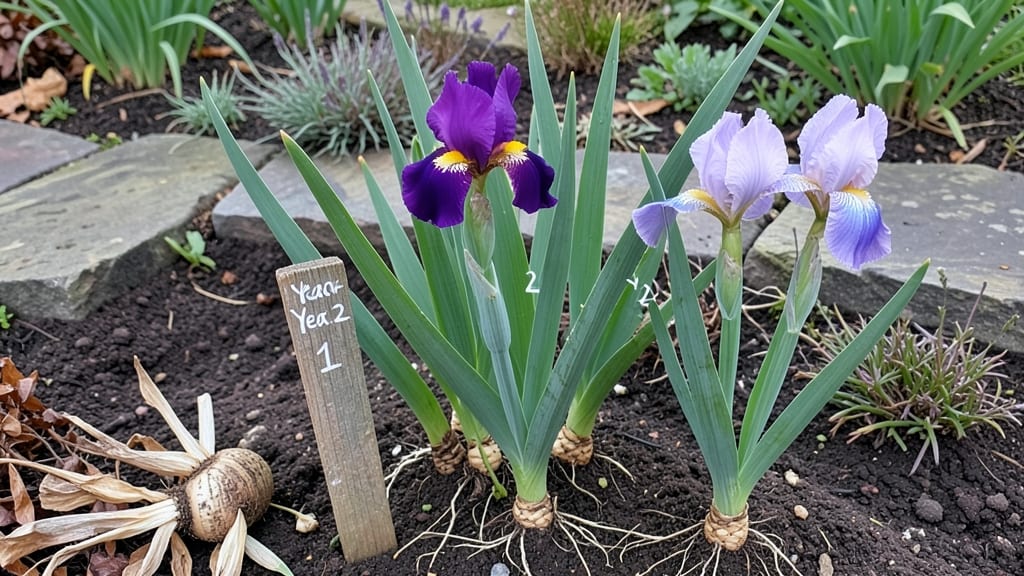
Not all iris varieties bloom every year—rhizomatous types like bearded and Siberian irises typically regrow annually, while bulbous irises often flower once before fading. Their reblooming depends on proper care, soil quality, and seasonal conditions.
Iris reblooming habits actually depend on their root type.
Rhizomatous irises (like the popular bearded varieties) store energy underground and can produce flowers year after year with proper care. 🌸 The key difference comes from their growth cycle—these types enter dormancy in summer but retain enough energy to rebloom the following spring.
Bulbous irises, on the other hand, rely on a single flowering cycle before their energy reserves are depleted, which is why they often disappear after blooming.
Climate plays a huge role too—warmer regions may see more consistent reblooming in perennial types, while colder zones might need extra protection to encourage annual flowering.
What's interesting is how soil conditions affect this cycle. Well-draining soil prevents root rot, which is crucial for rhizomatous types that need to store energy between blooms.
I've found that adding compost in early spring gives them the nutrient boost they need to produce strong stems and vibrant blooms the following season. The timing of fertilization matters too—too much nitrogen in late summer can actually prevent next year's flowers from forming.
💡 In This Article
- Why Some Iris Varieties Bloom Annually While Others Don’t
- How to Encourage Year-Round Iris Blooms in Your Garden
Why some iris varieties bloom annually while others don’t
The difference between annual and one-time iris blooms comes down to their root systems. Rhizomatous irises—like bearded and Siberian varieties—store energy in thick, horizontal roots called rhizomes.
These roots act like natural batteries, accumulating nutrients and starches over time to fuel multiple blooming cycles. 🌱 For example, a healthy bearded iris rhizome can weigh up to 2 ounces and store enough energy to produce 10-20 stems per season, while bulbous irises (like Dutch irises) rely on a single bulb that exhausts its energy after flowering.
Climate plays a crucial role in reblooming success. Rhizomatous irises need a distinct dormancy period—typically 6-8 weeks of 50-70°F temperatures—to trigger flower buds for the next season. In warmer climates, this dormancy may be shorter, while colder regions often require chilling periods (below 40°F) to break dormancy.
Bulbous irises, however, lack this adaptability—they flower once and then either die back or produce minimal foliage without new bulbs forming.
The science behind reblooming involves a process called "florigen" production—hormones that signal flowering. Rhizomatous irises can reset this cycle annually, but only if they receive proper care. For instance, Siberian irises often bloom twice in one season (spring and fall) because their rhizomes remain active longer.
In contrast, bulbous irises follow a strict monocarpic lifecycle—flowering once before dying, similar to how agave plants produce a single spectacular bloom before fading.
Another key factor is sunlight exposure. Rhizomatous irises require 6-8 hours of direct sun daily to build energy reserves, while bulbous types tolerate partial shade. I’ve noticed that bearded irises in full sun produce 20-30% more blooms than those in shaded areas, thanks to increased photosynthesis in their broad leaves.
This energy storage is what allows them to rebloom year after year.
Soil composition also determines reblooming potential. Rhizomatous irises thrive in well-draining, slightly alkaline soil (pH 6.0-7.0), while bulbous types prefer neutral to slightly acidic conditions (pH 5.5-6.5). Poor drainage causes rhizomes to rot, cutting off their energy supply and preventing future blooms.
For example, in my own garden, amending clay soil with sand and compost increased my Siberian iris reblooming rate from 50% to 90% over three years.
Finally, genetics play a role. Some hybrid varieties (like the Arilbred iris) combine rhizomatous and bulbous traits, leading to inconsistent reblooming. These hybrids may produce flowers for 2-3 years before declining, making them less reliable than true rhizomatous types.
Understanding these biological differences helps gardeners choose the right iris for their climate and care routine.