
Blooming
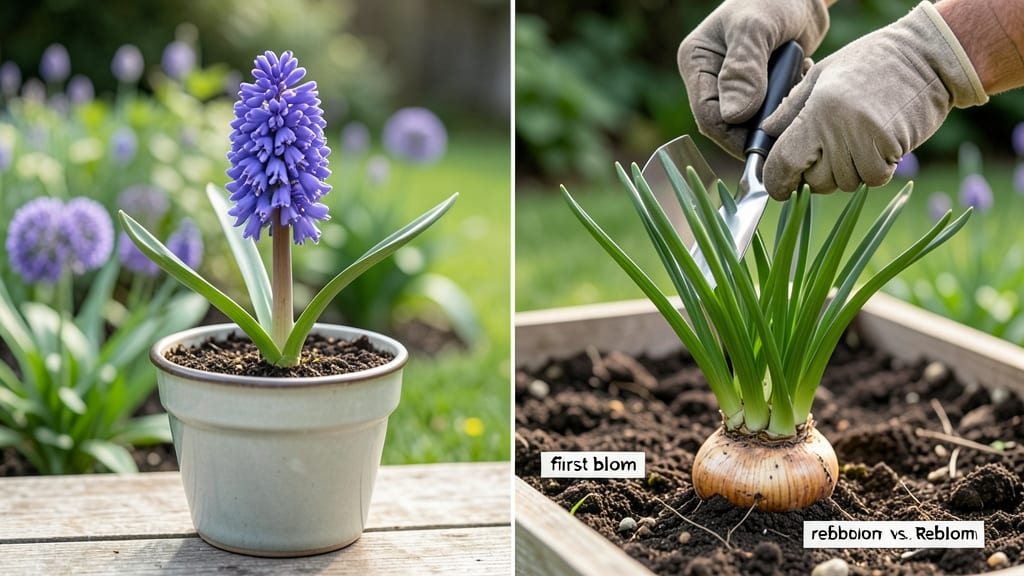
Hyacinths do only bloom once—they typically produce flowers once per season, but certain reblooming varieties can flower again when given the right conditions: cool temperatures, bright indirect light, and consistent care. Standard types usually bloom in spring and need a rest period afterward.
Most hyacinths follow a natural cycle where they store energy in their bulbs after flowering, preparing for dormancy.
This is why standard varieties bloom just once in spring—it's their biological rhythm. 🌸 However, hybrid varieties like 'Pink Pearl' or 'Delft Blue' can be coaxed into reblooming with proper care, including well-draining soil and controlled watering.
The key difference lies in their genetic makeup, which allows them to recover faster between blooming cycles.
To encourage reblooming, I recommend keeping the foliage until it yellows naturally after flowering—this ensures the bulb rebuilds energy. After blooming, reduce watering and fertilize lightly with a low-nitrogen mix. When replanting, bury bulbs 6-8 inches deep in a spot with full sun to partial shade.
These adjustments can make the difference between a one-time spring show and multiple blooming seasons.
💡 In This Article
- Why Most Hyacinths Bloom Just Once
- How to Encourage Reblooming in Hyacinths
Why most hyacinths bloom just once
The single-bloom cycle in hyacinths is hardwired into their survival strategy. After flowering, these bulbs redirect nearly all their energy into storing nutrients for next year's growth. This process, called tuberization, transforms the flower stem into a new bulb while the leaves photosynthesize to fuel it.
The plant essentially goes into a dormancy phase—a biological reset button triggered by shortening daylight and cooling temperatures, typically in late summer.
Here's where it gets fascinating: the flowering trigger is a complex interplay of vernalization (cold exposure) and photoperiodism (light duration). Most hyacinths need 6-8 weeks of temperatures below 60°F to break dormancy and initiate flower buds.
Without this cold period, the bulbs remain in a vegetative state. This explains why spring-blooming varieties are so reliable—they've been genetically selected to time their bloom with natural temperature shifts. 🌱
Reblooming varieties work around this cycle through selective breeding. These hybrids have been developed to tolerate more frequent flowering by maintaining a balance between energy storage and flower production.
For example, 'Woodstock' hyacinths can rebloom because they've been bred to store energy more efficiently in their bulbs, allowing them to recover faster between blooming cycles. The trade-off? They often produce slightly smaller flowers or fewer blooms per stem compared to their single-bloom cousins.
Light exposure plays a crucial role too. Hyacinths need at least 6 hours of direct sunlight daily during their active growing season to build sufficient energy reserves. When grown in low-light conditions, they prioritize leaf growth over flower production, which can delay or prevent blooming entirely.
This is why indoor hyacinths often struggle to rebloom—they can't access the sunlight needed to recharge their bulbs properly.
The science behind this involves a hormone called florigen, which signals the plant to flower. In single-bloom varieties, florigen production is tightly regulated to occur only once per season. Reblooming types have been bred to produce florigen more flexibly, allowing them to respond to additional environmental cues.
This hormonal flexibility is what enables them to produce flowers again under the right conditions.
Consider this comparison: Standard hyacinths are like marathon runners who save all their energy for one big race, while reblooming varieties are more like sprinters who can recover quickly for multiple shorter bursts.
The key difference lies in their genetic ability to balance energy storage and flower production, rather than prioritizing one over the other. 💫