
Blooming
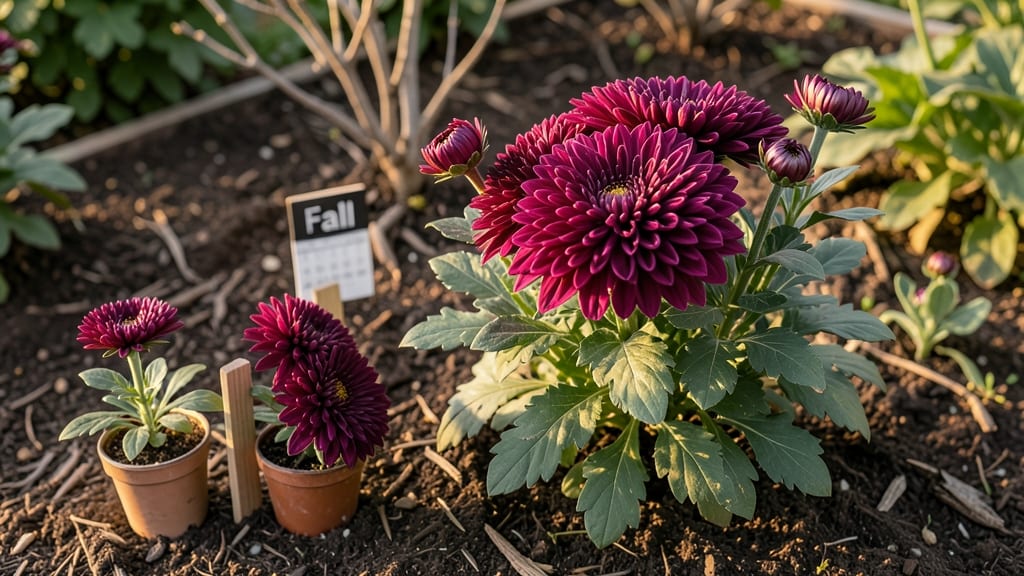
Chrysanthemums bloom every year only if you plant perennial varieties that thrive in USDA zones 5-9, though many gardeners treat them as annuals. Reblooming types need careful pruning, fertilization, and seasonal maintenance to keep producing flowers beyond their first season.
Whether your chrysanthemums return with vibrant blooms each year depends entirely on their type and care routine.
Perennial varieties are the only ones designed to rebloom annually, but even these need strategic pruning after their first flush of flowers to encourage new growth. Zone 5-9 climates provide the ideal temperature range, while colder regions often require overwintering protection. 🌸 The key difference between annuals and perennials lies in their root systems—perennials develop deep, hardy roots that survive winter, while annuals die back completely after flowering.
For gardeners eager to see their chrysanthemums bloom year after year, the secret lies in understanding their natural growth cycle. Most reblooming varieties follow a two-phase flowering pattern: an initial burst of blooms in early fall, followed by a second round if given proper care.
This requires monthly fertilization during the growing season and deadheading spent blooms to redirect energy into new flower production. Even in optimal conditions, some varieties naturally produce just one flush of flowers per season.
💡 In This Article
- Perennial vs Annual Chrysanthemum Blooming Cycles
- Step-by-Step Guide to Encouraging Reblooming Chrysanthemums
Perennial vs annual chrysanthemum blooming cycles
The fundamental difference between perennial and annual chrysanthemums lies in their root systems and growth habits. Perennial varieties develop a robust, woody base that survives winter dormancy, allowing them to regrow and bloom again the following year.
These plants typically thrive in USDA zones 5-9, where winter temperatures rarely drop below -15°F. In contrast, annual chrysanthemums complete their entire life cycle in a single season, producing one burst of flowers before dying back completely.
This makes them popular for seasonal displays but eliminates any chance of reblooming.
Botanically, perennial chrysanthemums (like 'Mammoth' or 'Bonanza') store energy in their roots during winter, which fuels new growth in spring. This process relies on a 6-8 week dormancy period at temperatures between 35-45°F to reset their growth cycle.
Annual varieties lack this storage mechanism, so they rely entirely on current season growth. The key visual difference? Perennial types often develop thicker stems and larger foliage over time, while annuals remain compact and uniform in appearance. 🌿
Climate plays a critical role in determining blooming patterns. In zones 5-7, perennial chrysanthemums may need winter protection (like mulch or row covers) to survive freezing temperatures. Those in zones 8-9 often bloom more prolifically due to milder winters and longer growing seasons.
Even within perennial varieties, some are bred specifically for reblooming (like 'Bright Golden Anne'), while others produce just one flush of flowers. The reblooming types require more intensive care to maintain their flowering potential year after year.
Light exposure creates another crucial distinction. Perennial chrysanthemums need 6-8 hours of direct sunlight daily to trigger flowering, while annuals can tolerate slightly more shade. The shorter daylight hours of fall (a phenomenon called photoperiodism) naturally stimulate blooming in chrysanthemums.
This is why you'll often see them flowering in late summer and fall—when daylight begins decreasing. For reblooming perennials, gardeners must carefully balance sunlight exposure with other care factors to encourage multiple flowering cycles.
One fascinating mechanism is how chrysanthemums respond to temperature fluctuations. Studies show that daytime temperatures above 75°F combined with cooler nights (55-60°F) trigger optimal flower bud formation. This explains why chrysanthemums often bloom most vigorously in early fall when these conditions naturally occur.
Annual varieties may produce flowers under these conditions, but their entire plant structure collapses after flowering, whereas perennials simply enter dormancy to prepare for next season's growth.
Consider this comparison: A perennial 'Dynasity' chrysanthemum might produce three distinct blooming cycles in a single season with proper care, while an annual 'Pink Princess' variety will flower just once before dying.
The perennial's ability to rebloom stems from its genetic programming to store and reuse energy—a trait that makes them ideal for gardeners seeking long-term color without annual replanting. 🌸