
Orchid Care
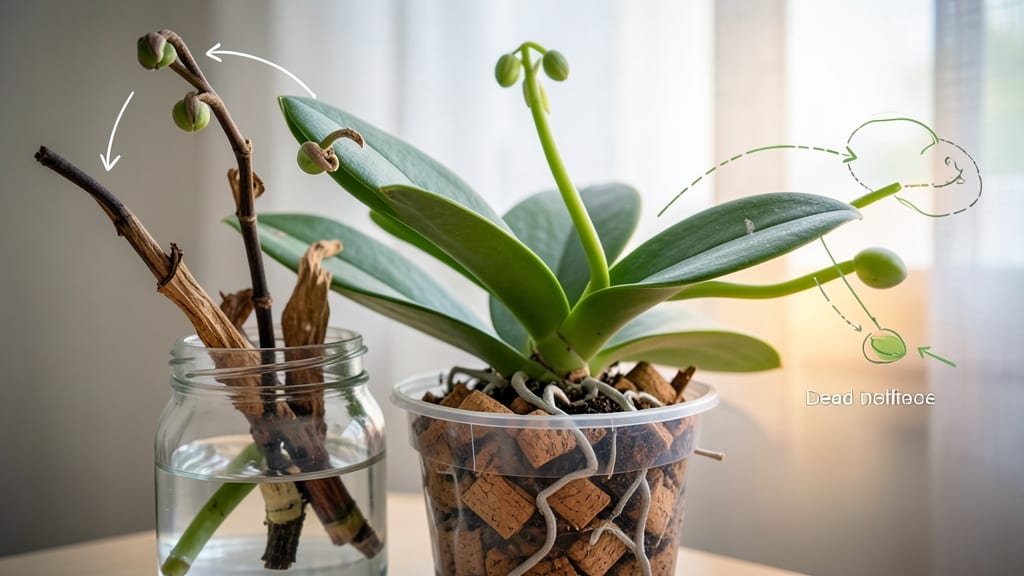
Orchids do not rebloom after they die back naturally, but their rhizomes often remain alive underground, allowing regrowth with proper care. Cutting dead stems and providing ideal conditions can revive dormant orchid roots and trigger new blooms.
When orchids die back naturally, their above-ground stems wither, but the underground rhizomes—thick, horizontal roots—can stay alive for months or even years. 🌱 These rhizomes act like energy banks, storing nutrients until conditions improve. The key to revival lies in understanding your orchid's dormancy cycle, which varies by species.
For example, Phalaenopsis orchids may need a slight temperature drop to break dormancy, while Cattleyas often respond better to reduced watering during their rest period.
To encourage reblooming, focus on three critical factors: proper repotting, adjusted care routines, and strategic pruning. Many growers mistakenly assume dead stems should be removed immediately, but leaving the dried stems attached can actually protect the rhizome during recovery.
Once new growth appears—typically within 4-8 weeks—you can safely trim the old stems just above a node, where buds may form.
💡 In This Article
- What Happens to Orchid Rhizomes After Dieback
- How to Revive Dormant Orchids for New Blooms
What happens to orchid rhizomes after dieback
Orchid rhizomes are the hidden superheroes of plant survival, acting like underground energy reserves that store starches and nutrients during dormancy. When your orchid's above-ground stems wither after flowering, the rhizome—typically 1-3 inches thick—remains alive, often for months, waiting for the right conditions to restart growth.
This dormant state is triggered by seasonal changes, particularly cooler temperatures (55-65°F) and reduced daylight, which signal the plant to conserve energy rather than produce new blooms immediately.
The biology behind this process involves specialized cells in the rhizome that convert sugars into insoluble starch granules, similar to how potatoes store energy. 🌱 For epiphytic orchids (like Phalaenopsis), these rhizomes cling to trees or support structures, while terrestrial varieties (such as Paphiopedilums) grow in soil.
Epiphytes often have thicker rhizomes to handle moisture fluctuations, while terrestrials may develop more fibrous root systems. The key difference? Epiphytes prioritize water storage, whereas terrestrials focus on nutrient absorption from the soil.
What most growers don't realize is that rhizomes can remain viable even after 6-12 months of dormancy, provided they're not exposed to extreme conditions. For example, a Cattleya orchid's rhizome might shrink during winter but swell again when temperatures rise in spring—a visual cue that it's still alive.
The challenge is creating the right environment to break this dormancy. Without proper care, rhizomes can dry out or rot, especially if kept too wet during their rest period.
Seasonal cues are critical: many orchids need a 4-6 week "rest" period with slightly cooler nights and reduced watering to trigger reblooming. This mimics their natural habitat cycles, where rainy seasons alternate with drier periods.
For instance, Dendrobium orchids often require a dry rest period of 6-8 weeks to produce new spikes, while Oncidiums may need a temperature drop of 10-15°F at night to stimulate flowering. Ignoring these signals can leave your orchid in a state of limbo—neither dead nor actively growing.
Here's a visual clue to check rhizome health: healthy rhizomes should feel firm and slightly springy, with a pale green or tan color. If they're mushy or blackened, the rhizome has rotted. Conversely, if they're shriveled but still intact, they're likely dormant.
The transition from dormancy to growth often begins with a tiny 1/8-inch bud emerging from a node on the rhizome—a sign that your orchid is preparing to rebloom.