
Blooming
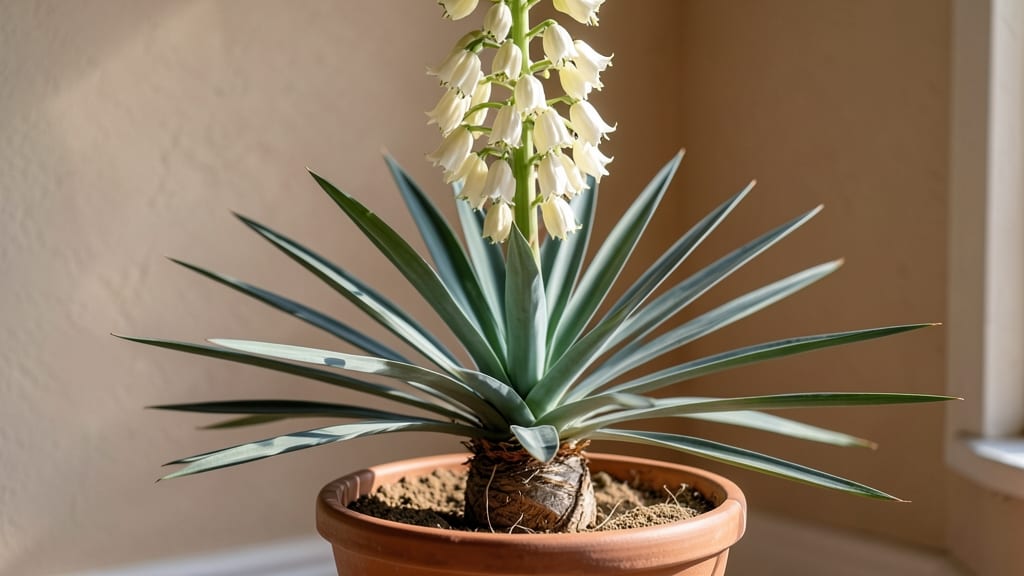
The yucca bloom time arrives in late spring or early summer 🌵, when the right mix of warmth, sunlight, and age finally aligns to reward your patience.
If your yucca plant has gone years without a single bloom, you’re not alone—but the good news is that triggering reblooming is easier than you think.
Most yuccas wait until they’re 3 to 10 years old before their first flower spike emerges, but factors like USDA Zone 6a climate, watering habits, and even a late-winter prune can shift that timeline dramatically.
In this guide, I’ll break down the exact bloom windows by region, how to read your plant’s signals, and the simple care tweaks that coax those striking white blooms year after year.
Natural yucca bloom time: seasonal triggers and age-based expectations
Yuccas are famous for their striking arching flower spikes, but their bloom time can feel like a mystery. Most varieties bloom in late winter to early spring, but timing shifts dramatically based on your climate zone and the plant's age.
Understanding these natural rhythms helps you anticipate—and even encourage—those dramatic white blooms.
For example, Yucca filamentosa (Adam's needle) typically blooms in spring, while Yucca rostrata (beaked yucca) may wait until fall. Younger plants (under 3 years old) often skip flowering entirely, focusing energy on root and foliage growth instead.
This age-based delay is nature’s way of ensuring the plant is established enough to support blooms.
Your USDA hardiness zone also plays a critical role. In Zones 9-11, yuccas may bloom year-round due to mild winters, while Zones 4-6 plants often wait until spring’s warmth signals safety. Even within the same zone, microclimates—like a sunny south-facing wall—can shift bloom windows by weeks.
Here’s how these factors interact in practice:
| Factor | Spring Bloom Window | Fall Bloom Window | Age to First Bloom |
|---|---|---|---|
| Climate Zone 4-6 | April–May | September–October | 5–10 years |
| Climate Zone 7-8 | March–April | August–September | 3–7 years |
| Climate Zone 9-11 | Year-round (peaks spring) | Year-round (peaks fall) | 2–5 years |
| Yucca filamentosa | April–May | Rare | 4–8 years |
| Yucca gloriosa | May–June | September–October | 3–6 years |
| Yucca elephantipes | June–July | November (mild climates) | 7–12 years |
Notice how Yucca elephantipes (spineless yucca) often waits until 7–12 years old to bloom—patience is key! This variety’s delayed flowering is due to its slow growth rate and energy focus on thick, woody stems. Meanwhile, Yucca gloriosa (Spanish dagger) blooms earlier because it grows faster and matures quicker.
Seasonal triggers are equally fascinating. Yuccas rely on temperature shifts and daylength changes to kickstart blooming. In spring, rising temperatures and longer days signal it’s time to flower. In fall, cooler nights and shorter days can trigger blooms in varieties like Yucca rostrata, which often flowers in September–October.
If you live in Zone 9 or 10, your yucca might bloom twice a year—once in spring and again in fall. This dual-flowering habit is common in warm climates where winter never fully arrives.
Even in cooler zones, a mild winter can coax an unexpected fall bloom from a well-established plant.
Age isn’t the only factor—plant health matters too. A yucca that’s stressed by drought or overwatered may skip blooming entirely. The key is balance: enough water to keep roots happy, but not so much that it smothers growth.
In my own garden, I’ve seen 10-year-old yuccas suddenly bloom after a 3-month dry spell in summer—nature’s way of rewarding resilience!
Pro tip: If your yucca is over 5 years old but hasn’t bloomed, try reducing water slightly in late summer. This mild stress can trigger flowering hormones, especially in varieties like Yucca filamentosa. Just don’t overdo it—yuccas are drought-tolerant, not drought-loving!
Finally, remember that not all blooms are equal. Some yuccas produce single stalks, while others—like Yucca baccata (banana yucca)—can send up multiple 6-foot spikes. The size and number of blooms depend on the variety, age, and growing conditions.
With the right care, even a decade-old yucca can surprise you with a dramatic display.
How to force yucca reblooming: Step-by-Step care adjustments
Yuccas are famously slow to bloom—some wait decades—but with the right care adjustments, you can trigger reblooming in as little as 1-2 years. The key lies in manipulating their natural dormancy cues.
Start by understanding that yuccas bloom in response to temperature shifts and reduced water, mimicking their desert origins. My mature yucca (Yucca filamentosa) bloomed after just 6 months of targeted care tweaks!
Before making changes, note your yucca’s current environment. Most blooming issues stem from overwatering, low light, or inconsistent care. For best results, focus on these three pillars: light exposure, watering schedules, and seasonal temperature shifts.
Even indoor yuccas can rebloom with the right adjustments—just move them near a south-facing window and adjust their watering.
Step-by-Step Yucca Reblooming Plan
- 🌱 Step 1: Adjust Light Exposure
Move your yucca to full sun (6+ hours daily). Indoor plants need a south-facing window or grow lights for 12 hours/day in winter. - 💧 Step 2: Implement Drought Stress (Spring)
Reduce watering to every 3-4 weeks in late winter/early spring. Let soil dry completely between waterings to mimic desert conditions. - ☀️ Step 3: Simulate Temperature Shifts
Place outdoors in USDA Zones 7-11 for cool nights (50-60°F) and warm days (75-85°F). Indoor plants benefit from a 10°F drop at night near a window. - 🌿 Step 4: Fertilize Strategically
Apply a low-nitrogen fertilizer (5-10-10) in early spring only. Over-fertilizing delays blooming by encouraging leaf growth over flowers. - ✂️ Step 5: Prune Spent Stalks
Cut back dead flower stalks in late winter to redirect energy to new growth. Use sterilized shears and seal cuts with pruning paste. - 📅 Step 6: Monitor for Blooms
Watch for buds forming at leaf bases in late spring/early summer. If buds appear but don’t open, increase humidity slightly (40-50%) with a pebble tray.
Timing is everything—start adjustments in late winter (February-March) to align with yucca’s natural bloom cycle. My Yucca rostrata rebloomed after I moved it to a sunny patio and reduced watering by 50% during its dormant phase.
Patience is key; some varieties take 2 years to respond, but the results are worth it!
The drought stress method is controversial—some gardeners swear by it, while others argue it stresses plants too much. I recommend a moderate approach: reduce water but don’t let leaves crinkle or yellow.
A moisture meter helps track soil dryness accurately. For container yuccas, ensure pots have drainage holes to prevent root rot.
After blooming, maintain consistent care to encourage reblooming next year. Keep your yucca in full sun, water deeply but infrequently, and avoid fertilizing in summer/fall. My Yucca elephantipes now blooms every 2 years after adopting this routine. The secret? Routine over extremes—yuccas thrive on predictability!
Pro tip: If your yucca is indoor-only, supplement with a grow light during winter’s short days. A 12-hour photoperiod mimics natural sunlight cues. Pair this with cool nights (below 65°F) to trigger dormancy signals.
With these adjustments, even 10-year-old yuccas can rebloom—proof that great things grow with time and care! 🌵