
Pruning
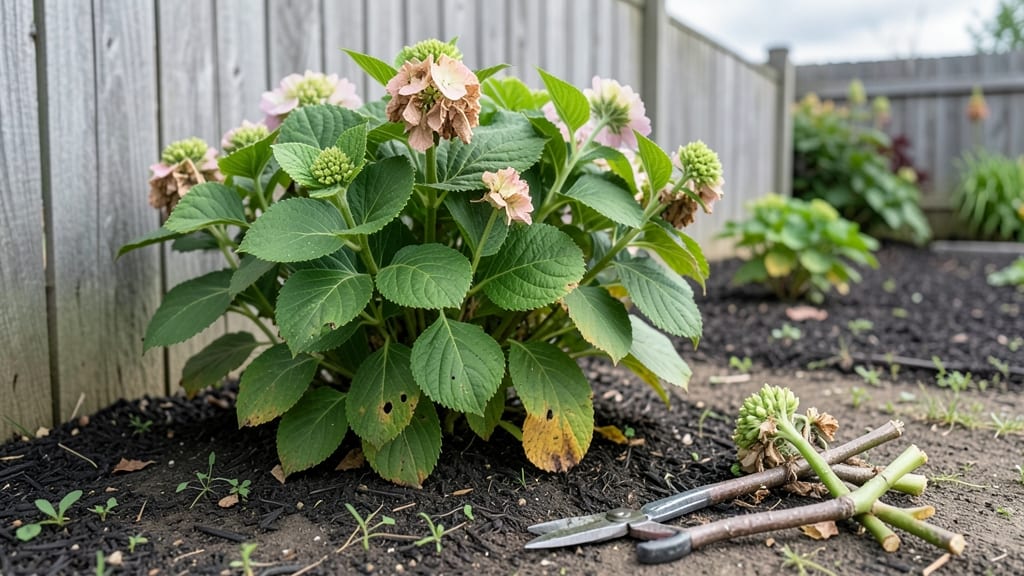
Trimming hydrangea blooms depends on the variety: prune mophead and lacecap types in late winter or early spring before new growth appears, while bigleaf hydrangeas bloom on old wood and should be pruned immediately after flowering. Avoid cutting back panicle or smooth hydrangeas until late winter to preserve next year’s blooms.
Timing your cuts matters because hydrangeas produce flowers on different parts of the plant each year. For instance, lacecap varieties rely on fresh growth for their delicate blooms, so pruning too late risks removing next season’s buds entirely.
Meanwhile, bigleaf types—like the popular Endless Summer series—can rebloom if you trim right after their summer flowers fade, but only if you leave some old stems intact. I’ve seen gardeners accidentally kill their bigleaf hydrangeas by pruning at the wrong time, so always check your plant’s label first! ✨
Seasonal cues also play a role: late winter’s dormant phase is ideal for heavy pruning of mopheads and panicles, while early spring’s emerging buds signal it’s time to shape lacecaps.
The key is matching your cuts to the plant’s natural cycle—rushing or delaying can leave your hydrangeas looking sparse or even flowerless next year. 🌿
💡 In This Article
- Hydrangea Pruning Rules by Flower Type
- Step-by-Step Hydrangea Pruning Guide
Hydrangea pruning rules by flower type
Hydrangeas bloom on either old wood (last year's growth) or new wood (current season's growth), which completely changes when—and how—you should prune.
The key difference lies in their flower buds: mophead and lacecap varieties develop buds on new growth in late winter, while bigleaf types form buds on old wood during the previous summer.
This biological distinction means pruning at the wrong time can leave your plant without flowers for an entire season.
For mophead and lacecap hydrangeas, buds form at the tips of new shoots in February-March—right when you see the first green shoots pushing through the soil. Cutting back too late risks removing these critical buds before they've had a chance to develop.
Bigleaf varieties, however, form their flower buds in summer on last year's stems, so pruning immediately after their summer blooms fade ensures you're not accidentally removing next year's flowers.
Panicle and smooth hydrangeas (like 'Limelight' or 'Little Lime') are unique because they bloom on new wood but require a slightly different approach. Their flower buds form in late summer on current season's growth, so heavy pruning should wait until late winter when the plant is fully dormant.
This timing gives the plant's energy reserves time to replenish before the next growth cycle begins.
What most gardeners don't realize is how temperature affects bud formation. Buds on new wood (like mopheads) need consistent 40-50°F temperatures to develop properly, while old wood buds (bigleaf varieties) require summer heat to mature. Pruning too early when temperatures fluctuate can shock the plant and prevent bud formation entirely.
Consider this visual comparison: mophead hydrangeas look like pompoms with dense flower clusters, while lacecaps have flat, lacy centers. Both need late-winter pruning because their flowers emerge from current season's growth.
Bigleaf varieties, however, produce their signature ball-shaped blooms on stems that grew the previous year—so you must wait until after they've finished flowering to prune.
Seasonal growth patterns explain why some hydrangeas rebloom while others don't. Bigleaf varieties like 'Endless Summer' can produce two flowerings per year because they develop buds on both old and new wood, but only if you prune immediately after their first summer bloom.
This creates a two-phase flowering cycle that most other varieties can't match.
The science behind this involves plant hormones called auxins, which regulate growth and bud formation. When you prune at the wrong time, you disrupt these hormonal signals, potentially stunting flower production for the entire season. That's why timing matters more than technique when it comes to hydrangea pruning. 💫