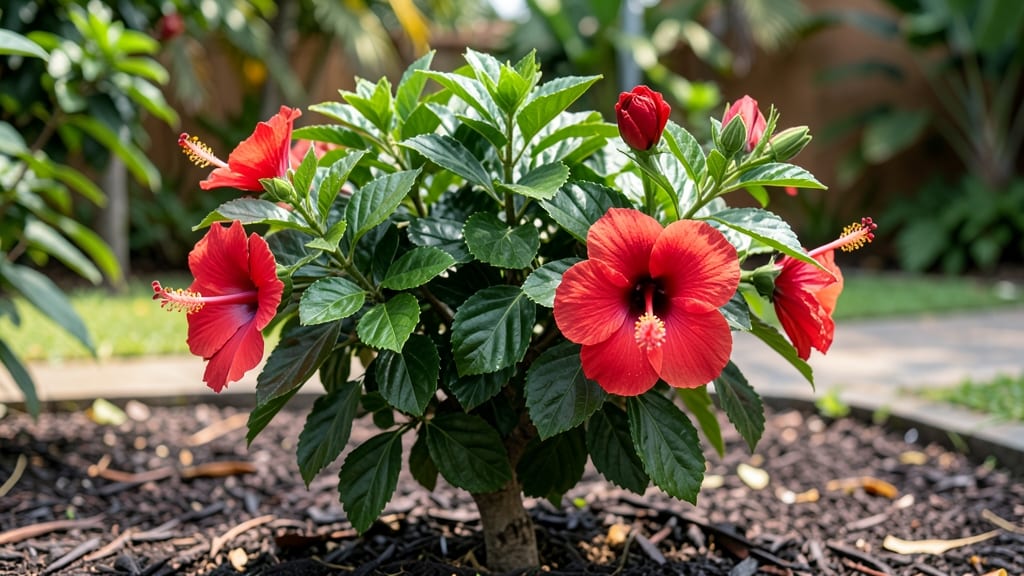
Hibiscus bloom in Florida from late spring through early fall 🌸, but the exact timing depends on your variety, location, and how you care for them.
If you’re dreaming of vibrant red blooms or delicate tropical flowers, timing is everything—especially in Florida’s unpredictable climate. Coastal hibiscus often start earlier, while inland varieties may wait until June, and a late frost (rare but possible in North Florida) can delay things further.
Most tropical hibiscus varieties, like the classic Hibiscus rosa-sinensis, burst into color by May and keep going until October, with peak performance in summer. Hardy types, such as Hibiscus moscheutos, may bloom slightly later but reward you with dramatic flowers that last longer.
In this guide, I’ll break down the month-by-month blooming schedule by variety, share climate hacks to extend your hibiscus season, and reveal the one pruning trick that keeps them flowering well into fall—no matter where you live in the Sunshine State.
Florida hibiscus blooming seasons: month-by-month calendar for tropical and hardy varieties
Florida’s warm climate creates a paradise for hibiscus, but not all varieties bloom at the same time. Tropical hibiscus (Hibiscus rosa-sinensis) and hardy hibiscus (Hibiscus moscheutos) have distinct bloom cycles.
Understanding these patterns helps you choose the right plants for year-round color or seasonal highlights. For example, tropical hibiscus often blooms continuously with peaks, while hardy types thrive in cooler months.
Microclimates play a huge role—South Florida’s heat (Zone 10-11) pushes blooms earlier, while North Florida’s milder winters (Zone 9a) extend fall displays. Coastal areas with humidity and salt spray may see slightly delayed blooms compared to inland gardens.
Even a 5°F temperature drop can trigger hardy hibiscus to burst into color, while tropical types may slow down.
Below is your month-by-month guide to hibiscus blooming in Florida, broken down by variety and region. Use this to plan pruning, fertilizing, and deadheading for maximum impact. For instance, spring-pruning tropical hibiscus in March ensures summer blooms, while hardy types benefit from fall pruning to prepare for winter.
| Month |
Tropical Hibiscus (H. rosa-sinensis) |
Hardy Hibiscus (H. moscheutos) |
South Florida Notes |
North Florida Notes |
| January |
Moderate blooms (cooler temps slow growth) |
Peak blooms (cold snaps trigger flowers) |
Year-round blooms; minimal slowdown |
Hardy types shine; tropical types sparse |
| February |
Increasing blooms (warming soil) |
Strong blooms (ideal 60-70°F temps) |
Prune lightly to encourage new growth |
Fertilize hardy types for spring surge |
| March |
Peak blooms (spring flush) |
Blooms taper (preparing for summer dormancy) |
Deadhead spent blooms for continuous color |
Prune tropical types for summer blooms |
| April |
Heavy blooms (best month for color) |
Minimal blooms (focus on foliage) |
Watch for aphids; spray neem oil if needed |
Mulch to retain moisture for tropical types |
| May |
Continuous blooms (summer heat tolerance) |
New growth (preparing for fall blooms) |
Water deeply in afternoon heat |
Fertilize tropical types for heat resilience |
| June |
Peak summer blooms (daily flowers) |
Dormant (focus on soil health) |
Prune lightly to improve airflow |
Test soil pH (aim for 6.0-6.5) |
| July |
Strong blooms (heat-loving varieties) |
Dormant (minimal activity) |
Mulch to prevent soil erosion |
Avoid fertilizing hardy types |
| August |
Blooms may slow (humidity stress) |
New shoots appear (fall prep) |
Watch for fungal issues; reduce watering |
Prune dead foliage from hardy types |
| September |
Reblooming after summer lull |
Peak fall blooms (cooler nights trigger) |
Fertilize tropical types for fall color |
Hardy types burst into color |
| October |
Heavy blooms (ideal fall temps) |
Strong blooms (last hurrah before winter) |
Deadhead to extend blooming |
Prune hardy types for winter shape |
| November |
How to extend hibiscus blooming in Florida: pruning, fertilizing, and climate hacks
Florida’s hibiscus thrives year-round, but peak blooming depends on timing, care, and climate adjustments. Unlike northern states, Florida’s USDA Zones 9-11 mean hibiscus can bloom spring through fall, but heat stress or improper pruning can shorten their show.
I’ve learned that spring pruning (after last frost) and fall fertilizing are game-changers for extending blooms.
Hibiscus respond dramatically to soil pH (6.0-7.0) and consistent moisture. In my Central Florida garden, I’ve seen tropical hibiscus like Hibiscus rosa-sinensis bloom nonstop from May to October when given the right care.
The key? Balancing pruning, fertilizing, and climate protection—especially during Florida’s brutal summer heat or rare cold snaps.
ORGANIC FERTILIZERS
SYNTHETIC FERTILIZERS
Pros:
- Slow-release nutrients
- Improves soil health
- Less risk of over-fertilizing
- Safe for pollinators
Pros:
- Fast results
- Precise nutrient ratios
- Longer shelf life
- Budget-friendly
Cons:
- Slower blooming response
- More frequent applications
- Higher cost per application
Cons:
- Can burn roots if overused
- No soil health benefits
- Harmful to beneficial microbes
Best Choice: Combine both—use organic for soil health and synthetic for quick bloom boosts.
For spring pruning, cut back 1/3 of the plant in late February or March to encourage new growth and summer blooms. I prune my hardy hibiscus (Hibiscus moscheutos) in early fall instead—this delays dormancy and extends blooms into late October.
Always use sterilized shears to prevent disease.
Florida’s humidity and heat can stress hibiscus, so I mulch heavily (3-4 inches of pine bark) to retain moisture and shade roots during 100°F+ days.
In North Florida, where temps dip below 30°F, I wrap young plants in burlap to protect them. Cold snaps can kill tropical hibiscus, but hardy varieties bounce back with minimal damage.
Fertilizing is where most gardeners go wrong. I use a balanced 10-10-10 fertilizer every 6 weeks from March to October, but I’ve found that organic compost tea in spring gives my hibiscus a longer bloom season than synthetic alone. Always water deeply after fertilizing to prevent root burn.
To maximize blooms, deadhead spent flowers regularly—this redirects energy to new buds. I also rotate my plants every 2-3 years to refresh the soil. With these Florida-specific hacks, my hibiscus now bloom 3 months longer than they did when I first planted them. 🌸
★★★★★4.8(13 reviews)
|