
Pruning
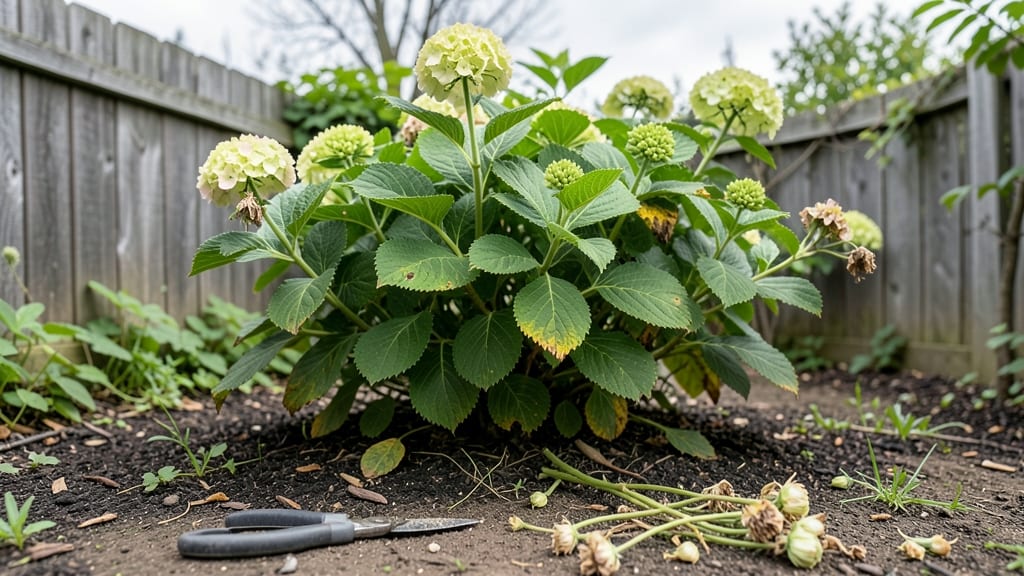
Deadheading hydrangea blooms encourages more flowers but depends on the variety: trim spent blooms on mophead and lacecap types for continuous blooming, while leaving them on bigleaf hydrangeas preserves next year’s flowers and extends current-season color. Always use clean pruners and avoid over-trimming stems.
Timing and technique make all the difference when it comes to managing these plants. 🌸 For mophead and lacecap varieties, removing faded blooms redirects energy to new stems, often resulting in a second flush of flowers by late summer.
However, bigleaf hydrangeas store next year’s buds on old wood, so pruning too early can sacrifice next season’s color. I always recommend using sharp, sterilized shears and cutting just above a leaf node to encourage healthy regrowth.
Another key factor is recognizing the difference between old and new wood growth. If your hydrangea is already showing signs of stress—like yellowing leaves or sparse blooms—deadheading might not be the solution.
Instead, focus on improving soil health and watering consistency first. The goal is to balance aesthetics with the plant’s natural growth cycle, not force it into an unnatural bloom pattern.
💡 In This Article
- How Deadheading Affects Different Hydrangea Types
- Step-by-Step Deadheading Guide for Hydrangeas
How deadheading affects different hydrangea types
The key difference between hydrangea varieties lies in their flower bud formation cycles. Mophead and lacecap types produce buds on new wood—meaning they grow from current season's stems.
When you remove spent blooms, you're essentially signaling the plant to redirect energy toward fresh stem growth, often triggering a second bloom cycle by late summer. This is why these varieties respond so well to deadheading: they can regenerate flowers from the same stems that bore the first batch.
Bigleaf hydrangeas, however, operate on a different schedule. Their buds form on old wood—last year's stems—and remain dormant through winter. Pruning these stems too early removes next year's potential blooms entirely. The plant's energy is already allocated to these buds, so deadheading won't stimulate new growth.
In fact, leaving the faded blooms on bigleaf varieties actually preserves their vibrant color longer, as the dried flowers act as natural protection for the developing buds below.
Timing is everything when dealing with reblooming varieties like mophead ('Endless Summer') or lacecap ('Limelight'). The critical window is late summer to early fall, after the first flush of flowers has faded but before hard frosts.
This allows enough time for new stems to mature and set buds for next season. Cutting too early (before July) may remove potential new wood growth, while waiting too long (after September) risks exposing tender stems to winter damage.
Here's what's happening biologically: When you deadhead mophead hydrangeas, you're removing the terminal bud—the plant's growth director. This triggers lateral buds along the stem to activate, producing new shoots that can develop into flowers.
The plant perceives the removal as a stress signal and responds by redirecting stored nutrients and hormones to these secondary growth points. In contrast, bigleaf hydrangeas have already allocated their resources to the old wood buds by early summer, making deadheading counterproductive.
The visual difference is striking: After deadheading mophead varieties, you'll often see fresh green shoots emerging from the trimmed stems within 2-3 weeks. These new stems will produce smaller but abundant flowers by late summer.
Bigleaf varieties, however, maintain their bold foliage and dried blooms throughout fall, creating a completely different aesthetic that many gardeners appreciate for its seasonal interest.
What most gardeners don't realize is that even within reblooming varieties, there's a bud formation hierarchy. The first flush of flowers comes from buds formed on the previous year's growth, while the second flush emerges from current season's stems.
Deadheading too aggressively can remove these critical second-flush buds before they form. Always leave at least 4-6 inches of stem below your cut to preserve potential growth points.
For maximum impact, pair your deadheading with a balanced fertilizer (10-10-10 ratio) applied immediately after pruning. This gives the plant the nutrients it needs to support new growth.
The science shows that proper deadheading can increase flower production by 30-50% in reblooming varieties when done correctly, while improper timing can reduce blooms by up to 70% in bigleaf types.