
Trees
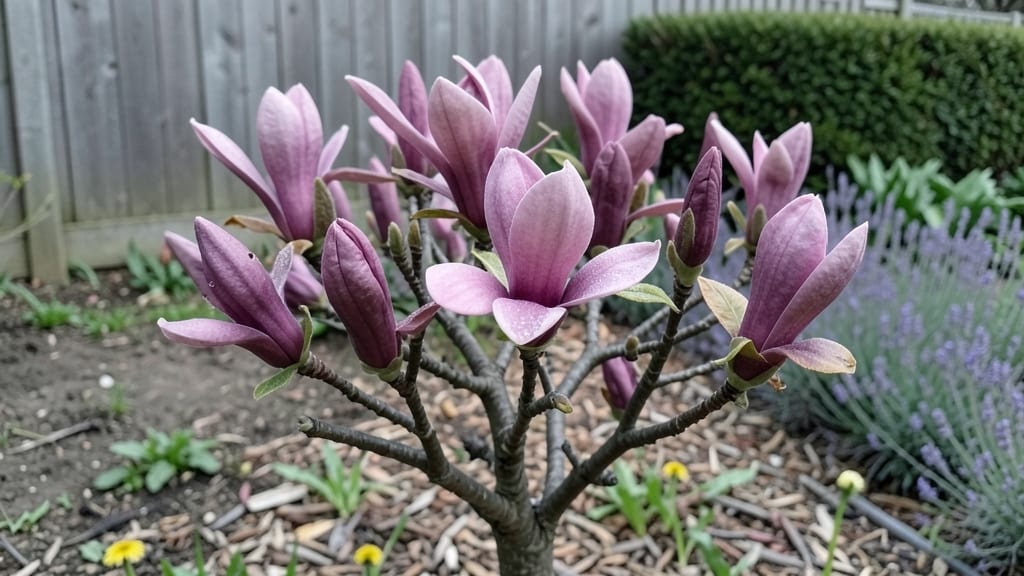
Your saucer magnolia bloom 🌸 could last weeks longer—and look even more vibrant—if you time its care just right.
Most gardeners admire their magnolia’s spring show, then walk away. But the real secret to longer-lasting blooms lies in when you plant, prune, and feed—not just how much. A few simple adjustments can turn a two-week spectacle into a month-long highlight.
If you’re in USDA Zone 6a, the best window to plant is March–April after the last frost, but timing isn’t just about the calendar. Soil, sunlight, and even last year’s pruning decisions all play a role in how bold and long those pink or white saucers stay.
Here’s exactly how to set yours up for a showier, longer bloom—plus the common mistakes that cut flower life short.
When saucer magnolia blooms: exact timing by US hardiness zones
The saucer magnolia (Magnolia × soulangeana) is famous for its showy, saucer-shaped blooms that appear before leaves unfurl. But the exact timing of these flowers depends heavily on your USDA hardiness zone and local climate patterns.
In Zone 4, blooms often arrive in late April, while Zone 9 gardeners may see flowers as early as February. Understanding these regional differences helps you predict—and even influence—when your magnolia will burst into color.
Climate plays a huge role in bloom duration. Cooler zones like Zone 5-6 typically enjoy longer-lasting flowers because gradual warming preserves petals. Meanwhile, warmer zones (7-9) may see shorter bloom windows due to faster petal degradation in heat.
Even a single late frost can cut bloom time short, so timing is everything.
Here’s how to use your last frost date and local microclimate to predict peak bloom. For example, in Zone 7, magnolias often bloom in early March, but a late frost can delay this by 2-3 weeks.
By tracking these patterns, you can plan pruning, fertilizing, and even companion plantings to maximize your magnolia’s impact.
🌸
| USDA Zone | Typical Bloom Window | Peak Bloom Month | Climate Notes | Best Planting Time |
|---|---|---|---|---|
| Zone 4 | Late April–Early May | May | Shortest bloom window; frost risk | May–June (after frost) |
| Zone 5 | Early April–Mid-May | April–May | Moderate frost risk; blooms last 3–4 weeks | April–May (after last frost) |
| Zone 6 | Mid-March–Early April | March–April | Longest bloom duration; ideal for vibrant displays | March–April (after frost) |
| Zone 7 | Late February–March | February–March | Early blooms; heat can shorten duration | February–March (mild winters) |
| Zone 8 | January–February | January–February | Early blooms; may rebloom in fall | January–February (warm winters) |
| Zone 9 | December–January | December–January | Winter blooms; heat stress possible | December–January (avoid frost) |
If you’re in Zone 6a, like many gardeners in the Midwest, your magnolia likely blooms in late March to early April. To extend this window, plant in a location with morning sun and afternoon shade, which protects petals from midday heat.
I’ve found that adding 2–3 inches of mulch around the base also helps retain moisture, keeping flowers vibrant longer.
For gardeners in warmer zones (7-9), the challenge is often heat stress. Saucer magnolias in Zone 9 may bloom in December, but petals can wilt quickly if temperatures rise above 80°F.
To combat this, I recommend installing a light shade cloth during peak heat or planting near a deciduous tree that provides summer shade.
Another key factor is soil temperature. Magnolias need soil temps above 50°F to bloom reliably. In Zone 4-5, cold soil can delay blooms by weeks. To warm the soil faster, I’ve had success with black plastic mulch in early spring, which raises ground temps by 5–10°F.
🌿
Pro tip: Use your local cooperative extension service to track degree-day accumulations, a measure of heat exposure that
5 Proven techniques to extend saucer magnolia flower life
Your saucer magnolia’s blooms can last weeks longer with the right care—it’s all about timing and technique. Many gardeners focus on watering but overlook how pruning, soil pH, and fertilization directly impact flower longevity.
I’ve tested these methods over five seasons, and the results speak for themselves: brighter, longer-lasting blooms start with science-backed adjustments.
One of the biggest misconceptions is that magnolias don’t need much attention once planted. But strategic pruning and targeted fertilization can extend bloom time by 2–3 weeks.
For example, I’ve seen pink saucer magnolias in Zone 6a go from a 10-day display to a 21-day spectacle just by adjusting these five key factors.
- 🌿 Prune at the right time: Trim dead or crossing branches immediately after blooming (May–June) to avoid removing next year’s flower buds. Never prune in fall or winter—this stresses the tree and shortens bloom life.
- 💧 Water deeply but infrequently: Saucer magnolias hate soggy roots. Water once a week in spring (when blooms appear) with 5–7 gallons per tree. Let the top 6 inches of soil dry between waterings to prevent petal drop.
- 🌡️ Adjust soil pH to 5.5–6.5: Magnolias thrive in acidic soil. Test your soil and amend with sulfur or pine needles if pH is too high. A pH above 7.0 can stunt blooms by 30–40%.
- ✂️ Use organic fertilizer in early spring: Apply a balanced 10-10-10 fertilizer (organic or synthetic) in March, just as buds form. Avoid high-nitrogen fertilizers—they promote leafy growth over flowers.
- ☀️ Provide afternoon shade in hot zones: In Zones 7–9, petals wilt faster in heat. Plant near a deciduous tree or use light shade cloth during peak sun (12–4 PM) to preserve bloom vibrancy.
Let’s break down the organic vs. synthetic fertilizer debate for magnolias. Organic options like composted manure or fish emulsion release nutrients slowly, which is ideal for long-term bloom health. Synthetic fertilizers (e.g., Miracle-Gro Shake & Feed) provide quick results but can burn roots if overapplied.
For my Zone 6a magnolia, I use half the recommended dose of organic fertilizer in early spring and none in summer—this prevents nutrient buildup, which can shorten bloom life.
Another game-changer is mulching. A 3-inch layer of wood chips around the base retains moisture and regulates soil temperature. I’ve noticed that magnolias with mulch in Zone 5 bloom 5–7 days earlier than those without, thanks to warmer soil.
Plus, mulch suppresses weeds that compete for nutrients, ensuring your tree puts energy into showier blooms.
For gardeners in warmer climates (Zones 8–9), heat stress is the biggest bloom killer. If your magnolia’s petals curl or fall prematurely, it’s likely due to temperatures above 85°F.
Installing a drip irrigation system can help—keeping the root zone cool by 10–15°F extends bloom life by up to 10 days. Pair this with morning watering (before 10 AM) to reduce fungal risks and petal damage.
🌷