
Pruning
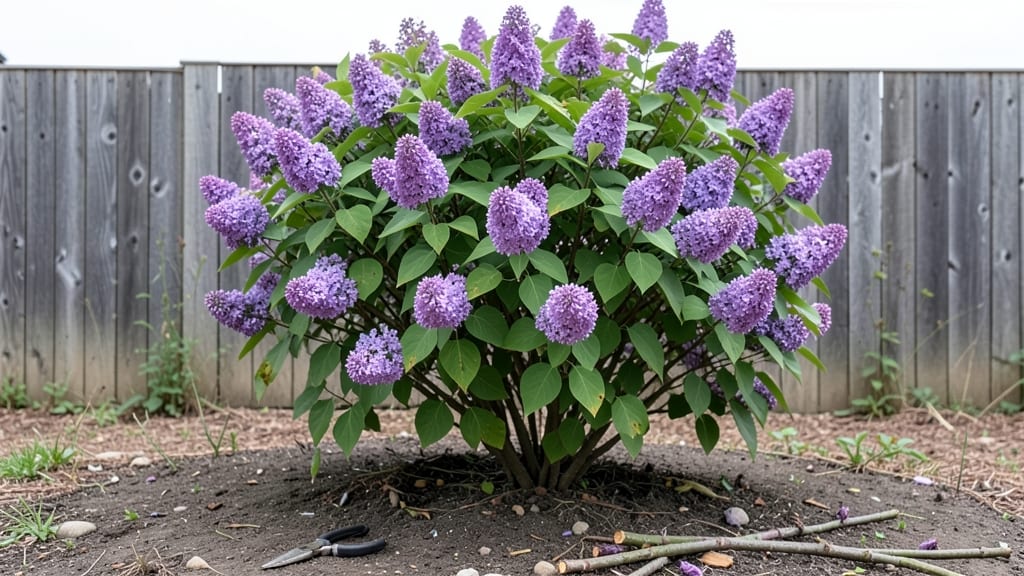
Pruning lilacs after bloom involves cutting back faded flower clusters to just above the first set of healthy leaves, typically in late spring or early summer, to encourage stronger growth and future blooms. Avoid heavy pruning, as lilacs bloom on old wood.
Timing matters more than you might think—lilacs bloom on last year’s growth, so cutting too aggressively can rob them of next season’s flowers. 🌿 I’ve learned the hard way that late spring or early summer is ideal, right after blooms fade but before new buds form.
Use sharp pruners to make clean cuts at a 45-degree angle just above a leaf node to prevent disease and encourage fresh, vigorous shoots.
Watch for overcrowded branches or leggy growth as red flags—they’re your lilac’s way of signaling it’s time for a trim. A light prune now can double your blooms next year, but skip the heavy-handed approach unless you’re reviving an overgrown shrub.
Think of it like giving your plant a haircut: just enough to shape it up without sacrificing its future style.
💡 In This Article
- Best Time and Technique for Lilac Post-Bloom Pruning
- Signs Your Lilac Needs Pruning and Long-Term Care Tips
Best time and technique for lilac post-bloom pruning
The ideal window for post-bloom pruning falls between late spring (May-June) and early summer (July), once the flower clusters have fully faded but before new growth hardens into wood.
Here's why timing matters: lilacs bloom on old wood—meaning last year's growth—so cutting back too early risks removing next year's flower buds. The key is waiting until after the blooms turn brown and crispy, typically 4-6 weeks post-flowering.
This gives you the perfect balance between removing spent flowers and preserving next season's potential.
When you're ready to prune, use bypass pruners with sharp, clean blades to make precise cuts. The cutting angle matters too—always slice at a 45-degree angle about ¼ inch above a leaf node (the bump where leaves attach).
This angle helps water run off the cut, reducing rot risk. Never cut into old wood (the dark, woody stems from previous years)—this is where next year's flowers form. Instead, focus on removing only the current year's growth from the top of the plant, keeping the shape natural and open.
A good rule of thumb is to remove no more than ⅓ of the plant's total volume in any single pruning session.
The right tools make all the difference. Dull pruners crush stems, creating jagged wounds that invite disease. Sterilize your tools with 70% isopropyl alcohol before and after pruning to prevent bacterial spread.
For larger branches, use loppers or a pruning saw, but never prune when the plant is stressed—avoid pruning during extreme heat (90°F+) or drought conditions. The best time of day is early morning when the plant is hydrated and temperatures are mild.
You'll know you're doing it right when you see fresh, green growth emerging within 2-3 weeks—this signals your lilac is responding well to the trim.
What most gardeners overlook is the leaf node rule. Each lilac branch has a series of leaf nodes where buds form. When you cut just above a leaf node, you're directing the plant's energy to grow from that point, creating stronger, more productive branches.
For example, if you see a branch with 3-5 leaf nodes and no flowers, it's safe to prune it back to the lowest healthy node. This technique prevents the plant from becoming top-heavy and encourages a fuller, bushier shape.
Think of it like sculpting—you're shaping the plant's future growth pattern by where you make your cuts.
Here's a common mistake to avoid: shearing lilacs with hedge clippers. This practice creates a dense, unnatural shape that blocks airflow, increasing disease risk and weakening future blooms.
Instead, use the "open center" approach—remove only the oldest branches (those in the center) to allow light and air to reach the center of the plant. This method mimics how lilacs grow naturally in the wild, where sunlight penetrates the canopy.
You'll also notice that properly pruned lilacs develop a stronger fragrance in subsequent years, as the plant focuses its energy on producing more flower buds rather than dense foliage.
For those with older lilacs that need rejuvenation, consider a gradual pruning plan over 2-3 years. Remove ⅓ of the oldest wood each year, starting with the least productive branches. This approach reduces shock to the plant while still encouraging vigorous new growth.
Pair your pruning with a balanced fertilizer (10-10-10 ratio) applied in early spring to support recovery. The result? A lilac that not only survives but thrives, with larger, more abundant blooms each season and a lifespan that can extend for decades with proper care.