
Blooming
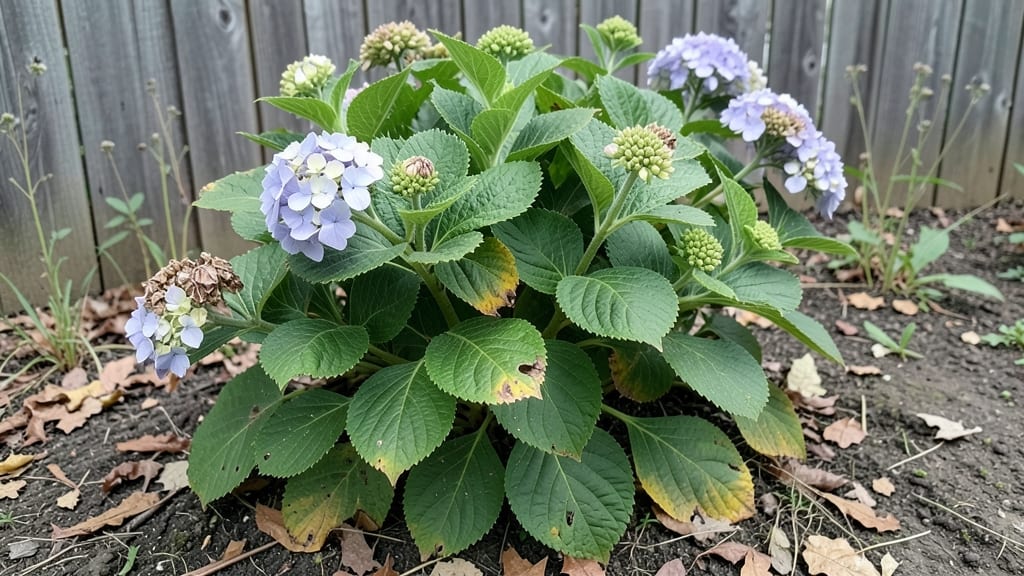
Hydrangea blooms turning green instead of pink, blue, or purple? That’s your plant’s way of screaming for help—usually because of too much nitrogen, the wrong soil pH, or stress from pruning or pests.
I’ve seen this happen after a heavy-handed spring feeding or when the soil pH drifts too far from the sweet spot for your variety. The good news? Fixing it is simpler than you’d think, and you’ll have those showstopping blooms back in no time.
Here’s the thing—hydrangeas are divas about nutrients. Too much nitrogen (like from fresh manure or high-nitrogen fertilizers) forces them to grow leaves instead of flowers, and the blooms turn greenish. Meanwhile, soil pH that’s too high or too low can wash out the color pigments entirely.
My first fix? A soil test kit (they’re cheap and save you from guessing). If the pH is off, a few handfuls of sulfur (to lower it) or lime (to raise it) can reset the chemistry in weeks.
Once you’ve adjusted the food and pH, give your hydrangeas a pruning reset—cutting back old wood in late winter encourages fresh, vibrant growth. Within 6-8 weeks, you’ll see new buds forming in their proper colors.
The key is consistency: check pH yearly, fertilize with a balanced 10-10-10 formula, and avoid overwatering (soggy roots stress plants).
This works for both in-ground shrubs and container-grown hydrangeas—just scale the fertilizer and pH adjustments to your pot size. And if you’re growing in containers, flush the soil with water every 3-4 months to prevent salt buildup from fertilizers.
Your hydrangeas will thank you with blooms so bold they’ll make your neighbors jealous.
Why it happens
When your hydrangea blooms start turning a dull, leafy green instead of their usual pink, blue, or purple, it’s usually a sign that something’s off behind the scenes. The color shift isn’t just a random quirk—it’s your plant’s way of communicating specific needs.
Let’s break down the science-backed reasons why this happens, so you can diagnose the issue like a pro.
🌡️ Soil pH Imbalance: The Color Switch
Hydrangeas are pH-sensitive powerhouses, and their bloom colors are directly tied to the acidity or alkalinity of the soil. Here’s how it works:
- Blue or Purple Blooms: These thrive in acidic soil (pH 5.0–5.5). If the pH rises (becomes more alkaline), the aluminum in the soil becomes less available, and the flowers turn greenish or revert to a dull pink.
- Pink or Red Blooms: These naturally occur in neutral to slightly alkaline soil (pH 6.0–7.0). If the soil becomes too acidic, they may fade to green.
💡 Pro Tip: Test your soil’s pH with a home kit or send a sample to a local extension office. If the pH is off, amend it gradually with sulfur (to lower pH) or lime (to raise pH), following package instructions. Avoid drastic changes—hydrangeas prefer stability!
💧 Overwatering Or Poor Drainage
Too much water isn’t just bad for roots—it can also leach out essential nutrients and disrupt the soil chemistry that hydrangeas rely on for vibrant blooms. Here’s why:
- Waterlogged soil reduces oxygen availability, stressing the plant and causing chlorosis (yellowing/greening of petals).
- Excessive irrigation can wash away aluminum and iron, two critical elements for blue/purple hues.
- Poor drainage leads to root rot, which weakens the plant’s ability to absorb nutrients, including those responsible for pigment.
🔥 Fix It: Ensure your hydrangea is planted in well-draining soil (mix in compost or perlite if needed). Water deeply but only when the top 1–2 inches of soil are dry. Use a pot with drainage holes if growing in containers.
☀️ Nutrient Deficiencies: The Silent Faders
Green blooms can signal that your hydrangea isn’t getting the right nutrients to produce pigments. The two biggest culprits?
- Aluminum Deficiency: Blue hydrangeas (H. macrophylla) need aluminum to synthesize their signature color. If the soil pH is too high, aluminum becomes unavailable, and blooms turn green.
- Iron or Magnesium Deficiency: These minerals are vital for chlorophyll production. If the plant can’t access them (often due to compacted or alkaline soil), petals may turn pale or greenish.
🌱 Action Steps:
- Apply an acid-loving plant fertilizer (like Miracle-Gro Azalea, Camellia & Rhododendron Food) every 4–6 weeks during the growing season.
- For aluminum boosts, use chelated aluminum sulfate (follow label rates).
- Test soil for deficiencies—green blooms could also hint at nitrogen excess, which suppresses color development.
🌿 Pest Or Disease Stress
Sometimes, unseen invaders or infections stress the plant so much that it prioritizes survival over vibrant blooms. Common offenders include:
- Spider Mites or Aphids: These sap-sucking pests weaken the plant, causing chlorosis (green petals) and stunted growth.
- Fungal Infections (e.g., Powdery Mildew): Fungal spores thrive in humid conditions, coating blooms and turning them greenish or gray.
- Root Rot: Caused by overwatering or poor drainage, this disease blocks nutrient uptake, leading to pale or green flowers.
🔪 Treatment Plan:
- Inspect leaves and stems for webs, sticky residue, or white powder—signs of pests or fungus.
- Spray affected areas with neem oil or insecticidal soap for pests.
- Prune infected blooms or leaves and treat with a fungicide (like copper-based sprays) if mildew is present.
🌤️ Environmental Shifts: Heat Or Sunburn
Hydrangeas prefer partial shade (4–6 hours of sun daily). Too much direct sunlight—especially in hot climates—can cause:
- Sunburn: Petals may turn greenish or brown in patches due to heat stress.
- Premature Drying: Blooms lose moisture and nutrients faster, leading to dull, greenish hues.
- Transpiration Stress: Excessive heat increases water loss, making it harder for the plant to absorb and distribute pigments.
✨ Shade Solutions:
- Move potted hydrangeas to a shadier spot during peak afternoon sun (1–5 PM).
- Use lightweight shade cloth (30–50%) if relocating isn’t an option.
- Mulch the base with 2–3 inches of organic mulch to keep roots cool.
How to solve it
If your hydrangea blooms have turned a dull, greenish shade instead of their usual vibrant hues, don’t despair—there are practical, science-backed solutions to restore their beauty. The fix depends on the root cause, so let’s tackle each issue step by step.
With a little effort, your hydrangeas will be bursting with color in no time!
🌱 Overwatering or Poor Drainage (2)
If your hydrangeas are soggy from excess water, their blooms may turn green due to chlorosis (a nutrient deficiency caused by poor root health). Here’s how to correct it:
- 🔥 Improve drainage: Amend the soil with organic matter like compost or perlite to loosen heavy clay. Aim for soil that drains within 1–2 hours after watering.
- 👨🍳 Adjust watering habits: Water deeply 2–3 times per week (or when the top 2 inches of soil feel dry) instead of daily shallow watering. Avoid letting plants sit in standing water.
- 🔪 Check the pot (if potted): Ensure drainage holes are clear, and repot if roots are circling or the soil is compacted.
💡 Prevention tip: Test your soil’s drainage by digging a 6-inch hole, filling it with water, and timing how long it takes to drain. If it’s slower than 4 hours, amend the soil immediately.
☀️ Too Much Sun or Heat Stress
Hydrangeas in scorching conditions may produce greenish blooms due to heat stress or sunburn. Revive them with these steps:
- 🌡️ Provide afternoon shade: Use a light shade cloth (30–50%) or plant near a tree that offers partial shade during peak sun (12–4 PM).
- 💦 Increase hydration: Water early in the morning to reduce evaporation and stress. Mulch with 2–3 inches of organic mulch (like wood chips) to retain moisture.
- 🎯 Fertilize wisely: Use a balanced, slow-release fertilizer (10-10-10) in early spring to support recovery. Avoid high-nitrogen feeds, which encourage leafy growth over blooms.
💡 Prevention tip: Choose heat-tolerant varieties like ‘Endless Summer’ or ‘Limelight’ if your climate is hot. These thrive in more sun than traditional types.
🍄 Fungal Issues or Pest Damage
Green, mushy, or spotted blooms could signal fungal infections (like powdery mildew) or pest damage (e.g., aphids). Act fast with these remedies:
- 🔪 Prune affected areas: Remove any discolored, wilted, or spotted blooms with clean pruners. Dispose of them in the trash (not compost) to prevent spread.
- 🍳 Apply fungicide: Spray with a copper-based fungicide or neem oil solution (1 tbsp neem oil + 1 quart water + a drop of dish soap) every 7–10 days until symptoms improve.
- 👨🍳 Combat pests: Blast aphids off with a strong stream of water or introduce ladybugs (natural predators). For severe infestations, use insecticidal soap.
💡 Prevention tip: Space plants 3–5 feet apart to improve airflow, reducing humidity and fungal risks. Water at the base of the plant (not overhead) to keep foliage dry.
📊 Nutrient Imbalance (Too Much Nitrogen)
If your hydrangeas are lush but colorless, they may be over-fertilized with nitrogen, which promotes leaves over blooms. Rebalance with these steps:
- ⏰ Adjust fertilization: Switch to a low-nitrogen, high-phosphorus fertilizer (e.g., 5-10-10) to encourage flowering. Apply in early spring and mid-summer.
- 🥗 Add micronutrients: Hydrangeas need iron, magnesium, and calcium. Use Epsom salt (1 tbsp/gallon of water) monthly for magnesium or a chelated iron supplement if leaves show yellowing between veins.
- 🌡️ Monitor soil pH: Test your soil’s pH (hydrangeas prefer 5.2–6.0 for blue blooms or 6.0–7.0 for pink). Adjust with sulfur (to lower pH) or lime (to raise pH) as needed.
💡 Prevention tip: Avoid yard waste or compost with high nitrogen (like fresh grass clippings). Stick to aged compost or balanced organic fertilizers.
✨ General Revival Care
For any hydrangea with dull blooms, these universal tips will help revive their vibrancy:
- 🌿 Prune strategically: Cut back last year’s blooms (if applicable to your variety) in early spring to encourage new growth. For ‘Endless Summer’ types, prune in late winter.
- 🍎 Boost with compost: Work 2–3 inches of compost into the topsoil around the base to replenish nutrients.
- 🌡️ Mulch properly: Use 3–4 inches of mulch (like shredded bark) to regulate soil temperature and retain moisture.
With these fixes, your hydrangeas should rebloom in their true colors within 4–6 weeks. Keep an eye on their progress and adjust care as needed!
Frequently asked questions
Why do my hydrangea blooms turn green instead of their usual color?
This usually happens due to soil pH imbalance or nutrient deficiencies. For blue/purple blooms, acidic soil (pH 5.0–5.5) is key—if it rises, aluminum (critical for color) becomes unavailable. Pink blooms need slightly alkaline soil (pH 6.0–7.0), and too much acidity can fade them. Overwatering or excess nitrogen also suppresses pigment production, making blooms look greenish.
Can I fix green hydrangea blooms without soil testing?
Yes! Start by switching to a balanced 10-10-10 fertilizer and avoid high-nitrogen options. For blue blooms, apply chelated aluminum sulfate (follow label rates). If blooms stay green, provide afternoon shade and ensure soil drains well—standing water leaches nutrients. Results often appear in 4–6 weeks.
How do I prevent green blooms in future hydrangeas?
Test and adjust soil pH yearly using a kit, and mulch with 2–3 inches of organic matter to maintain acidity. Water deeply 2–3 times per week (not daily) and prune in late winter/early spring to encourage fresh growth. Skip fresh manure—opt for aged compost instead. Heat-tolerant varieties like 'Endless Summer' also handle stress better.
What if my hydrangea blooms are green AND wilted?
Wilted green blooms often signal root rot or fungal issues like powdery mildew. Prune affected areas immediately, then treat with neem oil or a copper fungicide. Ensure pots have drainage holes and avoid overhead watering. For potted plants, repot in fresh, well-draining soil if roots appear mushy.