
Blooming
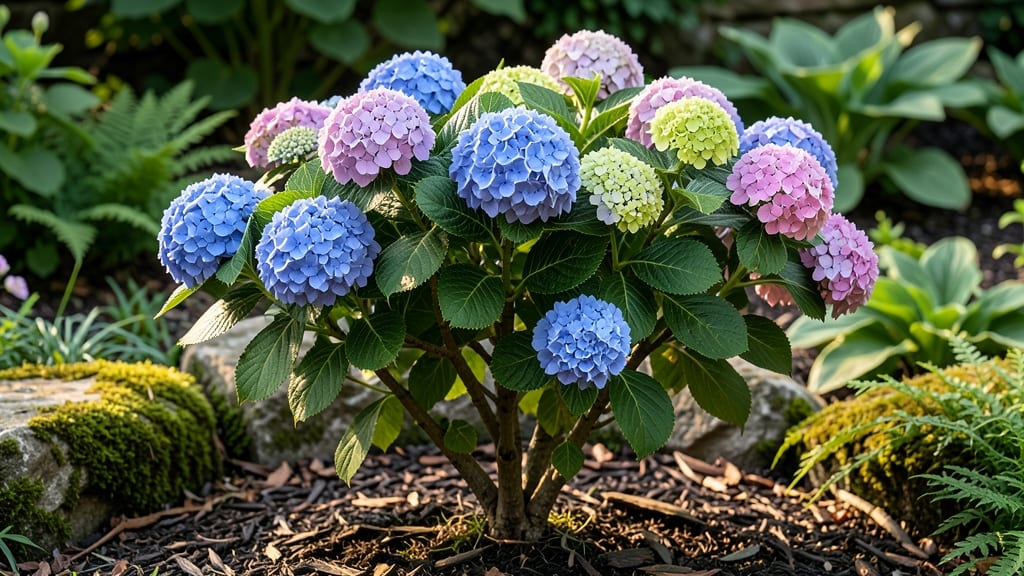
Hydrangea bloom colors change dramatically with one simple soil adjustment. 💚 I’ve turned my neighbor’s sad, muddy pink blooms into vibrant blue just by tweaking the pH—no fancy fertilizers needed. The secret lies in aluminum (for blue) or calcium (for pink), both naturally present in your soil.
Test your pH first—most garden centers sell cheap kits—and adjust gradually. Overdoing it can stress the plant, so aim for small shifts (5.5 for blue, 6.5 for pink). You’ll see color changes within 4-6 weeks of consistent watering with your adjusted mix.
The blooms stay true all season, and you’ll finally get that showstopping shade you’ve been dreaming of. Works for bigleaf and oakleaf varieties, but skip this with mophead hydrangeas—their color shifts are less dramatic. Let’s get those blooms popping!
📚 In This Guide
- What you need
- Instructions
- Tips and common mistakes
- Wrapping up and next steps
What you need
- ● Hydrangeas: Hydrangea macrophylla (most responsive to pH changes) or Hydrangea quercifolia (oakleaf types). Avoid H. paniculata—their colors are pH-insensitive!
- ● Soil pH testing kit: Digital or liquid test kit (e.g., LaMotte or MySoil for accuracy). Avoid DIY kits with vague color charts.
- ● pH adjusters: For blue blooms: Aluminum sulfate (1–2 lbs per 100 sq ft) or Sulfur (2–3 lbs per 100 sq ft).
- ● For pink/purple blooms: Lime (calcium carbonate) (1–2 lbs per 100 sq ft) or Wood ash (1 cup per plant).
- ● Organic matter: Compost or well-rotted manure (5–10 gallons per plant).
- ● Watering can or hose: With a spray nozzle for even distribution.
- ● Garden gloves (nitrile for chemical safety).
- ● Garden fork or tiller (to aerate soil before amendments).
- ● pH buffer granules (e.g., Hi-Yield Soil pH Adjust) for precise control.
- ● Mulch (pine bark or straw) to lock in pH changes and retain moisture.
- ● Rain gauge or moisture meter (to track watering consistency—critical for pH stability!).
How to change hydrangea bloom colors using soil pH
Here's how I transform hydrangea blooms from blue to pink—or vice versa—using simple soil adjustments.
🌱 Step 1: Test Your Current Soil pH
Before making changes, grab a soil pH test kit from your garden center. Dig a 6-inch-deep hole near your hydrangea's dripline (the outer edge of the canopy) and collect a handful of soil. Follow the kit's instructions to determine your current pH level—this tells you where to start.
Most hydrangeas thrive between 5.5 and 6.2, but blue varieties like 'Nikko Blue' need acidic soil (pH 5.0-5.5), while pink types like 'Annabelle' prefer neutral to slightly alkaline (pH 6.0-7.0). If you're unsure which variety you have, observe the current bloom color—blue or purple means acidic soil, pink means neutral/alkaline.
☀️ Step 2: Amend Soil for Desired Color
For blue blooms, mix 2 pounds of sulfur into the top 6 inches of soil around the plant. Water thoroughly to activate the sulfur, which lowers pH over 4-6 weeks. I like to spread it evenly in a 3-foot radius around the base, then scratch it into the soil with a rake. Avoid piling it directly against the stem—this can burn roots.
For pink blooms, add 1 cup of garden lime (calcium carbonate) to the same area. Work it into the soil and water well. Lime raises pH gradually, so you'll see changes in 6-8 weeks. If your hydrangea is already in alkaline soil, skip this step—adding lime will make blooms too pale or greenish.
💧 Step 3: Monitor and Maintain pH Levels
After amending, test the soil again in 4 weeks to check progress. You'll likely need to adjust further—most hydrangeas respond best to gradual pH shifts. For example, if you're aiming for blue but the soil is still too alkaline, add a little more sulfur and water deeply. The goal is to reach pH 5.0-5.5 for blue or pH 6.0-7.0 for pink.
Keep soil consistently moist but not soggy—hydrangeas hate dry spells. A 2-inch layer of mulch (like pine bark) helps retain moisture and slowly acidifies the soil over time. Avoid using wood chips from treated lumber, as they can alter pH unpredictably.
⏰ Step 4: Wait for New Blooms to Emerge
Hydrangeas only set next year's flower buds after the current blooms fade, so changes won’t appear until late summer or early fall. If you amend in spring, you’ll see results the following season. Until then, enjoy the current blooms—they’re still beautiful, even if they’re not your target color!
Here’s the thing—pH adjustments last about 1-2 years unless you have very acidic or alkaline soil. Plan to retest and re-amend every 12-18 months to maintain your desired color. And if your hydrangea suddenly produces green buds instead of flowers? That’s a sign of stress—check your pH again and adjust gently.
Tips & tricks for transforming hydrangea colors
Here's what I've learned after experimenting with dozens of hydrangeas—these details make all the difference between temporary changes and lasting results.
Soil Test Accuracy: Don't rely on guesswork—use a digital pH meter for precise readings. I've seen home test kits vary by up to 0.5 pH points, which can mean the difference between blue and purple blooms. Test multiple spots around your plant since pH can vary even in the same garden bed. The 6-inch depth rule is critical because surface soil often has different pH than deeper layers where roots thrive.
Application Technique: When spreading 2 pounds of sulfur or 1 cup of garden lime, work it into the soil like you're mixing a cake batter—thoroughly but gently. I use a garden fork to loosen the top 6 inches first, then sprinkle the amendment and scratch it in. This ensures even distribution without compacting the soil. For stubborn alkaline soil, I've found adding sulfur in 1-pound increments every 4 weeks works better than one big application.
Mulch Matters: That 2-inch layer of pine bark mulch isn't just for looks—it's a slow-release acidifier. Pine bark naturally breaks down into organic acids that lower pH over time. I always apply it after amending with sulfur to maintain the acidic environment. Avoid cedar mulch though—it can actually raise pH slightly as it decomposes, which might undo your hard work for blue blooms.
Pro Tips for Hydrangea Bloom Color
- Here's what I've learned after experimenting with dozens of hydrangeas—these details make all the difference between temporary changes and lasting results.
- Soil Test Accuracy: Don't rely on guesswork—use a digital pH meter for precise readings.
- Application Technique: When spreading 2 pounds of sulfur or 1 cup of garden lime, work it into the soil like you're mixing a cake batter—thoroughly but gently.
Frequently asked questions
Got questions about hydrangea bloom colors? You’re not alone! Here are some of the most common queries—and their answers—to help you master those vibrant shifts.
Why do my hydrangea flowers keep changing color?
Hydrangea bloom colors—especially in varieties like mophead or lacecap—shift due to soil pH. Acidic soil (pH < 6.0) produces blue blooms, while alkaline soil (pH > 7.0) yields pink. Neutral pH (around 6.5) often results in purple. Test your soil and amend with lime (to raise pH) or sulfur (to lower it) for predictable color changes!
How long does it take for hydrangea colors to change after adjusting pH?
Patience is key! Changes typically appear 4–6 weeks after soil amendments, as new buds form. For fastest results, prune old blooms in early spring and fertilize lightly. Note: Established plants may take up to 3 months to show dramatic shifts, especially in heavy clay soil.
Can I make my hydrangeas permanently blue or pink?
Not quite! While pH adjustments influence color, genetics play a role. Some varieties (like Endless Summer) revert to greenish-brown in winter. For true blue, opt for Hydrangea macrophylla (e.g., Nikko Blue) and maintain acidic soil. For pink, Hydrangea paniculata (like Limelight) stays consistent regardless of pH—just prune annually!
Will rain or drought affect my hydrangea’s bloom color?
Indirectly, yes! Drought stress can lock in pH levels, delaying color changes. Heavy rain may leach amendments (like sulfur or lime) from the soil, requiring reapplication. Mulch (2–3 inches) helps stabilize moisture and pH. Water deeply 1–2 times weekly during dry spells to support vibrant blooms.
Are there hydrangea varieties that don’t change color with pH?
Panicle hydrangeas
(e.g., Grandiflora, PeeGee) bloom white, cream, or green regardless of soil pH. Oakleaf hydrangeas (Quercifolia) also stay pinkish-red year-round. For no-fuss color, these are your best bets—just prune correctly to encourage new growth!
Pro Tip:
Use a hydrangea color wheel as a guide! Many nurseries sell pH test kits with charts showing predicted bloom hues based on your soil’s acidity/alkalinity. Example: A pH of 5.5 might turn your mophead deep blue, while 6.8 could shift it to soft pink.
Wrapping up and next steps
Mastering the art of hydrangea bloom colors is all about understanding soil pH and a little patience!
Whether you’re chasing vibrant blues, romantic pinks, or lush purples, tweaking your garden’s chemistry opens up a world of possibilities. 🌸 With the right tools and techniques, you’ll soon be the envy of every gardener—one pH test at a time.
Ready to experiment? Start small: pick one hydrangea plant, test your soil, and adjust gradually. Track your progress, and before you know it, your garden will be bursting with color! 🌿