
Blooming
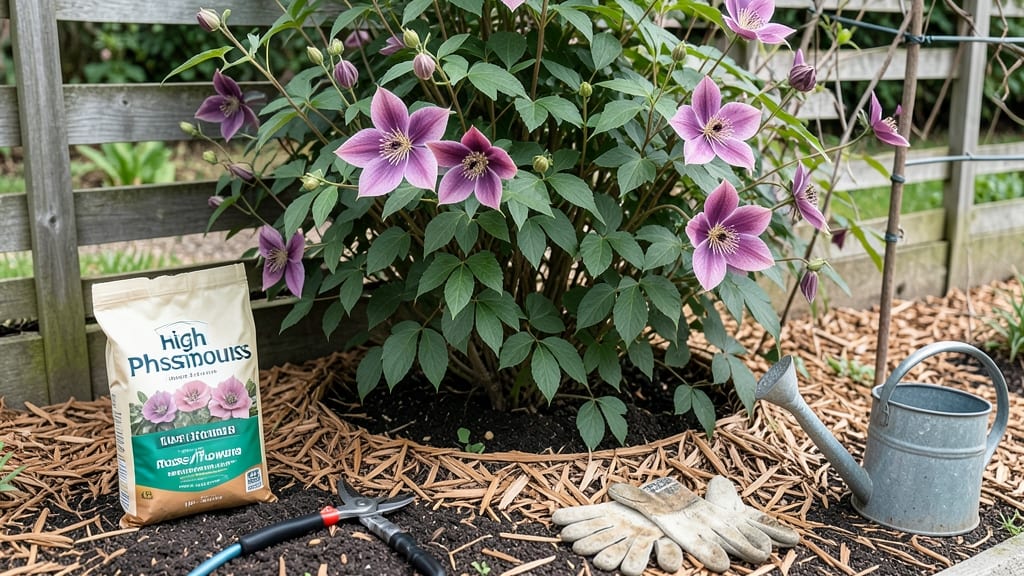
Your clematis can bloom all summer in nonstop purple spikes by next season—if you master how to make clematis bloom all summer with the right pruning. 🌿 The secret isn’t just when to cut, but how to encourage new growth while you’re at it.
I’ve turned my once-sparse vines into a blooming powerhouse by mastering the three pruning groups, and you can too. Most gardeners overlook the sunlight-water-fertilizer triangle that keeps clematis flowering. Too much shade? Fewer blooms. Too much nitrogen? Leafy monsters, not flowers.
The right balance means three to four flushes of blooms instead of just one. Start with the pruning schedule, then fine-tune the rest. By late summer, you’ll be snipping spent blooms and watching fresh buds form within 2-3 weeks.
The vines stay compact, the flowers stay vibrant, and your neighbors will ask for your secret. It’s not magic—just timing and consistency. Works for both early-spring bloomers and late-summer varieties. Let’s get those vines climbing!
📚 In This Guide
- What you need
- Instructions
- Tips and common mistakes
- Wrapping up and next steps
What you need
- ● Clematis vine: Choose a healthy, mature plant (3+ years old) for best results. Varieties like ‘Jackmanii’ or ‘Niobe’ are great starters!
- ● Pruning shears: Sharp, clean bypass pruners (avoid dull tools—they crush stems!). 1 pair is all you need.
- ● Gloves: Heavy-duty gardening gloves (clematis can be thorny!). 1 pair for protection.
- ● Disinfectant: Rubbing alcohol (70%+) or bleach solution (1 part bleach to 9 parts water) to sterilize tools between cuts.
- ● Compost or mulch: Well-aged compost or organic mulch (5–10 gallons) to replenish soil nutrients after pruning.
- ● Hand pruners: For smaller stems or tight spaces (backup to bypass pruners).
- ● Knee pad or stool: Because bending over clematis all day is a vibe—but not a sustainable one.
- ● Plant support: Trellis, arbor, or sturdy stakes if your vine needs a post-pruning boost.
- ● Slow-release fertilizer: Balanced 10-10-10 or rose/flower-specific (1–2 lbs) for a nutrient kick.
- ● Rain gauge or moisture meter: To track watering—clematis loves consistency!
Step-by-step guide to encouraging clematis to bloom nonstop
Here's how I transform my clematis from a single spring burst to a summer-long floral display—no fancy tricks, just precise timing and technique.
✂️ Step 1: Identify Your Clematis Group for Proper Pruning
Clematis are divided into three pruning groups based on when they bloom, and pruning at the wrong time will kill your flowers. Group 1 blooms on old wood (last year's growth) in spring, Group 2 blooms on both old and new wood (spring and summer), and Group 3 blooms only on new wood (late spring/summer). Check your plant's label or observe when it flowers—if it blooms in early spring, it's Group 1.
This is the moment that matters: pruning a Group 1 clematis too aggressively will remove its flower buds, while pruning a Group 3 too lightly will leave it leggy and sparse. I always mark my plants with colored tape to remember which group they belong to—red for Group 1, blue for Group 2, and green for Group 3.
🌿 Step 2: Prune at the Right Time for Your Group
For Group 1 (spring bloomers), prune right after flowering in late spring or early summer. Cut back one-third of the oldest stems to encourage new growth while leaving enough old wood to support next year's blooms. For Group 2 (repeat bloomers), prune lightly in late winter or early spring, removing dead or weak stems but keeping the rest intact. Group 3 (summer bloomers) get the most aggressive pruning—cut all stems back to 12-18 inches in late winter or early spring.
Here's the thing—if you prune at the wrong time, you'll end up with no flowers at all. I've learned this the hard way with a prized Group 1 clematis that went bare after I pruned it in fall. Wait until the flowers have faded completely before touching your Group 1 or 2 plants, and never prune Group 3 until dormancy.
☀️ Step 3: Feed and Water for Continuous Blooms
Clematis are heavy feeders and need balanced fertilizer every 4-6 weeks from spring to summer. I use a 10-10-10 formula, applying it after watering to prevent root burn. The key is consistency—skipping feedings will result in weak stems and sparse blooms. Water deeply once a week (more in extreme heat) to encourage strong root growth, but avoid wetting the foliage to prevent fungal diseases.
You'll see the difference within weeks: vibrant new leaves and an abundance of flower buds forming along the stems. If your clematis starts to wilt or drop buds, it's usually a sign of inconsistent watering or insufficient nutrients. I always keep a watering can nearby and check the soil moisture by sticking my finger 2 inches deep—if it's dry, it's time to water.
🪴 Step 4: Train and Support for Maximum Exposure
Clematis vines need strong support to climb and display their blooms properly. Use a trellis, arbor, or sturdy fence and train the vines with soft ties (never wire or anything that can damage the stems). I start by tying the main stems loosely to the support and then weave the side shoots through the structure as they grow. This ensures even light exposure and air circulation, which are critical for preventing mildew and encouraging blooms along the entire length of the vine.
Don't let the vines sprawl unchecked—this leads to crowded growth and fewer flowers. Prune any stems that grow away from the support or become tangled. You'll notice a difference in just a few weeks: the vines will climb more vigorously, and the flowers will appear more frequently along the stems rather than just at the tips.
⏰ Step 5: Deadhead and Encourage Second Flushes
Deadheading spent blooms immediately after they fade will signal the plant to produce more flowers. For Group 1 clematis, I leave the first flush of blooms to set seed (if you want them to rebloom), but for Groups 2 and 3, I remove every faded bloom to encourage a second flush. Use clean, sharp pruners and cut just above a set of healthy leaves or buds to promote new growth.
Real talk: if you skip deadheading, your clematis will still bloom, but the flowers will be fewer and more spaced out. I deadhead mine every 2-3 days during peak bloom season to keep the floral display dense and continuous. Watch for new buds forming at the leaf axils—this is your cue that the plant is responding well to the pruning and care.
Tips & tricks for nonstop clematis blooms
Here's what nobody tells you about keeping your clematis flowering all season long—these are the details that make the difference between a single spring burst and a summer-long spectacle.
Group Identification: If you're unsure which group your clematis belongs to, observe its blooming pattern for a full season before pruning. Group 1 plants will have their primary bloom in early spring, while Group 3 won't show flowers until late spring or summer. I've had to completely rethink my pruning approach after realizing I'd been treating a Group 3 plant like a Group 1—it took two years to recover from that mistake. The colored tape system I use (red for Group 1, blue for Group 2, green for Group 3) has saved me countless headaches since.
Pruning Precision: When pruning Group 1 clematis after flowering, aim to remove only the oldest, thickest stems—these are the ones that produced last year's blooms. The remaining stems should be about pencil thickness. For Group 3, cutting back to 12-18 inches means you're leaving about 3-5 strong buds at the base. I've found that using clean, sharp pruners is just as important as timing—dull blades crush stems and create entry points for diseases. Disinfect your pruners with rubbing alcohol between cuts on different plants.
Fertilizer Timing: The 4-6 week feeding schedule works best when you start right after pruning. For Group 1, that means feeding immediately after your late spring prune. For Groups 2 and 3, begin feeding in early spring before new growth starts. I've noticed that clematis respond particularly well to a light feeding right when you see new buds forming—this gives them a quick energy boost. Always water thoroughly before and after applying fertilizer to prevent root burn, and avoid getting any on the leaves.
Deadheading Discipline: The 2-3 day deadheading schedule makes all the difference for Groups 2 and 3. I set a reminder on my phone for every other day during peak bloom season. Look for buds forming at the leaf axils—these are your plant's way of telling you it's ready for more flowers. For Group 1, I make an exception by leaving the first flush to set seed if I want potential reblooms next year, but I still deadhead any subsequent blooms immediately to encourage continuous flowering.
Pro Tips for Make Clematis Bloom All Summer
- Here's what nobody tells you about keeping your clematis flowering all season long—these are the details that make the difference between a single spring burst and a summer-long spectacle.
- Group Identification: If you're unsure which group your clematis belongs to, observe its blooming pattern for a full season before pruning.
- Pruning Precision: When pruning Group 1 clematis after flowering, aim to remove only the oldest, thickest stems—these are the ones that produced last year's blooms.
Frequently asked questions
about keeping your clematis in full bloom all summer—because even the most patient gardeners have questions! Here are the answers to the most common ones.Why isn’t my clematis blooming even after pruning?
Clematis may skip blooms if they’re overpruned (cutting back too late) or underfed. Check your pruning group (1-3) and timing—Group 1 blooms on old wood, so prune after flowering. Also, ensure they get balanced fertilizer (high phosphorus) and consistent moisture. If roots are shallow, mulch heavily to retain moisture.
Can I prune clematis at any time of year?
Nope! Timing is critical. For Group 1 (early spring bloomers), prune right after flowering. Group 2 (repeat bloomers) can be pruned in early spring or after the first flush. Group 3 (late summer bloomers) get a light trim in early spring and a hard cutback in late winter. Avoid pruning in fall—it stresses the plant!
What if my clematis only blooms on the bottom?
This usually means too much shade or poor support. Clematis thrive with 6+ hours of sun—move it to a sunnier spot if possible. Also, ensure it has a strong trellis or arbor (they climb vigorously!). If the plant is young, it may need time to mature. Try a balanced fertilizer with extra potassium to encourage upward growth.
How do I encourage a second flush of blooms?
For Group 2 clematis (like ‘Jackmanii’), deadhead spent blooms regularly to redirect energy. Feed with a high-phosphorus fertilizer (like 5-10-5) every 4-6 weeks. Water deeply during dry spells, and avoid over-pruning—leave some old wood for backup blooms. If blooms fade quickly, it could signal heat stress; provide afternoon shade in hot climates.
Are there clematis varieties that bloom all summer without much effort?
Yes! Group 2 and 3 clematis are your best bets for low-maintenance, long blooms. Top picks:
- ‘Niobe’ (Group 2): Deep purple blooms from early summer to frost.
- ‘Perle d’Azur’ (Group 3): Light blue, repeat blooms with minimal pruning.
- ‘Hagley Hybrid’ (Group 3): Large pink flowers from midsummer on.
Wrapping up and next steps
With the right pruning techniques, sunlight, nutrients, and a little patience, your clematis can burst into nonstop blooms all summer long! 🌸 Remember, grouping plants by type and adjusting care based on their growth habit makes all the difference.
Start small—pick one clematis to experiment with this season—and watch your garden transform into a purple paradise.
Ready to dive deeper? Grab your pruners and check out our pruning timeline guide to keep your clematis thriving year-round! 🌿