
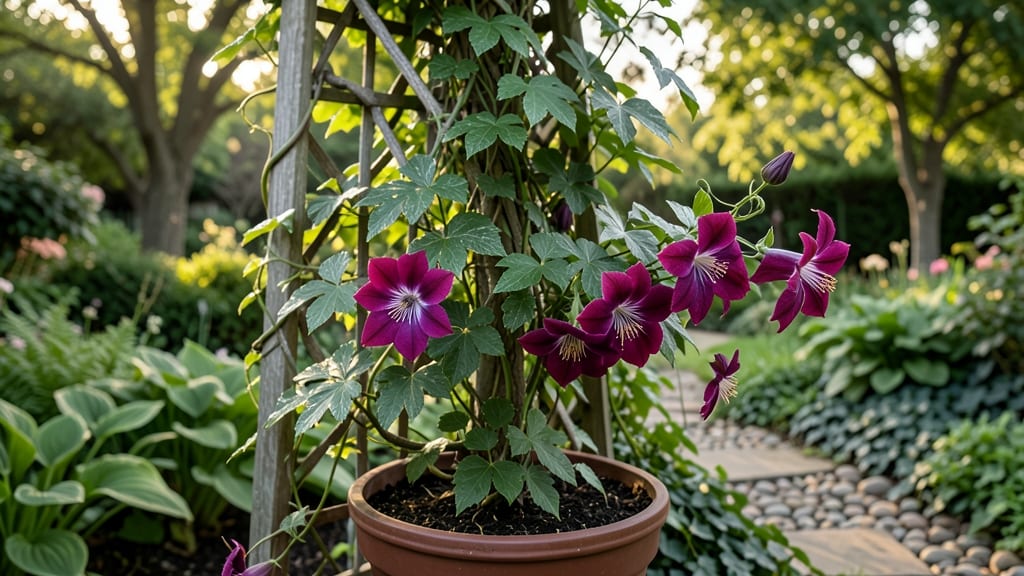
Clematis Bloom Time: Predict Your Garden’s Purple Spikes by Variety & Zone

Blooming

Clematis Bloom Time: Predict Your Garden’s Purple Spikes by Variety & Zone

Your clematis bloom time depends on its variety, pruning group, and where you garden — and getting it right means those showstopping purple spikes arrive exactly when you expect.

Picture this: You’ve waited all spring, only to stare at lush green vines with zero blooms by June. Or worse, your late-summer clematis fizzles out before the Fourth of July. The secret isn’t luck—it’s knowing your plant’s pruning group and how your hardiness zone tweaks the calendar.

In this guide, I’ll break down when 10+ popular varieties (like ‘Jackmanii’ and ‘Nelly Moser’) burst into bloom, how zones 3–10 shift those timelines, and the 5 critical factors that can delay or extend your clematis’ show.

You’ll leave here with a customized bloom schedule, pruning reminders for each season, and tricks to coax even more flowers—so your garden’s vertical drama arrives right on time.

Clematis bloom time by variety: when to expect purple spikes

If you're dreaming of vibrant purple clematis blooms cascading down your trellis, timing is everything. The bloom window for these stunning vines depends entirely on your variety and pruning group. Clematis are classified into three pruning groups—each with distinct bloom cycles.

Group 1 blooms on previous year's growth in early summer, while Groups 2 and 3 bloom on current season's growth, often in late summer or fall. Let’s break down the bloom schedules for 10 popular varieties so you can plan your garden around their stunning displays.

Understanding these seasonal patterns helps you time pruning, fertilizing, and even support installation for maximum impact. For example, Group 3 clematis like 'Jackmanii' produce their best blooms in late summer and fall, while Group 1 varieties like 'Early Sensation' shine in early to mid-summer.

Your hardiness zone also plays a role—cooler climates may delay blooms by a few weeks compared to warmer regions. Let’s dive into the specifics so you can predict when your clematis will burst into color.

Variety Pruning Group Bloom Time Color Height (ft) Notes
'Early Sensation' Group 1 Early to mid-summer Purple 6-10 Early bloomer; prune after flowering
'Jackmanii' Group 3 Late summer to fall Deep purple 10-15 Heavy bloomer; prune in early spring
'Niobe' Group 2 Summer to early fall Red-purple 8-12 Reblooms on new growth; prune lightly
'Perle d'Azur' Group 1 Mid-summer Lavender-blue 8-10 Fragrant blooms; prune after flowering
'The President' Group 3 Late summer White 10-12 Large

How hardiness zones affect clematis bloom timing

Your clematis bloom time isn’t just about the variety—it’s heavily influenced by your hardiness zone. In colder zones like Zone 4, frosts can delay blooms until late June, while Zone 9 gardeners might enjoy year-round color.

Understanding these differences helps you adjust pruning, protection, and care to sync with your local climate.

Clematis are divided into three pruning groups, but their bloom schedules shift dramatically across zones. For example, Group 1 varieties (early bloomers) in Zone 3 may wait until July, while the same variety in Zone 8 could bloom as early as May.

The key is knowing when to prune and protect your vines based on frost risks.

🌱 Zone-Specific Clematis Bloom Insights

  1. Zone 3-4: Delayed blooms (June-July) due to late frosts; prune in early spring after danger of frost passes.
  2. Zone 5-6: Typical bloom window (May-August); protect new growth from late frosts with burlap wraps.
  3. Zone 7-8: Extended blooms (April-September); prune Group 3 varieties in late winter for fall color.
  4. Zone 9-10: Year-round potential; Group 2 varieties may rebloom after pruning in early spring.

Pro tip: Use mulch in colder zones to insulate roots and encourage earlier blooms.

In Zone 4, where winters are harsh, clematis often enter dormancy early. This means their bloom cycle starts later, and you’ll need to prune Group 1 varieties in March—not February—to avoid cutting off next year’s flowers.

In contrast, Zone 9 gardeners can prune Group 3 varieties in late winter and still enjoy fall blooms.

Frost sensitivity is another critical factor. In Zone 5, a late frost can wipe out early blooms, so choose late-season varieties like 'Jackmanii' or protect emerging buds with frost cloth.

Meanwhile, Zone 7 gardeners can push their luck with early bloomers like 'Nelly Moser' by planting near a south-facing wall for extra warmth.

Adjusting your fertilization schedule by zone also makes a difference. In Zone 6, feed in early spring (March) to jumpstart growth, while Zone 10 gardeners can fertilize lightly in winter for continuous blooms. Always use a balanced fertilizer (5-10-10) to avoid leafy growth at the expense of flowers.

Finally, watering habits shift with zones. In Zone 3, deep watering in late summer helps roots establish before dormancy, while Zone 8 clematis may need weekly watering during droughts. Always water at the base of the plant to prevent fungal issues.

By aligning your clematis care with your hardiness zone, you’ll unlock the full bloom potential of your vines—whether that’s June roses in Zone 4 or fall blooms in Zone 9. 🌷

★★★★★4.9(15 reviews)
Categories Blooming