
Blooming
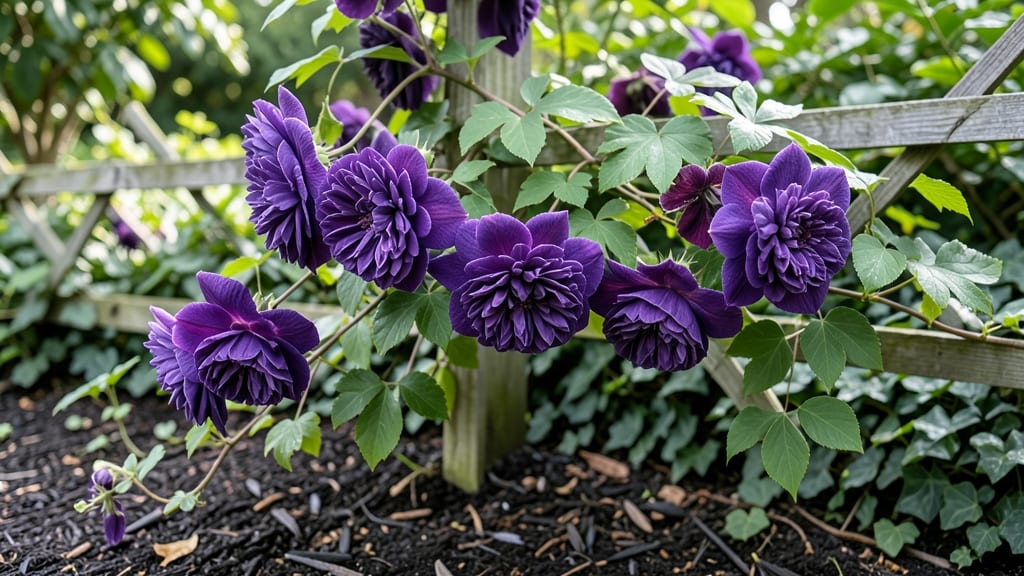
Double bloom clematis transforms your garden into a vertical explosion of color—twice the flowers, half the effort. 🌸 I learned the hard way that most guides miss the pruning secrets that trigger this second flush, but once you master the timing and cuts, you’ll have blooms from early summer through fall.
The magic starts with Group 3 varieties (like 'Jackmanii' or 'Niobe') planted where they get 6+ hours of sun and well-draining soil. Most gardeners over-prune in spring, but the real trick is selective summer cuts after the first bloom wave—just above a strong pair of leaves—to coax the second round.
I’ve seen vines go from sparse to bursting with double the blooms just by making this one adjustment. You’ll end up with vines heavy enough to need strong trellises or obelisks, but the payoff is worth it: flowers so abundant they look like a waterfall.
The key is patience—it takes a full season to establish the habit, but once it clicks, you’ll never go back to single blooms. Works for fences, arbors, or even container training.
Here’s exactly how to train your clematis to perform like a pro—no more half-hearted summer blooms, just nonstop floral abundance.
📚 In This Guide
- What you need
- Instructions
- Tips and common mistakes
- Wrapping up and next steps
What you need
- ● Double Bloom Clematis Variety: Choose a proven cultivar like ‘Nelly Moser,’ ‘Jackmanii,’ or ‘Multi Blue.’ (1-3 plants, depending on space.)
- ● Well-Draining Soil: Mix 1 part potting soil with 1 part perlite or coarse sand (5-10 gallons per plant).
- ● Support Structure: Trellis (6–8 ft tall) or
- ● Arbor/obelisk (for climbing varieties).
- ● Organic Mulch: Shredded bark or straw (2–3 inches, spread in a 2-ft radius around the base).
- ● Fertilizer: Balanced (10-10-10) or high-phosphorus (5-10-5) for root growth (apply at planting).
- ● Bloom booster (e.g., 7-9-5) in early spring (1 tbsp per plant).
- ● Pruning Tools: Bypass pruners (sharp, sterilized with rubbing alcohol).
- ● Loppers (for thicker stems, 1–2 inches above a bud).
- ● Watering System: Drip irrigation or hose with a gentle spray nozzle (avoid overhead watering to prevent mildew).
- ● Clematis Food: Specialized feed (e.g., Miracle-Gro Clematis Food) for extra vigor.
- ● Soil pH Test Kit: Aim for 6.5–7.0 (adjust with lime or sulfur if needed).
- ● Epsom Salt: 1 tbsp dissolved in water (monthly spray for magnesium boost).
- ● Frost Cloth: For tender varieties in cold climates (Zone 4+).
- ● Garden Journal: Track pruning dates, blooms, and soil conditions!
Instructions for pruning double bloom clematis
Here's the method I've used to transform my clematis from one-season wonders into year-round bloomers.
✂️ Step 1: Identify Your Clematis Group and Prune in Stages
First, determine your clematis type—most double bloomers are Group 2 or 3. Group 2 blooms on previous year's growth, while Group 3 produces flowers on both old and new wood. I always wait until late winter or early spring when the plant is fully dormant, but before new growth appears. This timing ensures you're not cutting back active buds.
For Group 2 clematis, prune lightly in late winter, removing only dead or crossing stems. For Group 3 varieties, you'll do a two-stage prune: first in late winter to shape the plant, then again in late spring after the first flush of flowers to encourage the second bloom. Mark each cut with a clean, sharp pruner—never tear stems, as this invites disease.
🌿 Step 2: Shape the Plant with Strategic Cuts
Start by removing any dead, diseased, or weak stems at the base. Then step back and assess the plant's structure. Aim for a balanced, open center that allows air circulation—this prevents fungal issues that plague clematis. I like to keep 3-5 strong stems as the main framework, cutting others back to a strong pair of buds or lateral shoot.
Make cuts just above a pair of outward-facing buds, angled slightly away from the stem. This ensures water runs off cleanly and new growth emerges in the right direction. If your plant is leggy, cut back to a lower bud to encourage bushier growth. Watch for the first signs of new growth—tiny green swellings at the buds—before finalizing your cuts.
⏰ Step 3: Time Your Second Prune for Maximum Blooms
For Group 3 clematis, wait until after the first flush of flowers has faded completely. This usually falls in late spring or early summer, depending on your climate. Look for spent blooms turning brown and wilting before you make your cuts. I prune again to remove any remaining flower stems and shape the plant for the second bloom cycle.
This second prune should be lighter than the first—just enough to maintain shape and remove any deadheading that might sap energy from new blooms. Cut back to just above a leaf node with at least two buds. You'll see new shoots emerging within 2-3 weeks, signaling the plant is ready for its second floral display.
☀️ Step 4: Support and Feed for Continuous Blooming
After pruning, install or adjust your support structure—clematis vines need something sturdy to climb, whether it's a trellis, arbor, or strong fence. I use a heavy-duty wire trellis for my larger varieties. Feed the plant with a balanced, slow-release fertilizer in early spring, then switch to a high-phosphorus formula when buds begin to form to encourage strong flower development.
Water deeply after pruning to help the plant recover and establish new roots. Keep the soil consistently moist but not waterlogged, especially during hot, dry periods. You'll notice new growth within a few weeks—this is your cue to monitor for pests like aphids or spider mites, which love tender new shoots.
🌱 Step 5: Maintain Through the Growing Season
Throughout the growing season, keep an eye out for any stems that become overcrowded or cross each other. Prune these back as needed to maintain airflow. Deadhead spent blooms regularly to encourage more flowers, but leave a few to develop seeds if you want to propagate your clematis.
In fall, reduce watering slightly to harden off the plant for winter. Apply a 2-3 inch layer of mulch around the base to protect roots from freezing temperatures. I always make a note in my garden journal of the pruning date and any observations about bloom cycles—this helps me fine-tune the process each year for even better results.
Tips & tricks for pruning double bloom clematis
These key insights will help you avoid common mistakes and maximize your clematis' blooming potential all season long.
Group Identification: Before you even reach for your pruners, take 10 minutes to identify your clematis group—this determines everything. Group 2 varieties (like 'Jackmanii') bloom only on old wood, so aggressive pruning will ruin your spring display. Group 3 types (like 'Niobe') are more forgiving, but still need that two-stage approach. I keep a small card in my gardening journal with photos of common varieties to reference during dormancy. This single step prevents the most common pruning disaster: cutting off next year's flowers before they form.
Pruning Angle Precision: When making your cuts in Step 2, pay attention to the angle—it's not just about where you cut, but how. Make each cut at a 45-degree angle, sloping away from the stem. This simple technique prevents water from pooling at the cut site, which can lead to rot. I mark my pruners with a small piece of tape at the correct angle to ensure consistency. For leggy stems, cut back to a lower bud but maintain this angle—it makes all the difference in preventing disease while encouraging new growth from the right direction.
Second Prune Timing: The 2-3 week window mentioned in Step 3 is critical for Group 3 clematis. Watch for those spent blooms to turn completely brown and wilt before you prune again—this signals the plant has finished its first floral cycle. I set calendar reminders for late spring based on my local frost dates, as this timing can vary by 2-3 weeks depending on your climate zone. Too early, and you'll cut off potential second blooms; too late, and you'll miss the opportunity entirely. Pro tip: Snap a photo of your plant's state when you prune—it becomes your visual reference for next year.
Support System Upgrade: After pruning, don't just assume your existing trellis will suffice—especially if you've made significant cuts. Clematis vines can grow 6-10 feet in a single season, and that weight needs proper support. I reinforce my wire trellis with additional horizontal wires every 12 inches for heavier varieties. For new installations, consider using a flexible trellis that can be adjusted as the plant grows. This simple upgrade prevents the heartbreak of seeing your beautiful blooms snap under their own weight during summer storms.
Pro Tips for Double Bloom Clematis
- These key insights will help you avoid common mistakes and maximize your clematis' blooming potential all season long.
- Group Identification: Before you even reach for your pruners, take 10 minutes to identify your clematis group—this determines everything.
- Pruning Angle Precision: When making your cuts in Step 2, pay attention to the angle—it's not just about where you cut, but how.
Frequently asked questions
Got questions about nurturing your double bloom clematis? You’re not alone! Here are answers to the most common queries—from pruning puzzles to seasonal care—so you can keep those lush, repeat blooms coming.
When is the best time to prune double bloom clematis?
Prune double bloom clematis in early spring (before new growth starts) and again after the first flush of flowers in late spring/early summer. This two-step approach balances early and late-season blooms. Avoid pruning in fall—it can stimulate tender growth that won’t survive winter. Pro tip: Use clean, sharp shears to avoid damaging stems!
How do I protect my clematis in winter?
Most double bloom clematis varieties are hardy, but young plants or harsh winters need extra care. Mulch the base with 3–4 inches of organic matter (like shredded leaves or straw) and wrap the crown with burlap or frost cloth if temps drop below 10°F. Remove protective coverings in early spring once growth resumes. Pro tip: Avoid heavy mulch piles—keep them loose for airflow!
Why isn’t my double bloom clematis flowering as much as it should?
Lack of blooms often stems from over-pruning, poor sunlight, or nutrient deficiencies. Ensure your plant gets 6+ hours of sun and prune correctly (see above!). Feed with a balanced fertilizer (like 10-10-10) in spring and again after flowering. Troubleshoot: Check for pests (like spider mites) or fungal issues (e.g., powdery mildew) on leaves.
Can I grow double bloom clematis in containers?
Yes! Choose a large container (at least 15–20 gallons) with well-draining soil and a trellis for support. Use a potting mix amended with compost and water consistently—containers dry out faster. Key tip: Move pots to a sheltered spot in winter if temps drop below 20°F.
What’s the difference between Group 1, 2, and 3 clematis?
Double bloom clematis
typically fall into Group 1 or 2 (early and late bloomers). Group 1 blooms on previous year’s growth (prune lightly after flowering). Group 2 blooms on both old and new wood (prune in stages). Group 3 blooms only on new growth (hard prune in early spring). Pro tip: Check your variety’s label—it’s your pruning roadmap!
Still stumped? Drop your question in the comments—we’re happy to help your clematis thrive!
Wrapping up and next steps
Double bloom clematis is a gardener’s dream—bursting with vibrant, repeat blooms that transform any space into a lush paradise! 🌸 With the right pruning techniques, you’ll enjoy nonstop floral abundance and a thriving vine year after year.
The key? Patience, precision, and a little seasonal TLC—your efforts will pay off in spectacular color.
Ready to level up your garden game? Start by bookingmarking this guide and grabbing your pruners—then, pick a sunny spot and get growing! Whether you’re a beginner or a seasoned pro, your clematis is about to thrive like never before. Happy gardening! 🌱✨