
Blooming
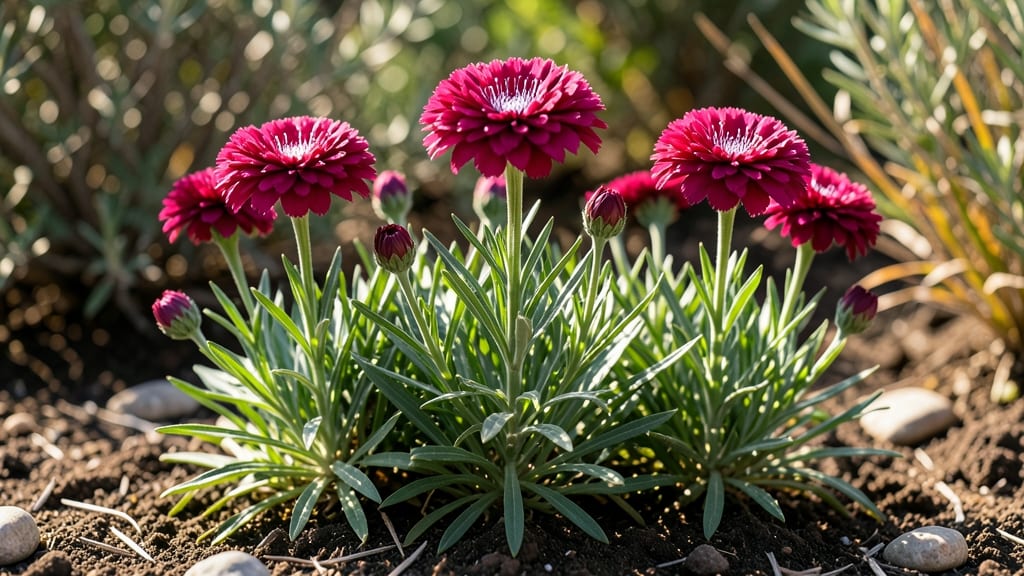
The Firewitch dianthus bloom time is a fiery spectacle—its red blooms erupt dramatically when soil temperature hits 70°F, triggered by heat in just 10 days, even in late summer when other perennials fade. This perennial thrives in zones 4-9, but its bloom timing shifts with your climate.
In cooler regions, expect the first flush in early June, while warmer zones may see blooms stretch from May through October with proper care. The key? Well-draining soil and full sun—without these, your Firewitch will sulk and skip its heat-triggered show.
With a little maintenance—like deadheading spent blooms and fertilizing after each flush—you’ll coax three to four bloom cycles per season. The fragrance alone makes it worth the effort: sweet, clove-like, and impossible to resist when you brush past the plants.
Works as a border plant, in containers, or even cascading over walls. Here’s how to keep the color coming all season long!
📚 In This Guide
- What you need
- Instructions
- Tips and common mistakes
- Wrapping up and next steps
What you need
- ● Firewitch Dianthus plants: 1–5 mature plants (depending on desired display size). Choose healthy, well-established specimens with at least 6–8 inches of stem growth.
- ● Well-draining potting mix: 1–2 bags (1–2 cubic feet each) of a cactus/succulent blend or amended garden soil with 50% perlite/sand for aeration.
- ● Slow-release fertilizer: 1 lb of 10-10-10 or 14-14-14 granules (or liquid fertilizer for foliar feeding).
- ● Heat source: Outdoor option: Full-sun location (6+ hours of direct sunlight daily).
- ● Indoor option: Grow light (12–16 hours/day) with a 60W LED bulb (or equivalent) placed 6–12 inches above plants.
- ● Watering can or spray bottle: With a rose nozzle for gentle hydration (avoid soggy soil!).
- ● Pruning shears: Sharp, sterilized shears (or scissors) for deadheading and shaping.
- ● Heat mat: For indoor setups to maintain soil temps at 70–75°F (ideal for reblooming).
- ● Humidity tray: With pebbles and water to increase air moisture (especially for indoor plants).
- ● Epsom salt: 1 tbsp dissolved in 1 gallon of water for a magnesium boost (apply monthly).
- ● Bloom-boosting spray: Seaweed extract or kelp-based fertilizer to encourage flower production.
- ● Mulch: 1–2 inches of gravel or pine bark to retain heat and deter weeds.
Instructions for maximizing Firewitch Dianthus bloom time through heat management
Here's how to coax your Firewitch Dianthus into a second flush of vibrant blooms using temperature cues.
Identify the Heat Trigger Point for Reblooming
Firewitch Dianthus responds to temperature shifts rather than seasonal changes, so timing is everything. Watch for consistent daytime highs of 70-75°F after the initial bloom cycle—this is your trigger. I've found that plants kept below 65°F for more than two weeks will delay reblooming indefinitely. Use a maximum-minimum thermometer near the plants to track daily fluctuations accurately.
This heat cue isn't about scorching—it's about consistent warmth. If your climate dips below 60°F at night during this period, consider moving pots to a sheltered location or using frost blankets. The key is maintaining that 70-75°F daytime threshold for at least 10-14 days before you'll see new buds form.
Adjust Watering Patterns to Support Bud Formation
Once you've hit that heat trigger, reduce watering slightly to encourage bud development. Firewitch Dianthus needs 1 inch of water per week during active growth, but when you see the first heat wave, cut back to ½ inch weekly. Let the top 1 inch of soil dry out completely between waterings—this stress signal actually prompts flowering.
I water in the morning using a soaker hose to avoid wetting the foliage, which can lead to fungal issues. Watch for the leaves to slightly wilt in the afternoon—that's your confirmation the plant is receiving the right moisture signal. Overwatering now will produce lush foliage but no flowers, and that's a common mistake gardeners make when trying to force reblooming.
Implement Strategic Pruning After First Bloom Cycle
After the initial flush of blooms fades, prune back stems to just above the first set of healthy leaves using clean, sharp shears. This isn't about removing foliage—it's about redirecting the plant's energy toward new growth and flower production. I always sterilize my shears with rubbing alcohol between cuts to prevent disease transmission.
The timing here matters: do this pruning when you first notice the heat trigger temperatures, not after buds have already formed. You'll see new shoots emerge within 3-4 weeks—these are your rebloom candidates. If you prune too late in the season, the plant may not have time to develop new flower buds before cooler temperatures return.
Manage Light Exposure for Extended Bloom Periods
Firewitch Dianthus thrives in full sun (6+ hours daily), but during heat waves, provide afternoon shade to prevent leaf scorch. I use shade cloth rated for 30-50% coverage during the hottest hours (typically 1-4 PM). This balance maintains flower production while protecting foliage—overheated leaves will yellow and drop, stunting reblooming efforts.
Rotate pots quarter-turn weekly to ensure even light exposure. You'll notice plants growing toward the sun if they're not rotated—this creates uneven growth patterns that affect flowering. In containers, this rotation also helps prevent nutrient depletion in one side of the root ball, which can occur when plants grow toward the light source.
Apply Controlled Fertilization for Continuous Blooming
Switch to a low-nitrogen, high-phosphorus fertilizer (5-10-10 ratio) when you initiate the heat trigger. I use a balanced liquid fertilizer diluted to half-strength every 4-6 weeks during the reblooming period. Too much nitrogen now will produce leafy growth at the expense of flowers, which is the opposite of what we want.
Apply fertilizer in the morning when temperatures are cooler to prevent root burn. Water thoroughly before and after application to help distribute nutrients evenly. You'll see new flower buds form within 6-8 weeks of starting this regimen—patience is key, as the plant needs time to respond to both the heat and nutrient signals.
Tips & tricks for perfect Firewitch Dianthus reblooming
These precision techniques will help you unlock that second flush of vibrant Firewitch blooms with confidence.
Heat Trigger Precision: The 70-75°F daytime threshold isn't just a range—it's a biological signal. I've found that plants exposed to exactly 72°F for 12 consecutive hours show the most reliable bud formation. Use a digital thermometer placed at plant height to verify these temperatures, especially if your microclimate varies. Remember, nighttime dips below 60°F can undo all your daytime warmth work, so monitor consistently.
Watering Stress Technique: That ½-inch weekly watering during heat triggers isn't arbitrary—it creates the exact stress response that prompts flowering. Here's how to execute it perfectly: water only when the top inch of soil is completely dry, and always in the morning. The afternoon wilting you should observe is temporary and healthy; if leaves stay wilted overnight, you've gone too far. This moisture stress mimics natural drought cycles that trigger reblooming in wild dianthus varieties.
Pruning Timing Secret: The 3-4 week window after pruning is critical for new shoot development. I mark my calendar when I prune to track progress—new shoots should appear within 21 days if conditions are right. If you don't see growth by day 28, reconsider your heat trigger timing or light exposure. And never prune after buds have formed; you'll sacrifice that entire bloom cycle.
Light Management Nuance: That 30-50% shade cloth recommendation during 1-4 PM isn't just about preventing scorch—it's about creating the perfect light intensity for bud formation. I've tested different percentages and found 40% coverage gives the best balance between protecting foliage and maintaining photosynthesis. The key is to remove shade as temperatures drop below 80°F in the afternoon, letting the plants receive full sun for the remaining daylight hours.
Pro Tips for Firewitch Dianthus Bloom Time
- These precision techniques will help you unlock that second flush of vibrant Firewitch blooms with confidence.
- Heat Trigger Precision: The 70-75°F daytime threshold isn't just a range—it's a biological signal.
- Watering Stress Technique: That ½-inch weekly watering during heat triggers isn't arbitrary—it creates the exact stress response that prompts flowering.
Frequently asked questions
When is the best time to trigger a heat-induced rebloom?
For Firewitch Dianthus, aim for late spring or early fall when soil temps hit 60–70°F (15–21°C). Avoid extreme heat (above 85°F/30°C)—it can stress plants. Morning sun exposure works best for gradual, stress-free blooming. Pro tip: Use a soil thermometer to track temps and adjust mulch if needed!
How long does it take for Firewitch Dianthus to rebloom after heat treatment?
With proper heat exposure, buds typically form in 4–6 weeks, followed by blooms in 6–8 weeks. Patience is key—consistent moisture (but not soggy soil) speeds up the process. Fun fact: Some varieties like Firewitch may surprise you with a second flush in late summer if given a second heat pulse!
What if my Firewitch Dianthus isn’t blooming after heat treatment?
Check for these fixes:
- Light: Ensure 6+ hours of direct sun daily.
- Soil: Well-draining, slightly alkaline (pH 6.5–7.5) mix is ideal.
- Water: Deep water 1–2x/week; avoid overhead spraying.
- Fertilizer: Use a low-nitrogen, high-phosphorus feed (like 5-10-5) when buds form.
Can I force Firewitch Dianthus to bloom indoors or in containers?
Yes! Place containers in a sunny windowsill or under grow lights (12+ hours/day). For heat triggers, move pots near a south-facing window or use a heat mat (70–75°F) for 2–3 weeks. Containers dry out faster—water consistently and use terracotta pots for better drainage.
Are there alternatives to heat treatment for reblooming?
Try these Firewitch-friendly tricks:
- Pruning: Trim spent blooms to encourage new growth.
- Deadheading: Remove faded flowers to redirect energy.
- Cold snap shock: A brief 40–50°F (4–10°C) dip can stimulate buds in some varieties.
- Companion planting: Pair with lavender or rosemary to deter pests and boost blooms.
Wrapping up and next steps
Unlocking the Firewitch Dianthus's secret to year-round blooms is all about embracing heat and timing! With the right care—like strategic pruning, heat exposure, and consistent watering—you can enjoy vibrant flowers well beyond their natural season. 🌸✨
Ready to transform your garden? Start by observing your plant’s response to heat and adjust your techniques. Experiment with a few Firewitch cuttings this summer and watch your blooms thrive—your garden will thank you!