
Blooming
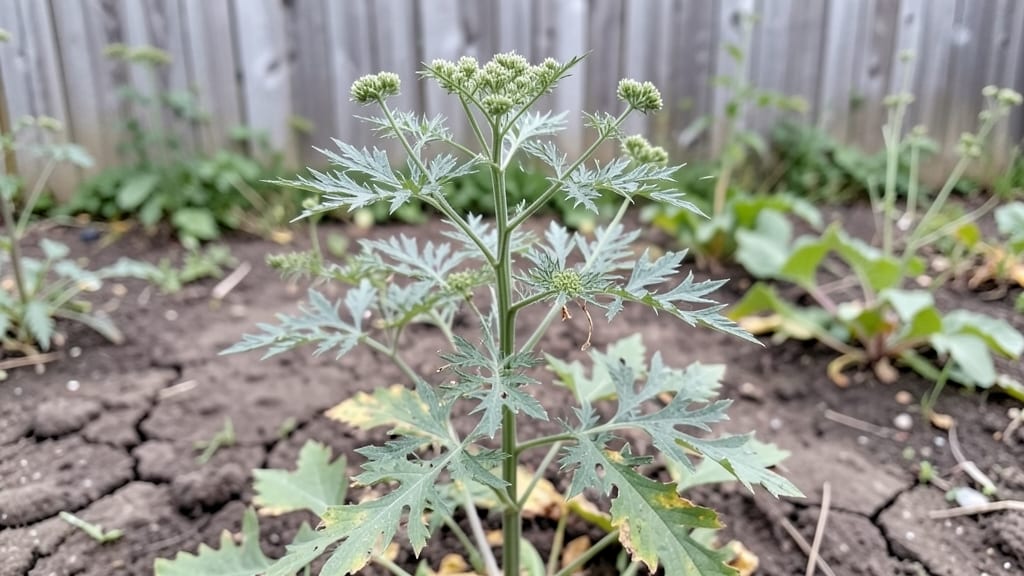
Ragweed blooms annually from late summer through fall, typically between August and November, releasing high levels of pollen that trigger seasonal allergies. Its small, green flowers grow in clusters and are rarely noticed until they cause reactions.
Ragweed’s explosive growth is what makes it such a potent allergen—it can shoot up from the ground in just a few weeks, reaching heights of 3-6 feet before bursting into flower. 🌿 Unlike many plants that rely on insects, ragweed depends entirely on wind to spread its pollen, which is why it produces so much of it: each plant can release 1 billion grains per season.
This wind-driven process is why pollen counts skyrocket during its peak bloom months, often overwhelming even those who don’t typically suffer from allergies.
What’s particularly frustrating is how easily ragweed blends into landscapes—its tooth-edged leaves and greenish-yellow flowers often go unnoticed until the sneezing starts. I’ve seen it pop up in cracks of sidewalks, vacant lots, and even well-maintained yards, making it nearly impossible to avoid entirely.
The key to managing exposure is recognizing its signature traits early, before the pollen takes over.
💡 In This Article
- Ragweed Bloom Cycle and Pollen Production
- Identifying Ragweed Blooms in Gardens and Landscapes
Ragweed bloom cycle and pollen production
The ragweed bloom cycle begins with an aggressive growth spurt that turns this weed into an allergy powerhouse. After winter dormancy, ragweed seeds germinate in early spring, but the plants remain low to the ground until late summer.
Here's what's actually happening: when day lengths shorten and temperatures stabilize around 70-80°F, ragweed triggers a hormonal response that accelerates its growth by up to 3 inches per week.
This rapid vertical expansion allows it to outcompete other plants for sunlight, positioning itself perfectly for its 6-8 week flowering window.
The key to ragweed's pollen dominance lies in its wind pollination strategy. Unlike bees that collect nectar, wind carries ragweed's pollen in massive clouds—each flower cluster can produce 10 million pollen grains per square foot during peak bloom.
These grains are tiny (0.01 millimeters in diameter), allowing them to stay airborne for hours and travel miles. The plant's greenish flowers lack showy petals, conserving energy for pollen production instead.
This explains why pollen counts often peak in the morning when humidity is low and winds are calm, trapping pollen near ground level where we breathe it in.
Comparing ragweed's bloom timing to other allergenic plants reveals its unique position in the seasonal allergy timeline. While tree pollens dominate in spring (March-May) and grass pollens peak in late spring to early summer (May-July), ragweed takes over in late summer through fall.
What most people don't realize is that ragweed pollen counts can remain high even after the first frost—its hardy nature means it continues producing pollen until temperatures drop below 32°F for extended periods.
This extended season is why ragweed is responsible for 75% of all hay fever cases in North America.
Ragweed's bloom cycle is also influenced by its ability to self-pollinate, meaning it doesn't need other plants to reproduce. This ensures consistent pollen production even in isolated patches.
The plant's roots can extend 6-12 inches deep, allowing it to access water from deeper soil layers during dry periods—a survival advantage that contributes to its persistence.
When you consider that a single ragweed plant can produce 1,000 seeds per year, each capable of growing into a new pollen-producing machine, the botanical strategy becomes clear: maximize reproduction through sheer volume rather than quality.
The late summer timing of ragweed's bloom isn't random—it's an evolutionary adaptation. By flowering when other plants are winding down, ragweed faces less competition for pollination vectors (wind) and resources. The warm, dry conditions of late summer also create ideal conditions for pollen dispersal.
Interestingly, ragweed's pollen is so abundant that it can be detected up to 40 miles downwind from its source, explaining why allergy sufferers in urban areas often experience symptoms even when no visible ragweed exists nearby.
What makes ragweed particularly challenging is how its pollen production correlates with temperature trends. Research shows that for every 1°F increase in average fall temperatures, ragweed pollen seasons extend by 3-5 days.
This climate sensitivity means allergy seasons are getting longer in many regions—a direct consequence of ragweed's biological adaptations to warmer conditions. The plant's ability to thrive in disturbed soils, from construction sites to garden beds, further amplifies its impact on human health.