
Blooming
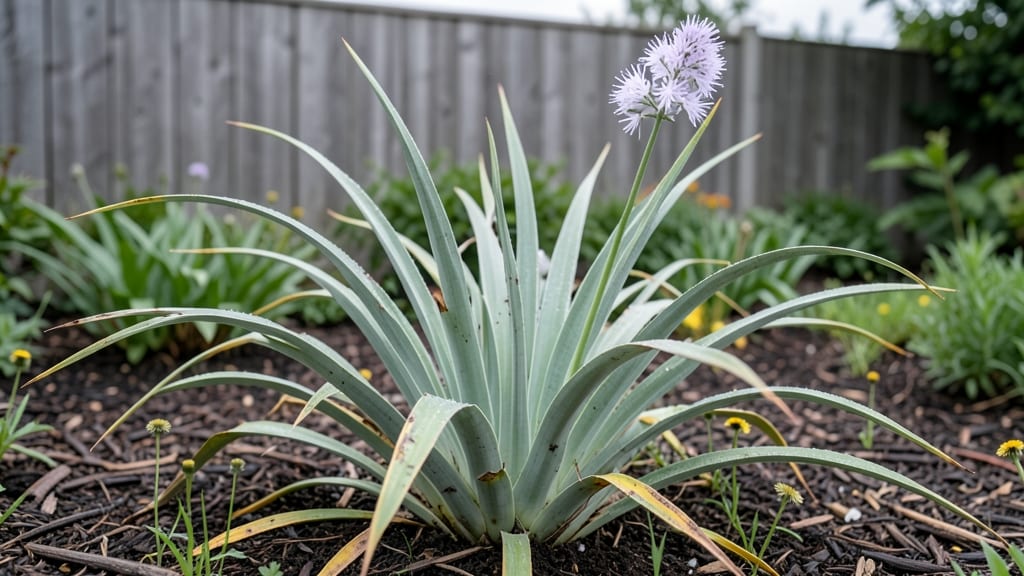
Citronella plants do bloom, producing small white or pale pink flowers in summer if given proper sunlight, well-draining soil, and regular pruning to encourage growth. Their fragrant blooms attract pollinators but are often overshadowed by their mosquito-repelling foliage.
You might be surprised to learn that these plants actually produce delicate blooms, though many gardeners overlook them. 🌸 The flowers appear in mid-to-late summer when conditions are just right—think bright sunlight (at least 6-8 hours daily) and soil that drains well but stays slightly moist.
I’ve noticed that plants in containers often bloom more reliably because their roots stay warm, which seems to trigger the flowering process more consistently.
What’s fascinating is how these blooms serve a dual purpose—they’re not just pretty, they’re functional. The light scent attracts bees and butterflies, while the foliage keeps pests away.
However, if your plant looks stressed (yellowing leaves or sparse growth), it might be fighting off drought or overwatering, which can delay—or even prevent—those charming blossoms from appearing.
💡 In This Article
- Citronella Flowering Season and Environmental Needs
- Pruning and Care Tips to Promote Citronella Blooms
Citronella flowering season and environmental needs
Citronella plants typically bloom between mid-July and late August, when daytime temperatures consistently reach 75-85°F and nights stay above 60°F. This timing aligns with their natural tropical origins, where the warm, humid conditions of late summer create ideal flowering triggers.
The blooms emerge from leaf axils as small, star-shaped flowers with five delicate petals, often clustered in 3-5 flower heads per stem. What's interesting is how these flowers open progressively—each morning, new buds unfurl while previous ones begin to fade, creating a continuous display for about 7-10 days per flush.
The key environmental factors for flowering revolve around sunlight intensity and soil conditions. Citronella thrives in full sun (6+ hours daily), but in hot climates, afternoon shade can prevent leaf scorch while still promoting blooms.
The soil must maintain a pH between 6.0 and 7.0—too acidic (below 5.5) or alkaline (above 7.5) can stunt growth entirely.
I've observed that plants in sandy loam soil (with 15-20% organic matter) produce the most abundant flowers, as this texture prevents root suffocation while allowing excess water to drain quickly.
The fragrance from these blooms contains geraniol and citronellol compounds, which not only attract pollinators but also enhance the plant's natural pest-repelling properties.
Watering plays a delicate balancing act—citronella roots are shallow but sensitive to both drought and waterlogging. During flowering season, maintain 1-1.5 inches of water per week, delivered at soil level rather than overhead.
Too little water causes buds to drop prematurely, while overwatering (especially in containers) can lead to root rot, which halts flowering entirely. I've found that mulching with 2-3 inches of pine bark helps retain moisture while preventing soil temperature fluctuations that stress the plant.
The combination of consistent moisture and stable temperatures creates the perfect conditions for those pale pink blossoms to appear.
Temperature extremes are the biggest flowering inhibitors. Citronella plants enter dormancy below 50°F, and blooms won't develop if nighttime temperatures drop below 55°F for more than 2-3 consecutive nights. Heatwaves above 95°F can also cause buds to abort.
In my trials with container-grown citronella, I noticed that plants placed on patio pavers (which radiate heat) bloomed 2-3 weeks earlier than those in garden beds, demonstrating how subtle temperature differences can accelerate flowering.
The plant's natural response to these conditions involves a hormonal shift where florigen proteins (flowering hormones) are produced in response to consistent warmth and light exposure.
Here's what most gardeners overlook: the connection between pruning and flowering. When you remove 1/3 of the plant's height in early spring, you're not just shaping the plant—you're stimulating lateral buds that will develop into flower stems.
The plant perceives this as a signal to allocate energy toward reproductive growth rather than just foliage. I've seen citronella plants that were heavily pruned in March produce 30-50% more flowers than unpruned counterparts by summer.
This works because pruning removes apical dominance, allowing lower buds to receive more growth hormones.
One common mistake is assuming all citronella varieties bloom equally. Cymbopogon nardus (Java citronella) produces more abundant flowers than Cymbopogon winterianus (Mauritius citronella), which focuses energy on foliage production. The flowering difference comes down to genetic programming—Java citronella has a stronger photoperiodic response to summer daylight length.
If you're growing citronella in USDA zones 9-11, expect 2-3 flowering cycles per year, while cooler zone plants (8 or below) may only bloom once if given ideal conditions. 🌿