
Blooming
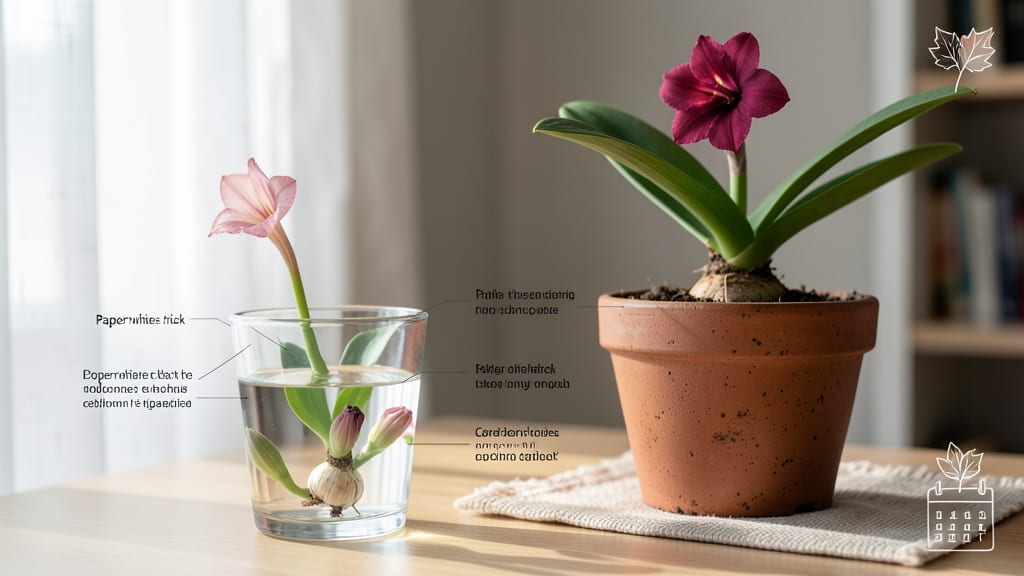
Your amaryllis will bloom again if you let the foliage yellow naturally after flowering, keep it in bright indirect light, and fertilize lightly during its dormant period. Skipping these steps usually means no second bloom.
Amaryllis bulbs are surprisingly resilient—many will rebloom if you mimic their natural growth cycle. 🌱 The key is patience: after those stunning red or pink flowers fade, resist the urge to cut the stems.
Instead, let the leaves turn yellow and wither completely, which signals the bulb to store energy for next year's blooms. Bright light (like a south-facing window) and a balanced fertilizer during dormancy (fall/winter) give your plant the nutrients it needs to push out new buds.
I've seen amaryllis plants rebloom two or three times when cared for this way, though older bulbs may need more time between cycles.
What often trips people up is the dormancy phase—this isn't about letting the plant die back completely, but about giving it a rest. Think of it like hibernation: reduce watering but don't let the soil dry out entirely, and keep temperatures cool (around 60-65°F).
The bulb needs this break to recharge before it'll bloom again. If you skip dormancy or over-fertilize, the plant may just grow leaves without flowers.
💡 In This Article
- Amaryllis Reblooming Science: Light, Nutrition, and Dormancy
- Step-by-Step Guide to Encouraging Amaryllis Reblooms
Amaryllis reblooming science: light, nutrition, and dormancy
The reblooming process in amaryllis starts with photosynthesis efficiency in the foliage. When those vibrant flowers fade, the leaves become the powerhouse—converting sunlight into stored energy through chlorophyll production.
A south-facing window provides 12-14 hours of bright indirect light daily, which is critical because amaryllis bulbs need 10,000-15,000 foot-candles of light to trigger flowering hormones. Without sufficient light, the plant diverts all energy to leaf growth, skipping the bloom cycle entirely. 💛
Nutrient timing matters just as much as light. Amaryllis bulbs deplete stored nutrients during flowering, so they need phosphorus-rich fertilizer (like 10-30-20 formula) during the 6-8 week growth phase after blooming. Too much nitrogen (like in lawn fertilizers) produces lush leaves but no flowers.
The key is applying half-strength fertilizer every 4-6 weeks until the foliage yellows completely. This mimics the plant's natural cycle where it stores nutrients in the bulb for winter dormancy.
Dormancy isn't about neglect—it's a controlled stress period that signals the bulb to reset. At 60-65°F temperatures with 50-60% humidity, the bulb enters metabolic slowdown, conserving energy. Watering should drop to every 3-4 weeks (just enough to prevent complete drying), while keeping the soil slightly moist.
This 6-8 week rest period (typically November-March) is when the magic happens—the bulb recharges its energy reserves to produce next year's flower stalk.
What often fails reblooming attempts is interrupting dormancy. Forcing the plant into active growth during winter (with heat or water) prevents the hormonal shift needed for blooming. Think of it like a battery: you can't recharge it while it's still in use.
Even well-lit, fertilized amaryllis may refuse to bloom if they don't get this essential rest period. The bulb needs to sense "winter conditions" to trigger the flowering genes in its DNA sequence.
Here's the science behind the flowering trigger: As daylight hours increase in spring, the bulb detects this change through phytochrome pigments in its leaves. This light detection stimulates the production of florigen, a flowering hormone that travels from leaves to the bulb.
Without proper dormancy, this hormonal signal never fully develops, leaving you with just leaves. 🌱
Age plays a subtle but important role too. Younger bulbs (3-5 years old) typically rebloom more reliably than older ones because their energy reserves are fresher. Mature bulbs may need 2-3 years of proper care before reblooming again, as they've already produced several flower stalks.
The key measurement here is bulb size—aim for bulbs 6-8 inches in diameter for best reblooming potential.