
Blooming
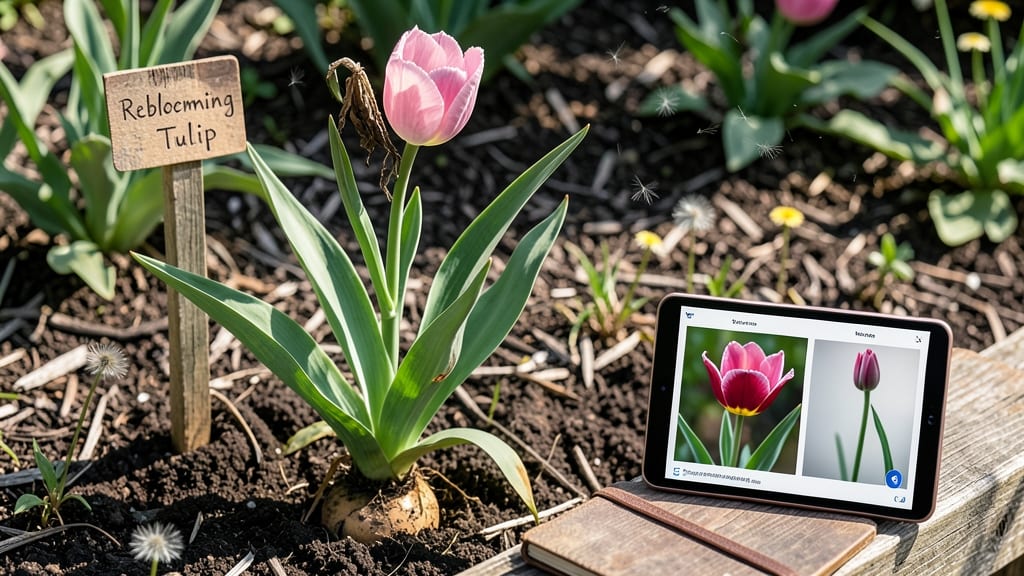
Most tulips do bloom more than once, but only the second time is typically weaker since they redirect their energy toward storing nutrients in the bulb after flowering. Specific varieties like Darwin Hybrids, Fringed, and Parrot tulips can produce a second bloom with proper deadheading, fertilization, and seasonal care.
This single-bloom behavior occurs because tulips are perennial bulbs that prioritize bulb replenishment over repeated flowering. 🌱 After their main bloom, they focus on building energy reserves for next year's growth rather than producing flowers again.
The reblooming varieties I mentioned are exceptions—they've been selectively bred to store enough energy to attempt a second bloom, but even then, it requires consistent care like removing spent blooms (deadheading) and providing balanced nutrients.
For non-reblooming types, their post-bloom decline is actually a survival strategy—it ensures the bulb remains strong for future seasons. What's fascinating is that climate and soil quality play huge roles too: tulips in cooler regions with well-draining soil often perform better overall, including better reblooming potential when encouraged.
💡 In This Article
- Why Most Tulips Bloom Only Once Per Year
- How to Encourage Reblooming in Tulip Varieties
Why most tulips bloom only once per year
Tulips follow a biological strategy where their primary energy after flowering goes toward bulb replenishment rather than producing another set of blooms. When a tulip flower opens, it's already using up to 70% of the bulb's stored energy to create stems, leaves, and petals.
This leaves little remaining for a second flowering cycle. The bulb's job after blooming is to rebuild its reserves through photosynthesis in the leaves—this process is called tuberization, where starches are converted back into energy storage.
The timing of this energy shift is critical. Most tulip varieties enter a dormancy phase about 6-8 weeks after blooming, during which the leaves turn yellow and die back.
This isn't just wilting—it's the plant's way of signaling the bulb to stop feeding the leaves and redirect all nutrients inward. 🌱 The bulb's skin even thickens to prevent moisture loss, a survival mechanism that prioritizes long-term storage over short-term flowering.
Climate plays a role here too: tulips in warmer regions may enter dormancy earlier, while cooler climates can extend the growing season slightly, but the energy trade-off remains the same.
Soil quality directly impacts this process. Tulips thrive in well-draining soil with a pH between 6.0 and 7.0, which allows their roots to efficiently absorb water and nutrients.
Poor drainage or overly rich soil can lead to bulb rot or weak growth, forcing the plant to divert even more energy toward survival rather than potential reblooming.
The bulb's size matters too—larger bulbs (typically 12/14 size or larger) have more stored energy to begin with, which is why they often perform better in subsequent years, but still rarely rebloom without intervention.
What's fascinating is that this single-bloom behavior is actually an evolutionary advantage. Tulips native to Central Asia, where they originally grew, experience harsh winters and limited growing seasons. By focusing all their energy on one spectacular bloom followed by robust bulb storage, they ensure survival through multiple seasons.
This strategy is so effective that even modern cultivated varieties retain it—unless selectively bred for reblooming, like Darwin Hybrids, which we'll explore next.
There's also a hormonal factor at play. After flowering, tulips produce higher levels of abscisic acid, a plant hormone that triggers dormancy and prevents new flower buds from forming.
This chemical signal is stronger in non-reblooming varieties, effectively "shutting down" the flowering process until next year's cycle begins. 💫 Even with ideal care, breaking this hormonal cycle requires precise timing and conditions that most gardeners don't provide accidentally.
The one exception to this rule is when tulips are grown in container gardens with controlled conditions. In pots, gardeners can remove spent blooms and provide consistent care, which sometimes tricks the plant into attempting a second bloom.
However, this second bloom is typically smaller, weaker, and less vibrant than the first, as the bulb is now divided between flowering and maintaining its own health.