
Blooming
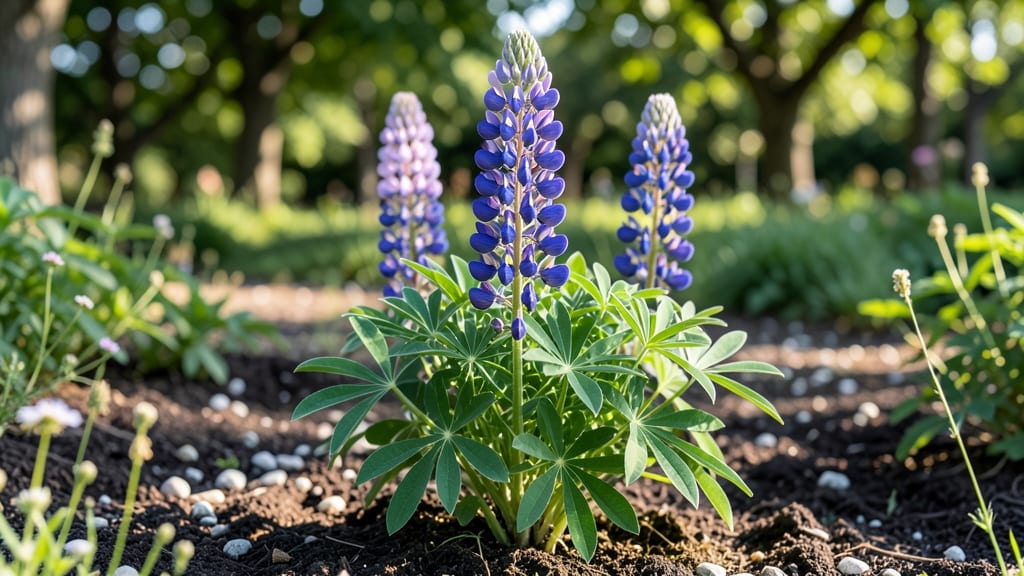
Lupines do not bloom the first year, focusing instead on building a deep root system. Most varieties need 1-2 years before flowering, though dwarf types might bloom sooner with ideal growing conditions.
This delayed flowering is actually a survival strategy—lupines prioritize root growth to anchor themselves and store nutrients. 🌱 The first year is all about establishing a strong foundation, especially in cooler climates where lupines need to build resilience before flowering.
Some gardeners report that dwarf varieties like 'Russell Lupine' or 'Sunset' can produce flowers in their first year if given rich, well-draining soil and consistent moisture.
What's fascinating is how lupines respond to environmental cues—longer daylight hours and warmer temperatures in the second year trigger their flowering genes. I've seen lupines that skipped blooming entirely in their first year but produced stunning 12-inch spikes of vibrant flowers the following spring.
Patience really pays off with these hardy perennials!
💡 In This Article
- Why Lupines Delay Flowering in Their First Year
- Encouraging Early Lupine Blooms: Care Tips for First-Year Seedlings
Why lupines delay flowering in their first year
Lupines follow a biennial growth pattern, where the first year is dedicated entirely to root development rather than flowering. This strategy allows them to establish a deep taproot system that can reach 3-5 feet underground, anchoring the plant and accessing nutrients from lower soil layers.
The energy allocated to root growth—often 70-80% of the plant's resources—creates a robust foundation for future blooms. 🌱 Unlike annuals that flower and die in one season, lupines store carbohydrates in their roots, similar to how onions or tulip bulbs prepare for next year's growth.
The decision to flower is controlled by a combination of internal and external factors. Lupines have a built-in mechanism called vernalization, where exposure to cold temperatures (typically 40-50°F for several weeks) triggers hormonal changes that prepare the plant for flowering.
This explains why lupines planted in cooler climates often bloom later than those in warmer regions. Additionally, lupines are sensitive to daylight length—most varieties require 14-16 hours of daylight to initiate flowering, which usually occurs in their second year when spring days lengthen.
The plant's leaves contain specialized cells that detect light duration and signal the roots to begin producing flower buds.
This delayed flowering isn't just about timing—it's a survival adaptation. Lupines native to Mediterranean climates evolved to avoid flowering during dry summers when water is scarce. By focusing on root growth first, they ensure they have sufficient reserves to produce 20-50 flowers per spike when conditions are optimal.
The vibrant colors of lupine blooms (purple, blue, yellow, or white) are actually a byproduct of this strategy—they attract pollinators to ensure successful seed production once the plant finally decides to flower. 💜 The energy stored in those deep roots can support flowering for several years, making lupines a low-maintenance perennial once established.
There are exceptions to this rule, particularly among dwarf varieties like 'Blue Dwarf' or 'Thomas Hogg' lupines. These smaller species (12-18 inches tall) may produce a few flowers in their first year if given perfect growing conditions—well-draining soil with pH 6.0-7.5, consistent moisture, and protection from strong winds.
However, even these dwarf varieties typically produce more robust blooms in their second year, when they've had time to develop a stronger root system. The trade-off between early flowering and long-term vigor is why most gardeners accept the biennial nature of lupines as part of their charm.
What's particularly interesting is how lupines manage their energy allocation. During the first year, lupines prioritize nitrogen fixation through their root nodules—a symbiotic relationship with soil bacteria that converts atmospheric nitrogen into usable forms.
This process requires significant energy but pays off by reducing the plant's need for external nitrogen sources. By the time lupines are ready to flower, they've essentially created their own fertilizer bank, which contributes to their hardiness and ability to thrive in poor soils.
This biological efficiency is one reason lupines are valued in agricultural rotations and natural ecosystems. 🌿
For gardeners eager to see lupines bloom sooner, understanding this growth pattern is key. While you can't force lupines to flower in their first year, you can create optimal conditions that might encourage limited blooming in dwarf varieties.
The secret lies in mimicking their natural environment—providing well-draining soil, adequate sunlight (6-8 hours daily), and consistent moisture without waterlogging. Even then, the plant's internal clock may still prioritize root development over flowering. Patience, as they say, is a gardener's virtue when it comes to lupines!