
Blooming
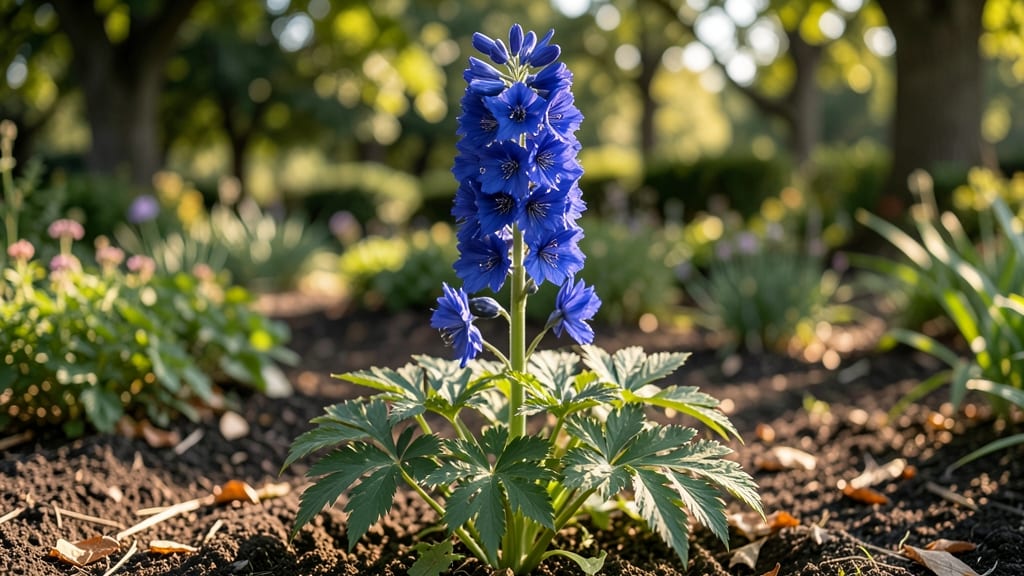
Larkspur blooms all summer only in cooler climates or with consistent moisture; most varieties peak in spring and early summer, fading by mid-summer heat or drought. Annual types may rebloom with deadheading, while perennials often decline after initial flushes.
Larkspur's summer bloom duration depends entirely on climate and care. 🌿 In hotter regions, these delicate flowers typically wilt by July unless you provide afternoon shade or frequent watering—think of them as high-maintenance divas that need perfect conditions.
Annual larkspur can sometimes produce a second flush if you remove spent blooms regularly, while perennials usually put all their energy into one spectacular spring show before resting.
The key difference lies in their root systems: annuals have shallow roots that dry out quickly, while perennials store energy underground but still struggle with prolonged heat.
💡 In This Article
- Larkspur Bloom Cycles by Variety and Climate
- Extending Larkspur Blooms Through Summer Care
Larkspur bloom cycles by variety and climate
Annual larkspur varieties like 'Bicolor Mix' or 'Russell Hybrid' follow a predictable pattern: they burst into bloom in late spring (typically May) and continue producing flowers until early July in most temperate zones.
Their bloom cycle is driven by day length and temperature—once average highs exceed 85°F (29°C), the plants detect heat stress and shift energy toward seed production rather than new blooms.
This is why you'll often see larkspur gardens looking vibrant in May but suddenly sparse by August, even if the plants appear healthy.
The key difference between annuals and perennials lies in their biological strategies. Annual larkspur completes its entire life cycle in one season, while perennial types like 'Blue Bird' or 'Munstead' store energy in deep taproots.
Perennials may produce a spectacular first flush in spring, but by mid-summer, they often enter a semi-dormant state—especially in hotter climates (USDA zones 7-9). This dormancy isn't death; it's a survival mechanism where the plant conserves moisture until cooler temperatures return in fall. The trade-off?
Perennials typically don't rebloom unless given ideal conditions.
Climate plays a starring role in extending summer blooms. In cooler maritime zones (like the Pacific Northwest or UK gardens), larkspur often continues flowering into August because nighttime temperatures rarely drop below 55°F (13°C). The secret?
Consistent moisture—larkspur roots need 1-1.5 inches (2.5-4 cm) of water per week during active growth. In contrast, desert climates (USDA zone 9+) may see larkspur wilt entirely by June unless you provide afternoon shade or drip irrigation.
The plant's native Alpine habitats taught it to thrive in cool, moist conditions, so replicating those is essential for summer success. 🌸
Heat stress triggers a physiological response called abscission, where the plant sheds buds and flowers to conserve energy. This happens when leaf temperatures exceed 95°F (35°C) for more than a few hours. The result? Buds dry up before opening, and existing blooms wilt within days.
This is why deadheading (removing spent flowers) can sometimes coax a second flush—it signals the plant to focus on new growth rather than seed production. However, this only works if temperatures stay below 80°F (27°C) consistently.
Regional growing zones also dictate bloom duration. In USDA zones 3-5 (cool continental climates), larkspur often blooms from May through September because summer temperatures rarely exceed 75°F (24°C). Meanwhile, in zones 6-9, gardeners must use shade cloth (30-50% coverage) to protect plants from afternoon sun.
The difference? In full sun without protection, larkspur in zone 7 may bloom for just 6-8 weeks, while shaded plants can extend this to 10-12 weeks. The moral? Location matters more than variety when planning for summer blooms. 🌿
One surprising exception is 'Giant Mixed' larkspur, which sometimes produces a second bloom cycle in late summer if given perfect conditions. The catch? This requires daily watering, weekly fertilization with high-phosphorus feed, and protection from pests like aphids, which thrive in the same warm, humid conditions that stress larkspur.
It's a delicate balance, but possible with diligent care. For most gardeners, however, accepting larkspur's seasonal nature is easier than fighting its biological limits. 💫