
Blooming
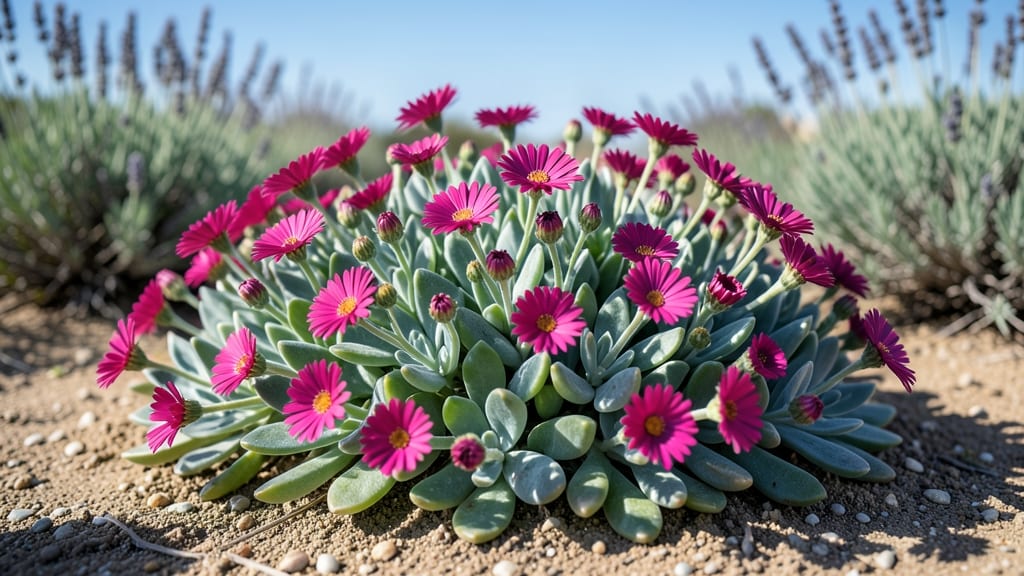
Ice plants do bloom all summer in warm climates, producing vibrant flowers from early spring through fall, though late-season blooms may slow as temperatures drop below 70°F. Deadheading spent blooms encourages prolonged flowering, while proper watering and sunlight exposure maximize their summer display.
These drought-tolerant succulents thrive in summer heat thanks to their ability to store water in thick leaves, which lets them survive dry spells while still producing bright blooms. 🌵 The key to keeping them flowering is maintaining consistent moisture without overwatering—think of them like desert plants that need occasional hydration rather than constant soaking.
Varieties like Delosperma cooperi and Lampranthus spectabilis are particularly reliable for summer color, often continuing to bloom until frost if given enough sunlight and minimal care.
What sets ice plants apart is their adaptability to heat and their low-maintenance nature. Unlike many annuals that fade in summer, these perennials (in warm zones) or tender perennials (in cooler areas) bounce back with minimal intervention.
The secret lies in their deep root systems and waxy leaf coatings that reduce water loss, making them perfect for hot, sunny gardens where other plants struggle.
💡 In This Article
- Why Ice Plants Thrive in Summer Heat
- Best Ice Plant Varieties for Continuous Summer Blooms
Why ice plants thrive in summer heat
Ice plants (genus Delosperma and Lampranthus) have evolved remarkable adaptations for summer blooming, starting with their succulent leaves that act as built-in water reservoirs.
These thick, fleshy leaves store moisture during dry spells, allowing the plant to continue flowering even when rainfall is scarce. 🌵 For example, Delosperma cooperi can store enough water to sustain blooming for weeks without supplemental irrigation in 90°F+ temperatures—a trait that sets it apart from many ornamental plants.
Their heat tolerance extends to their root systems, which grow deep to access groundwater while their shallow, fibrous roots spread wide to capture surface moisture. This dual strategy ensures they remain hydrated during prolonged dry periods.
Additionally, their waxy leaf coating minimizes water loss through transpiration, similar to how cacti conserve moisture in arid environments. These adaptations explain why ice plants often outperform traditional summer annuals like petunias, which wilt under similar conditions.
Photoperiod sensitivity also plays a crucial role in their prolonged blooming. Unlike many plants that rely strictly on day length, ice plants trigger flowering based on temperature cues and available moisture.
When daytime temperatures stay above 75°F for extended periods, they enter a continuous bloom cycle that can last from spring through fall. This is why they thrive in USDA zones 7-11, where summer heat is consistent and winters are mild enough to avoid dormancy.
Sunlight exposure is equally critical—ice plants require 6+ hours of direct sun daily to maintain vigorous growth and flowering. Their bright flowers (often pink, purple, or yellow) contain pigments that reflect excess heat while absorbing sunlight for photosynthesis.
In shaded conditions, their blooming slows dramatically, as they prioritize leaf growth over flower production. This is why gardeners in hot climates often place them in full sun where other plants might scorch.
One fascinating mechanism is their ability to "pause" blooming during extreme heat waves (above 100°F).
The plant conserves energy by reducing flower production until temperatures moderate, then resumes blooming—this built-in survival strategy explains why they often continue flowering long after other summer plants have faded. 🌸 Understanding these adaptations helps gardeners create optimal conditions for year-round color.
For those in cooler climates, selecting varieties with heat-tolerant genetics (like Lampranthus spectabilis) ensures better summer performance. These plants can handle brief temperature dips below 50°F at night without significant stress, making them more versatile than traditional summer annuals.