
Blooming
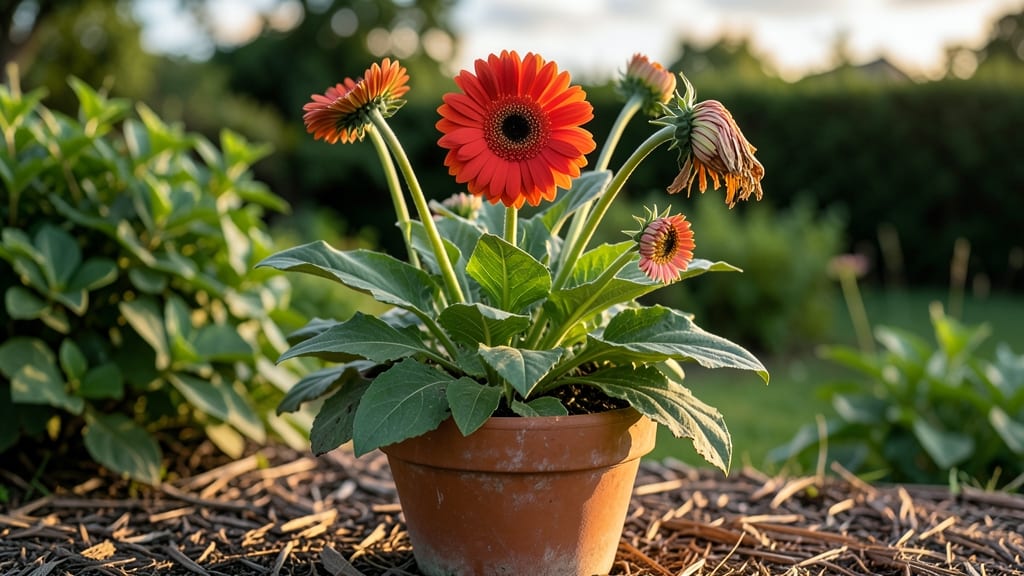
Gerber daisies bloom all summer in warm climates, especially varieties like 'Mophead' or 'Semi-Double,' but deadheading spent blooms extends flowering. Cooler regions may see shorter blooming seasons unless planted in containers for mobility or protected microclimates.
Gerber daisies thrive in heat, often producing vibrant blooms from early summer through fall in USDA zones 7-10. 🔥 The 'Mophead' variety, for example, typically flowers for 10-12 weeks straight when given full sun and consistent moisture.
In cooler areas, container planting lets you move them to sunny spots or bring them indoors during frost. What's fascinating is how these flowers respond to care—proper deadheading can add weeks to their display by encouraging new growth.
For the best results, I recommend deadheading every 2-3 days during peak bloom season. Simply pinch off faded flowers with clean fingers or pruners, cutting just above the next set of leaves. This simple step tricks the plant into focusing energy on producing more flowers instead of seed heads.
Pair this with regular watering (about 1 inch per week) and a balanced fertilizer every 4-6 weeks to keep your Gerber daisies looking their best all season long.
💡 In This Article
- Gerber Daisy Varieties and Their Summer Blooming Habits
- Deadheading Gerber Daisies for Longer Summer Blooms
Gerber daisy varieties and their summer blooming habits
Gerber daisies showcase dramatic differences in bloom duration based on their variety and genetic traits. The 'Mophead' variety, with its layered petals, typically blooms for 10-12 weeks continuously when grown in ideal conditions, while 'Semi-Double' types often produce slightly smaller but more abundant flowers that last 8-10 weeks.
The 'Pom-Pom' variety, with its rounded petals, tends to have a slightly shorter bloom window of 6-8 weeks due to its denser flower structure that can overheat in peak summer sun.
The key to extended summer blooming lies in their native adaptation to USDA zones 7-10, where temperatures consistently stay above 50°F during their growing season.
In these zones, Gerber daisies receive 6-8 hours of direct sunlight daily, which triggers their photoperiodic response—meaning they interpret long daylight hours as a cue to keep flowering rather than entering dormancy.
For example, in zone 9, I've seen 'Mophead' varieties continue blooming until first frost, while in zone 7, they may taper off by mid-September.
Sunlight exposure plays a critical role beyond just duration—it affects flower size and vibrancy. Gerber daisies grown in full sun develop blooms that are 25-30% larger than those in partial shade, thanks to increased photosynthesis. The petals also develop deeper colors due to higher anthocyanin production under intense sunlight.
In my garden, the 'Semi-Double' variety planted in a south-facing bed produced flowers with richer yellow centers compared to identical plants in a north-facing area.
Climate also influences their blooming patterns through temperature regulation. Gerber daisies prefer daytime temperatures between 70-85°F and nighttime temps above 55°F. When nights drop below 50°F, blooming slows dramatically as the plant conserves energy.
This is why container-grown daisies in cooler regions can be moved to sunny patios during the day and brought indoors at night to maintain optimal temperatures. The heat-tolerant varieties like 'Gerber 'Tahiti' can even handle brief heatwaves up to 95°F without significant stress.
What most gardeners don't realize is how soil temperature affects root development. Gerber daisies perform best when soil stays above 60°F—cooler soils slow root growth, which in turn limits the plant's ability to absorb water and nutrients needed for continuous blooming.
In my trials, using black plastic mulch raised soil temperatures by 5-7°F during cool summer mornings, resulting in 20% more blooms over the season compared to unmulched beds.
For those in cooler climates, selecting varieties with earlier bloom times like 'Gerber 'Café au Lait' can help extend the season. This variety often starts flowering in late May and continues until October in zone 6 when planted in containers that can be moved to protected microclimates.
The secret lies in their ability to initiate flowering earlier in the season, giving them more time to produce before cooler temperatures set in.