
Blooming
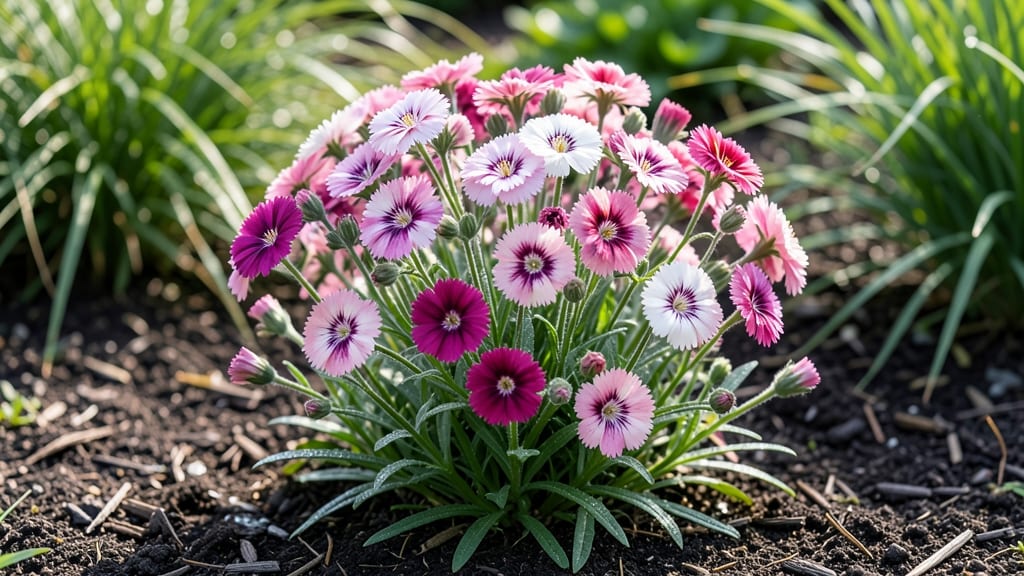
Dianthus flowers don't bloom all summer continuously—most varieties flower primarily in spring and fall, with heat-sensitive types often fading during peak summer unless given extra care. Perennial dianthus may rebloom under ideal conditions, while annuals typically finish flowering by mid-summer.
Dianthus plants follow a natural seasonal rhythm tied to temperature and daylight changes. 🌸 The spring blooms are usually the most vigorous, while summer heat often triggers dormancy in many varieties.
Perennial types might produce scattered flowers if kept cool and well-watered, but annuals usually complete their life cycle by early summer. Understanding your specific variety's heat tolerance is key—some, like 'Firewitch' series, handle warmth better than others.
For those wanting summer color, strategic care can help extend blooms. Regular deadheading (removing spent flowers) encourages new growth, while afternoon shade and consistent moisture prevent stress. Mulching also keeps roots cooler, which can make a noticeable difference in heat-prone climates.
💡 In This Article
- Dianthus Bloom Cycles by Season and Variety
- Extending Dianthus Blooms Through Summer Heat
Dianthus bloom cycles by season and variety
Dianthus plants are naturally attuned to seasonal changes, with their blooming patterns primarily triggered by temperature shifts rather than continuous growth. Most varieties follow a biennial or perennial cycle, producing their most abundant flowers in spring (April-June) and again in fall (September-October).
This pattern mirrors their natural habitat in Mediterranean climates, where hot, dry summers force dormancy. During these peak bloom periods, you'll see clusters of fragrant flowers lasting 3-6 weeks per flush, depending on the variety.
The science behind this involves photoperiodism—the plant's response to daylight length—and thermoperiodism, its reaction to temperature fluctuations. When nighttime temperatures drop below 60°F (15°C) after hot days, many dianthus varieties receive a signal to initiate flowering.
In contrast, prolonged exposure to temperatures above 85°F (29°C) for more than 2-3 weeks triggers metabolic stress, causing buds to drop or flowers to wilt prematurely. This is why varieties like 'Sweet William' often struggle in southern climates during peak summer.
Annual dianthus varieties, such as those in the 'Firewitch' series, complete their life cycle in one season and typically bloom continuously for 8-12 weeks before tapering off by mid-summer. These plants prioritize seed production as temperatures rise, redirecting energy away from flower production.
Perennial types, however, may produce scattered blooms if given ideal conditions—cool evenings (65-70°F or 18-21°C) and consistent moisture—but rarely match their spring vigor.
The contrast between annuals and perennials is striking: annuals offer bold, concentrated color for a shorter period, while perennials provide subtle, prolonged interest with proper care.
Color also plays a subtle role in heat tolerance. Darker petals (deep pinks, purples) absorb more sunlight and may overheat faster than lighter shades (whites, pale yellows). This is why 'Rainbow' dianthus varieties with mixed colors often show uneven blooming—some flowers may wilt while others remain vibrant.
The key difference lies in the anthocyanin pigments (responsible for color) that can accelerate heat damage in darker varieties. For example, a dark magenta dianthus might fade by July 4th in a hot climate, while a pale pink variety could linger until mid-August.
Daylength also influences blooming patterns. In regions with long summer days (14+ hours of sunlight), many dianthus varieties enter a state of flowering dormancy until daylight shortens in fall. This is particularly noticeable in Zone 8-10 climates, where dianthus may appear healthy but refuse to bloom until September.
The exception? Some heat-tolerant hybrids like 'Mystic Tides' series, which have been bred to handle 90°F (32°C) temperatures with minimal stress, though they still prefer cooler evenings for optimal blooming.
Understanding these patterns helps gardeners set realistic expectations. If you're planting dianthus for summer color, focus on late-summer varieties like 'Firewitch' or create succession plantings—sowing new seeds every 4-6 weeks to stagger blooms.
The trade-off? Annuals require more frequent replanting, while perennials demand careful summer maintenance to coax any blooms at all. 🌿