
Blooming
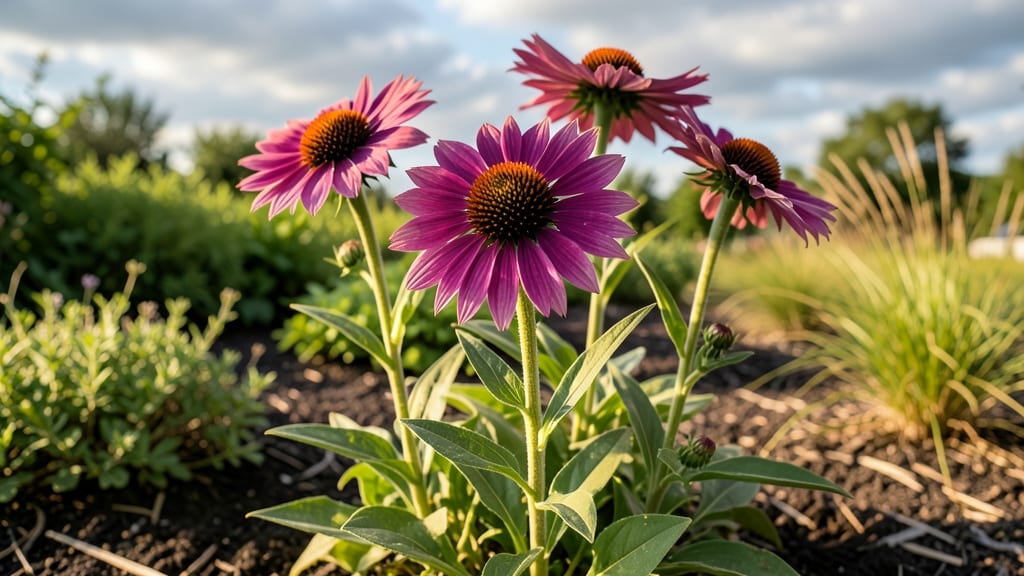
Zone 8 perennials that bloom all summer thrive in heat-tolerant varieties like Black-Eyed Susan, Lantana, and Coneflower, which maintain vibrant blooms through prolonged warmth with minimal maintenance. These drought-resistant plants deliver continuous color from early summer through fall.
These hardy plants survive Zone 8's intense heat thanks to deep root systems that access moisture and waxy leaves that reduce water loss. 🔥 The key to their reblooming lies in temperature triggers—most respond to warm days followed by cooler nights, which reset their flowering cycles.
For best results, plant them in well-draining soil with afternoon shade during peak summer months, and deadhead spent blooms to encourage new growth.
My top recommendation is Lantana, which not only tolerates heat but attracts pollinators all season long. Black-Eyed Susan and Coneflower also excel, with the latter offering bonus wildlife value by supporting butterflies and bees.
The secret to keeping them flowering? Consistent moisture during establishment and occasional fertilization with a balanced, slow-release formula.
💡 In This Article
- Why These Perennials Rebound in Zone 8 Heat
- Planting and Care Tips for Summer-Blooming Perennials
Why these perennials rebound in Zone 8 heat
These summer-blooming perennials survive Zone 8's intense heat through a combination of deep taproots that reach moisture up to 3-5 feet below ground, allowing them to access water during droughts.
Plants like Lantana and Black-Eyed Susan also develop waxy leaf coatings that reduce water loss through transpiration—some varieties can lose as little as 10-15% moisture compared to 40%+ in non-adapted species during peak summer afternoons.
Their flowering cycles are triggered by day-night temperature differentials. Most summer-bloomers need consistent daytime temperatures above 85°F followed by cooler nights (65-75°F) to reset their buds for continuous blooming.
For example, Coneflower (Echinacea) produces new flower stems when nighttime temperatures drop below 70°F, even during heatwaves—this explains why they often bloom in three distinct waves throughout summer.
Soil conditions play a crucial role too. These perennials thrive in well-draining, slightly alkaline soil (pH 6.5-7.5), which prevents root rot while maintaining nutrient availability. The ideal mix combines 50% native soil, 30% compost, and 20% perlite to create an airy medium that prevents heat buildup.
Without proper drainage, root temperatures can exceed 90°F in Zone 8 summers, which triggers stress responses that halt flowering.
Another key adaptation is their photosynthetic efficiency. Many summer-bloomers use C4 photosynthesis (like Lantana) or CAM pathways (like some succulent perennials), which allow them to fix carbon more efficiently in high temperatures.
This gives them a competitive edge over cooler-climate perennials that struggle when daytime temps exceed 85°F for extended periods.
Consider the Black-Eyed Susan (Rudbeckia) as a perfect example: its hairy stems reduce heat absorption by up to 20%, while its deep yellow petals reflect sunlight, preventing overheating of the flower buds.
This combination of structural and physiological adaptations explains why it maintains blooms from June through October with minimal care.
For gardeners, understanding these mechanisms means you can extend blooming seasons by providing afternoon shade during 100°F+ heatwaves and maintaining consistent soil moisture (1-2 inches per week) during establishment. The payoff? Perennials that continue flowering when many others have given up by late summer.