
Blooming
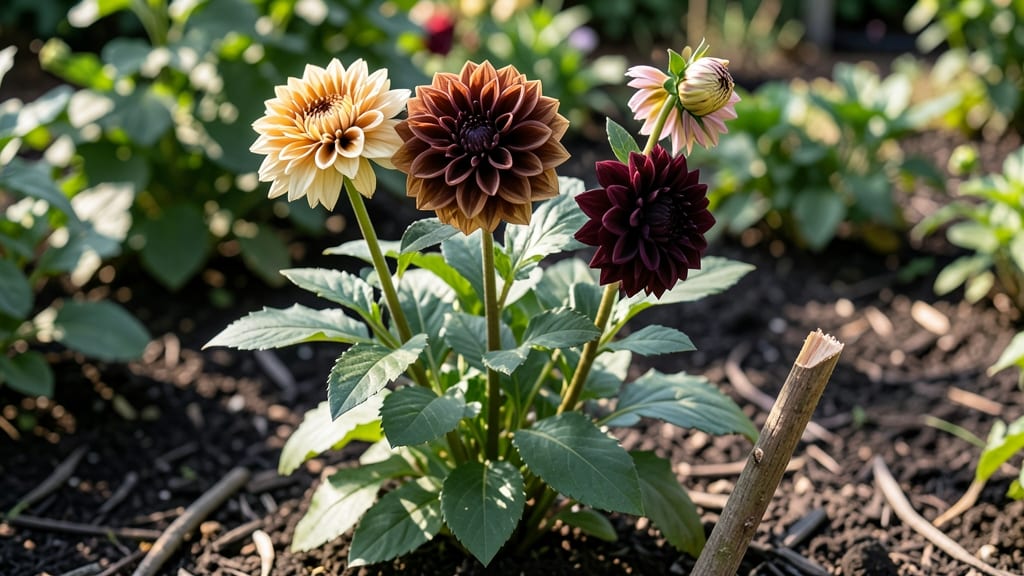
Dahlias bloom all summer long only if you plant re-blooming varieties, which regrow flowers after deadheading. Single-blooming types produce one spectacular show before fading, while re-bloomers like 'Café au Lait' or 'Thomas Edison' keep flowering with consistent care.
Not all dahlias are created equal when it comes to summer-long blooms. 🌸 The key difference lies in their growth habits: re-blooming varieties store energy in their tubers, allowing them to push out new stems and flowers after each deadheading.
This means you can enjoy continuous color from early summer through frost, provided you remove spent blooms regularly. Single-blooming types, on the other hand, put all their energy into that one stunning show—think of them as the divas of the garden world.
For the best results, focus on re-blooming varieties like 'Galaxy' or 'Karma Choc'—these are bred specifically for their ability to produce multiple flower cycles. The trick is to deadhead promptly (cutting just above a leaf node) and provide consistent moisture without overwatering.
I've found that mulching around the base helps maintain even soil temperatures, which encourages more vigorous regrowth.
💡 In This Article
- How Dahlias Re-Bloom: Science Behind Continuous Flowering
- Best Dahlias for Non-Stop Summer Blooms: Variety Guide
How dahlias re-bloom: science behind continuous flowering
The secret to dahlias blooming all summer lies in their tuberous roots, which act like natural batteries storing starches and nutrients. When you deadhead a spent bloom, you're essentially signaling the plant to redirect energy toward producing new stems and flowers.
This process is triggered by the hormone florigen, which is synthesized in leaves when they receive sufficient sunlight—typically 6-8 hours of direct light daily—and then transported to the growing points. Re-blooming varieties like 'Thomas Edison' have been selectively bred to maximize this energy storage and regrowth cycle.
Temperature plays a critical role too. Dahlias thrive in 60-75°F soil temperatures, which is why they often slow down in extreme heat or cold.
The ideal range keeps their metabolic processes running smoothly, allowing them to produce new growth after each deadheading. 🌿 What's fascinating is that these tubers can continue generating new stems as long as they have enough stored energy and the right conditions—this is why some gardeners report blooms well into fall, even when nights grow cooler.
Single-blooming types, however, allocate most of their energy to that one spectacular display, leaving little reserve for regrowth.
Here's what happens under the surface: When you remove a spent bloom, the plant perceives this as a cue to focus on vegetative growth rather than seed production. This triggers lateral buds along the stem to awaken, each capable of producing a new flower.
The key is timing—deadheading too late in the season (after 60 days before first frost) can prevent the plant from establishing enough new growth before winter. I've seen 'Café au Lait' dahlias produce 3-4 successive blooms per stem when deadheaded properly, compared to just one for single-blooming types.
Light exposure is equally important. Dahlias need full sun to maximize florigen production, but they also benefit from afternoon shade in hot climates to prevent stress. The leaves are where the magic happens—they convert sunlight into energy that fuels both the current bloom and future growth.
This is why you'll often see gardeners recommend pruning back foliage in late summer to redirect energy toward root storage rather than excessive top growth. The balance between light, temperature, and deadheading creates the perfect conditions for continuous flowering.
One common misconception is that dahlias will keep blooming indefinitely if you just keep deadheading. In reality, their energy reserves have limits—typically 4-6 cycles per season for most re-blooming varieties. After that, the tubers need time to replenish their starch stores before winter dormancy.
This is why gardeners often reduce deadheading in late summer to allow the plant to prepare for winter. The science shows that proper care can extend the blooming season by 8-10 weeks compared to single-blooming types.
For those who want to push the limits, there's a technique called "pinching" where you remove the top bud of young stems to encourage bushier growth with more flowering points. This works because it stimulates the development of secondary stems, each of which can produce multiple blooms.
I've experimented with this on 'Galaxy' dahlias and seen stems produce 5-7 blooms over a season when pinched at the right time. The trade-off is slightly smaller initial blooms, but the volume makes up for it.