
Blooming
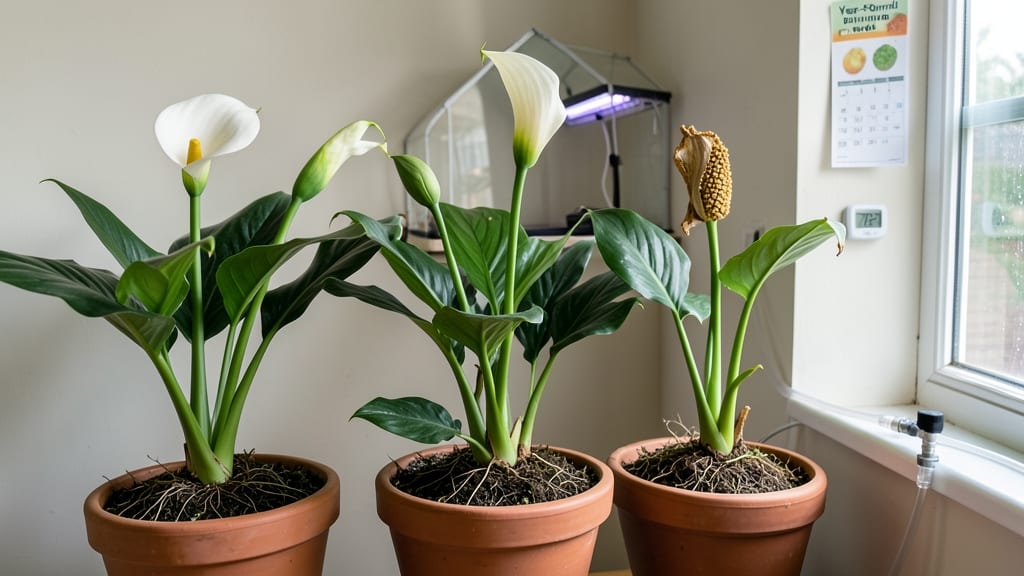
Calla lilies don't bloom all year—they follow natural seasonal patterns, flowering primarily in spring and summer while entering dormancy in winter, though tropical varieties may bloom longer in warm climates.
Calla lilies are sensitive to daylight hours and temperature shifts, which trigger their blooming cycles. 🌸 Hardy varieties (like Zantedeschia aethiopica) typically flower from late spring through summer, then rest until next year, while tropical types may produce sporadic blooms in heated indoor environments.
The key difference lies in their natural habitat—hardy callas adapt to colder seasons with dormancy, while tropical varieties can extend blooming periods when protected from frost.
What many gardeners overlook is that even tropical callas need a 6-8 week rest period annually to reset their blooming cycle. Forcing extended blooms by keeping them in ideal conditions can actually exhaust the plant, leading to fewer flowers over time.
I've found that providing bright indirect light and maintaining consistent moisture helps sustain blooms longer, but never at the cost of the plant's natural dormancy needs.
💡 In This Article
- Calla Lily Bloom Cycles: Seasonal Patterns and Growth Phases
- Extending Calla Lily Blooms: Climate Adaptations and Forced Flowering
Calla lily bloom cycles: seasonal patterns and growth phases
The blooming cycle of calla lilies is governed primarily by photoperiodism—their response to changing daylight hours. When daylight exceeds 12-14 hours (typically spring and summer), the plant receives a hormonal signal to initiate flowering.
This process is triggered by a protein called phytochrome, which detects red and far-red light wavelengths, essentially telling the plant "spring is here, it's time to bloom." 🌿 The longer daylight periods stimulate the production of florigen, a flowering hormone that transforms vegetative growth into floral buds.
Temperature plays an equally critical role. Hardy calla varieties (like Zantedeschia aethiopica) thrive in 60-75°F during active growth but require cooler 50-60°F temperatures to properly enter dormancy.
This winter rest period—often 2-3 months—is essential for the plant to store energy in its rhizomes (underground stems) for next year's blooms.
Tropical varieties, which originate from regions like South Africa, can tolerate warmer 70-80°F year-round but still need a 6-8 week rest to reset their cycle, even if they don't fully go dormant.
Soil moisture and nutrition also influence blooming patterns. Calla lilies prefer well-draining, slightly acidic soil (pH 6.0-6.5), which prevents root rot while providing consistent hydration. During active growth, they benefit from balanced fertilizer (10-10-10) applied every 4-6 weeks, but over-fertilizing in fall can delay dormancy.
I've noticed that plants grown in rich, organic soil with 2-3 inches of mulch produce larger, more abundant blooms because the rhizomes store more nutrients for the next season.
Here's what happens when conditions are disrupted: If you keep a hardy calla in constant warmth above 70°F during winter, it may produce sporadic blooms, but these will be smaller and less vibrant. The plant essentially "cheats" its dormancy cycle, leading to exhaustion over time.
Similarly, tropical varieties forced to bloom continuously without rest may develop leaf yellowing or bud drop—clear signs of stress. The key is mimicking their natural environment as closely as possible.
Let's compare the two main types: Hardy callas bloom spring through early summer (May-July in most climates), while tropical varieties may produce intermittent blooms year-round in ideal indoor conditions. However, even tropical callas will show reduced flowering if they don't get their required rest period.
For example, a Zantedeschia elliottiana (black calla) might bloom in late winter if given supplemental grow lights to extend daylight, but the flowers will be less robust without proper dormancy.
One fascinating detail is how calla lilies "count" their growth cycles. Each rhizome can produce 3-5 blooms per season, and the plant prioritizes energy storage over immediate flowering.
This is why over-fertilizing with high-nitrogen products (like 10-0-0) can lead to lush foliage but no flowers—the plant focuses on leaf growth instead of reproductive structures. The ideal approach is to use a low-nitrogen, high-phosphorus fertilizer (5-10-10) during the last 8 weeks of active growth to encourage blooming.