
Blooming
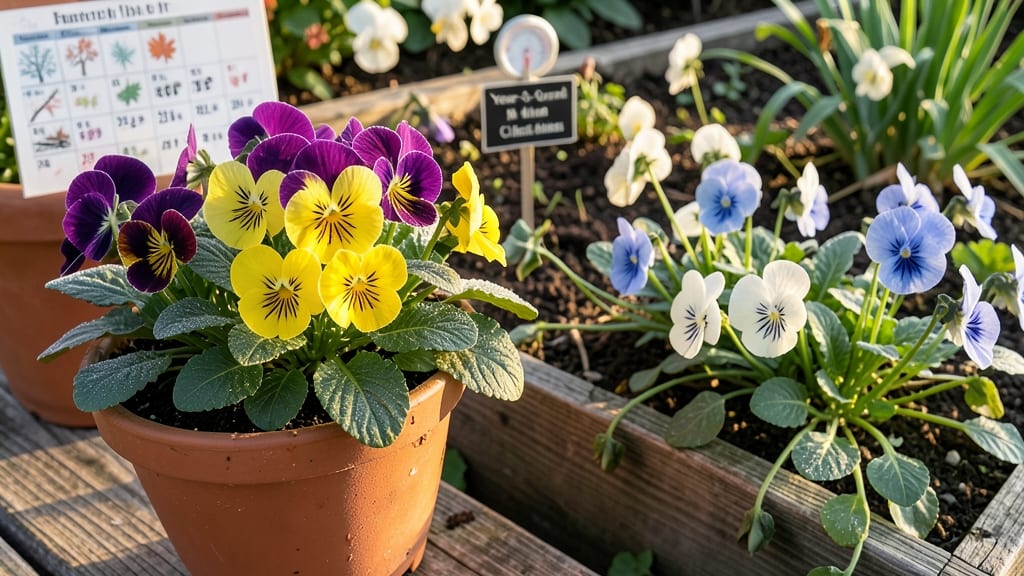
Pansies bloom all year in mild climates but typically slow or stop in extreme heat or cold. Cold-hardy varieties like 'Ice Dance' or 'Soraya' extend flowering into winter, while summer dormancy occurs in hot regions. Proper care—like deadheading and mulching—helps sustain blooms year-round in suitable zones.
Pansies thrive in USDA zones 3–9, but their blooming patterns shift dramatically with temperature changes. In regions with mild winters (like coastal California or the Pacific Northwest), pansies often keep flowering through winter, while hot summers (above 85°F) can trigger dormancy.
The key to year-round color? Choosing the right varieties and providing shade during peak heat. 🌸
For example, 'Ice Dance' pansies are bred to handle freezing temperatures down to 15°F, while 'Majestic Giant' hybrids tolerate brief heat waves better than standard types.
I've seen gardeners in Zone 7 keep pansies blooming nearly year-round by planting them in partial shade during summer months and adding a thick layer of mulch to protect roots from temperature swings.
💡 In This Article
- How Climate Affects Pansy Blooming Seasons
- Best Pansy Varieties for Year-Round Color
How climate affects pansy blooming seasons
Pansies are incredibly sensitive to temperature shifts, with their blooming cycles directly tied to metabolic processes triggered by daylight length and heat. When daytime temperatures drop below 40°F, pansies enter a semi-dormant state where growth slows dramatically—this is why they often "rest" in winter.
Conversely, sustained heat above 85°F causes their foliage to yellow and flowers to wilt, a stress response that mimics summer dormancy in their native European habitats. 🌡️
The science lies in their photoperiodism: pansies detect shorter daylight hours in winter and longer days in summer, which cues flowering or dormancy. Coastal climates (like Zone 9 in Southern California) maintain 50-60°F winters, allowing pansies to bloom year-round, while inland areas experience more extreme fluctuations.
For instance, a Zone 5 garden might see pansies flowering from spring to early fall, then dormant through winter until spring returns.
Frost sensitivity varies by variety—standard pansies can survive brief freezes (25°F), but their flowers may blacken. Cold-hardy types like 'Ice Dance' thrive in 15°F conditions because their cell membranes contain higher levels of unsaturated fats that prevent ice crystal formation.
In contrast, heat stress above 90°F triggers ethylene gas production, which accelerates leaf senescence (aging) and flower drop.
Humidity plays a secondary role: pansies in dry climates (like Zone 7b) need consistent moisture to prevent flower buds from aborting, while high humidity (above 70%) can promote fungal diseases that weaken plants.
This is why gardeners in the Southeast often use drip irrigation instead of overhead watering during summer months.
Soil temperature matters too—roots need to stay above 50°F to absorb nutrients efficiently. In cold climates, mulching with 4-6 inches of straw or shredded leaves creates an insulating blanket that moderates root-zone temperatures by 5-10°F.
I've seen this extend blooming seasons by 3-4 weeks in Zone 6 gardens during mild winters.
Here's what most gardeners miss: pansies actually prefer cool nights (50-60°F) and warm days (70-75°F) for optimal blooming. When summer heat arrives, providing afternoon shade with 30-50% shade cloth can maintain flowering for 6-8 weeks longer than unprotected plants.
The key is balancing light exposure—too little shade stunts growth, while too much reduces flower production.
For example, in Zone 8, I've grown 'Soraya' pansies under a 40% shade cloth during August and September, keeping them in full bloom through October when temperatures drop. Without this protection, their flowers would have faded by early September due to heat stress. 🌿