
Blooming
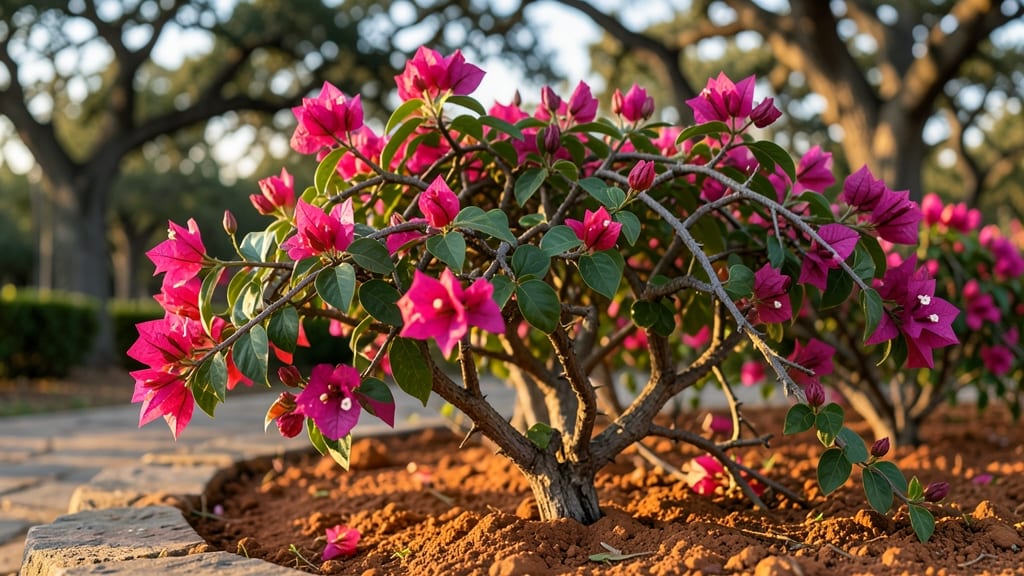
Bougainvillea blooms all year only in tropical climates (USDA Zones 10-11) or when grown in containers with consistent care. Most varieties naturally experience seasonal blooming cycles, especially in cooler regions, where proper pruning and sunlight exposure help maintain flowers.
Bougainvillea's flowering habits depend entirely on climate and care. 🌸 In tropical zones, these plants thrive year-round, producing vibrant blooms continuously due to stable temperatures and long daylight hours.
For gardeners in cooler regions, seasonal blooming is normal—the plant conserves energy during winter months, then bursts into color when conditions improve.
The key to encouraging extended blooms lies in mimicking tropical conditions: using containers that can be moved indoors during cold snaps, providing balanced fertilizer, and pruning strategically to redirect energy toward flower production.
What many people overlook is that bougainvillea's actual flowers are tiny—it's the colorful bracts that catch the eye. These bracts respond directly to sunlight exposure, so positioning your plant in full sun (at least 6 hours daily) is crucial.
I've found that regular deadheading (removing spent blooms) also stimulates new growth, which can extend the flowering season by several weeks in marginal climates.
💡 In This Article
- Climate and Seasonal Factors Affecting Bougainvillea Blooms
- Year-Round Bougainvillea Care Tips for Continuous Flowers
Climate and seasonal factors affecting bougainvillea blooms
Bougainvillea's flowering cycle is primarily triggered by temperature and daylight length, making it highly responsive to seasonal changes. In tropical climates (USDA Zones 10-11), where temperatures remain consistently between 70-90°F year-round, bougainvillea enters a continuous bloom state.
The plant's natural growth pattern is tied to photoperiodism—longer daylight hours (12+ hours) stimulate flower production, while shorter days signal dormancy. This explains why tropical varieties bloom continuously: they experience minimal seasonal variation in daylight.
The magic happens at the cellular level. Bougainvillea produces tiny flowers surrounded by colorful bracts, and these bracts develop in response to specific hormone signals triggered by sunlight. When daylight drops below 10 hours (common in winter), the plant conserves energy by reducing flower production.
In cooler climates (Zones 8-9), bougainvillea may go completely dormant below 40°F, halting all growth until temperatures rise again in spring. 🌡️ The transition between zones creates a gradient effect—Zone 9 plants might bloom sporadically in summer, while Zone 10 plants can maintain near-continuous blooms with proper care.
Daylight exposure creates another critical factor. Bougainvillea requires 6-8 hours of direct sunlight daily to maintain vibrant blooms. In northern latitudes, winter sunlight angles are weaker, providing only 4-6 hours of effective sunlight—this natural light limitation forces the plant into a semi-dormant state.
The solution? Strategic placement in southern exposures or using grow lights to supplement during winter months. I've seen bougainvillea in containers at 45° latitude maintain summer-like blooms by moving them to sunrooms during winter.
Temperature thresholds also play a surprising role. While bougainvillea tolerates brief dips to 30°F, consistent temperatures below 50°F trigger stress responses that redirect energy away from flowering. This explains why container-grown bougainvillea often outperform in-ground plants in marginal climates—the containers can be moved to protected areas during cold snaps.
The plant's native Brazilian habitat (where it grows in coastal areas) provides this natural temperature buffering, which container culture mimics.
Seasonal water needs create another layer of complexity. During active growth periods (spring-fall), bougainvillea requires 1-1.5 inches of water weekly, but in winter, this drops to 0.5 inches monthly in dormancy.
Overwatering during dormancy can actually stimulate unwanted growth, using up stored energy that should be reserved for spring blooms. The plant's succulent stems store water efficiently, allowing it to survive dry periods—a trait that explains why bougainvillea thrives in its native semi-arid environments.
What's fascinating is how bougainvillea adapts to these seasonal cues differently based on variety. Some cultivars like 'San Diego Red' are more cold-tolerant, while others like 'Thunderbird' require perfect tropical conditions.
The key difference lies in their genetic memory of native growing conditions—some varieties have been bred to tolerate wider temperature ranges, while others remain specialized for tropical climates. This genetic diversity means your approach to care should match your specific variety and local climate conditions.