
Blooming
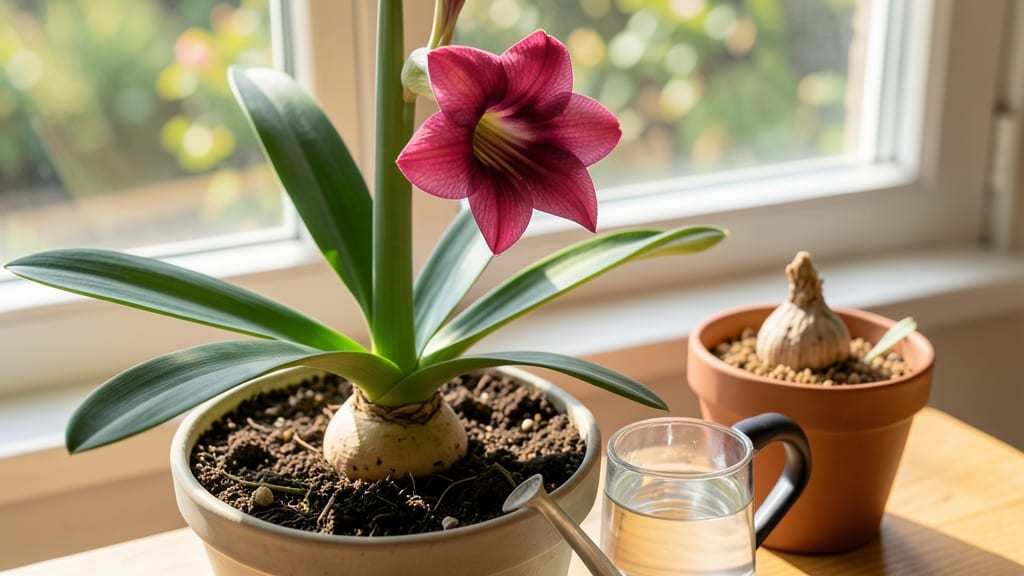
Amaryllis bulbs only bloom every year when they receive proper dormancy, bright sunlight, and consistent care. Without these conditions, most bulbs fail to rebloom due to inadequate energy storage or stress.
Amaryllis bulbs are like athletes—they need recovery time after blooming to recharge.
When you cut back the flower stalk too early or keep the bulb in bright light year-round, it never gets the rest it needs. Proper dormancy (6-8 weeks of cooler temps and reduced water) is key, as this mimics their natural cycle.
I’ve seen bulbs that get 6+ hours of sunlight daily and a balanced fertilizer during growth stages produce stunning annual blooms. 💫
Even with perfect care, some bulbs skip blooming because they’re too young or haven’t stored enough energy. That’s why I recommend repotting every 2-3 years—it refreshes the soil and gives roots room to grow, which directly impacts next year’s flowers.
💡 In This Article
- Why Amaryllis Bulbs Skip Reblooming
- Step-by-Step Guide to Encourage Annual Amaryllis Blooms
Why amaryllis bulbs skip reblooming
Amaryllis bulbs rely on a 6-8 week dormancy period to store energy for next year’s blooms. When you skip this rest phase—by keeping the bulb in warm, bright conditions year-round—the bulb never signals its internal clock to prepare for flowering.
This is because amaryllis bulbs, native to South America, evolved to bloom in response to seasonal changes. Without dormancy, the bulb’s photosynthetic reserves (stored as starch in the bulb) remain depleted, leaving no energy for new flower stalks. 🌱
The bulb’s energy storage works like a battery: it converts sunlight into sugars during the growing season, then converts those sugars into starch during dormancy.
A mature amaryllis bulb can store enough energy to produce 2-6 flower stalks, but this only happens if the bulb gets 6+ hours of direct sunlight daily during active growth. Without sufficient light, the bulb’s leaves produce less chlorophyll, reducing its ability to store energy.
Even with bright light, if the bulb isn’t given a proper dormancy period, it may produce leaves but no flowers.
Nutrient deficiencies also play a role. Amaryllis bulbs need a balanced fertilizer (high in phosphorus for blooms) during their active growing phase. If you’re using a low-phosphorus fertilizer or over-fertilizing with nitrogen (which promotes leaf growth at the expense of flowers), the bulb won’t have the resources to produce blooms.
I’ve seen bulbs that received too much nitrogen grow lush foliage but fail to rebloom because all their energy went into leaves instead of flower buds.
Another common mistake is overwatering during dormancy. While the bulb needs moisture during active growth, keeping it too wet during its rest period can cause rot and stress. The ideal dormancy conditions include 50-60°F temperatures, minimal water (just enough to prevent the bulb from shriveling), and complete darkness.
Without these conditions, the bulb’s metabolic processes slow down improperly, disrupting its natural cycle and preventing reblooming.
Even with perfect care, some bulbs skip blooming because they’re too young—amaryllis bulbs typically need 2-3 years to mature enough for consistent flowering. Others may be stressed by frequent repotting or root disturbance, which diverts energy away from flower production.
The key is patience and consistency: a well-cared-for amaryllis bulb can bloom reliably for decades if given the right conditions each year. ✨
Finally, bulb size matters. A mature amaryllis bulb should be at least 4-6 inches in diameter to store enough energy for blooming. Smaller bulbs may produce leaves but lack the reserves for flowers.
This is why repotting into a slightly larger container every 2-3 years (with fresh, well-draining soil) encourages bulb growth and improves reblooming rates.