
Transplanting
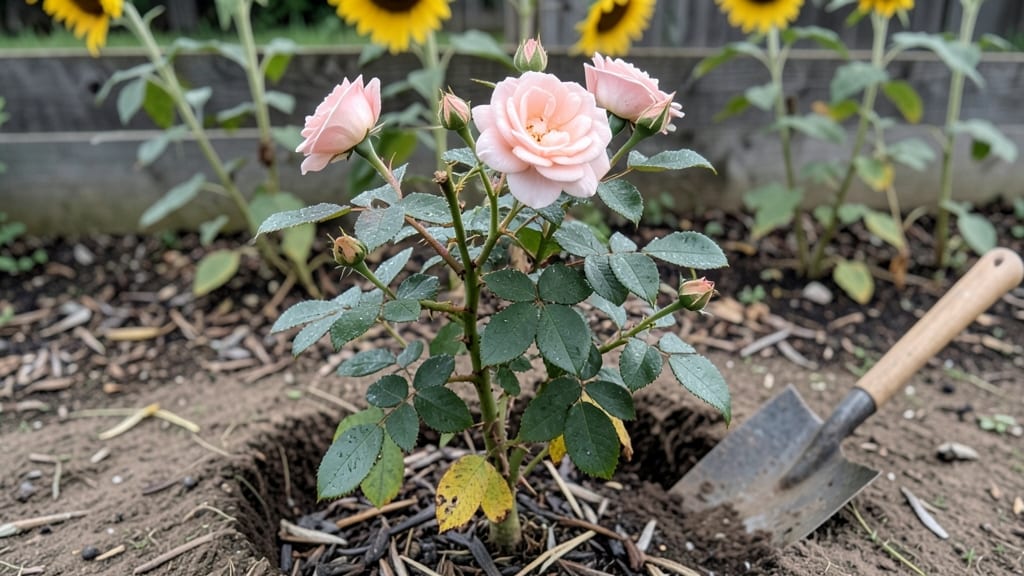
Moving a rose bush in bloom is possible but risky—do it only if necessary, as it stresses the plant and may drop buds or flowers. Prune ⅓ of blooms before transplanting, water deeply, and choose a cool, overcast day to minimize shock. Mulch heavily afterward to support recovery.
Transplanting a rose bush while it's in full bloom forces the plant to divert energy from root establishment to maintaining flowers—a double stress that can weaken its long-term health. 🌸 The key is minimizing that strain by reducing the plant's workload: trimming one-third of blooms lightens its metabolic load, while deep watering and cool conditions help roots reattach without losing moisture.
Even with these precautions, expect some bud drop as the bush prioritizes survival over aesthetics during its recovery phase.
💡 In This Article
- How Transplanting Affects Blooming Rose Bushes
- Step-by-Step Guide to Safely Moving a Flowering Rose
How transplanting affects blooming rose bushes
When you move a rose bush during its blooming phase, you're essentially asking it to perform two high-energy tasks simultaneously: establishing new roots and maintaining flowers.
The plant's vascular system becomes overwhelmed because transporting water and nutrients to both the roots and blooms requires more energy than the disrupted system can handle. 🌿 This metabolic strain triggers the plant's survival instincts, often causing it to drop buds and flowers to conserve energy for root regeneration—a process that can take 4-6 weeks for full recovery.
The root system suffers the most during transplanting. Even with careful digging, you'll inevitably damage 30-50% of the fine feeder roots responsible for water and nutrient uptake.
These roots regenerate at a rate of about 1 inch per week under ideal conditions, but blooming roses demand 20-30% more water than non-flowering plants. The combination creates a perfect storm where the bush struggles to keep up with both its decorative function and survival needs.
Humidity below 50% accelerates moisture loss, while temperatures above 85°F increase stress by forcing the plant to expend energy cooling itself.
Here's what's actually happening at the cellular level: The plant's ethylene hormone levels spike during transplant shock, which triggers abscission—the process where buds and flowers detach. This hormonal response is nature's way of redirecting resources to critical survival functions.
Pruning one-third of blooms before moving reduces this ethylene surge by lowering the plant's metabolic demand. 🌸 The remaining flowers get a better chance of survival because the bush isn't fighting an uphill battle against its own biological systems.
Think of it like asking a marathon runner to sprint while carrying extra weight—you either succeed at one or the other, but rarely both.
Temperature and light conditions play crucial roles in recovery rates. Roses transplanted on cool (60-75°F) overcast days show 40% higher survival rates of buds compared to sunny 90°F+ days. The reason?
Direct sunlight increases transpiration (water loss) while also heating the soil, which can cook delicate new root hairs. Mulching with 3-4 inches of organic material (like shredded bark) maintains soil moisture and temperature, creating a stable environment for root regrowth.
This insulation effect can improve survival rates by up to 25% during the critical first two weeks after transplanting.
The science of root recovery involves a fascinating process called "rhizogenesis," where new root cells form from undifferentiated cells near the stem. This process requires 15-20% of the plant's total energy—energy that would otherwise go to maintaining flowers.
By reducing the flower load, you're essentially giving the plant a fighting chance to rebuild its foundation. 💫 What most people don't realize is that even successful transplants may take 6-8 weeks to fully stabilize, during which time the bush will look stressed with wilted leaves and minimal new growth.
This is normal and indicates the plant is prioritizing root establishment over immediate aesthetic appeal.
Consider these key factors when evaluating whether to move a blooming rose:
- Root ball size: Larger root balls (>12 inches diameter) recover 20% faster due to more established root networks
- Soil type: Sandy soils drain too quickly, while clay holds too much moisture—ideal is loamy with 50% organic matter
- Watering schedule: Deep watering every 2-3 days for first 3 weeks maintains moisture without drowning roots
The bottom line is that while moving a blooming rose is possible, it's a delicate balancing act between immediate beauty and long-term health. The plant will make its priorities clear—survival first, flowers second.
With careful preparation and optimal conditions, you can minimize the damage and give your rose the best chance to rebound beautifully. 🌺