
Blooming
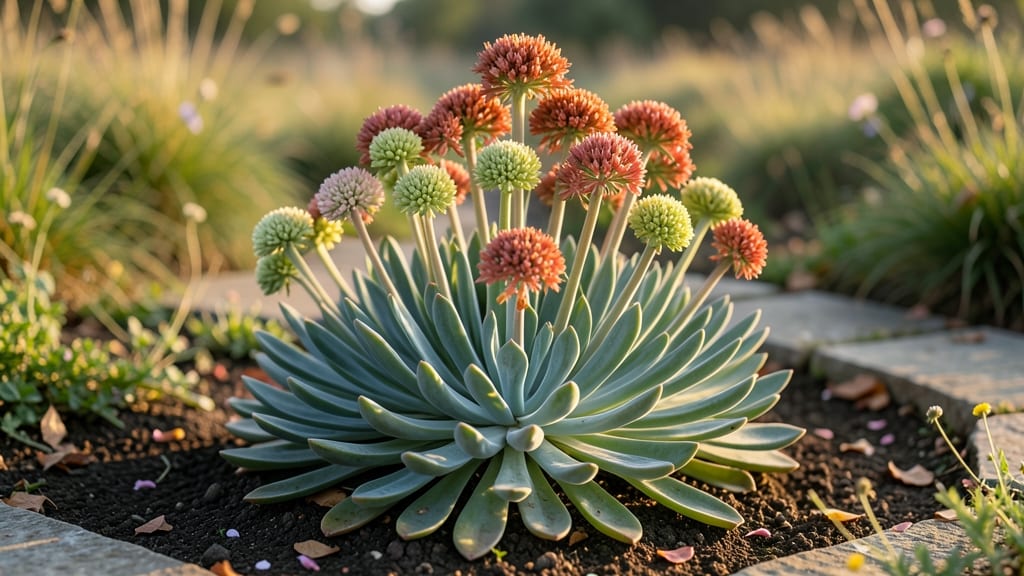
The Autumn Joy Sedum bloom time is the highlight of late summer gardens, when its pink-purple clusters transform into deep copper-red masterpieces 🌸.
If you’ve ever wondered why your Autumn Joy Sedum isn’t blooming when expected—or how to time its stunning pink-purple flowers for maximum impact—this guide reveals the exact months it thrives in your hardiness zone.
Most gardeners in Zone 6a see blooms from late August through October, but cooler climates can push flowers back to September, while warmer regions extend them into November.
Below, I’ll break down the perfect bloom window for your zone, plus 3 simple tricks to make those flowers last even longer—no green thumb required.
Autumn Joy Sedum bloom time by USDA plant hardiness Zones
Timing your Autumn Joy Sedum blooms correctly means planning for late summer to fall color, but the exact months depend on your USDA hardiness zone. In cooler continental climates (Zones 3-6), expect blooms to start 4-6 weeks earlier than in Mediterranean zones (Zones 8-10).
Understanding these variations helps you prune at the right time and extend the bloom period for maximum impact.
For gardeners in Zones 3-5, the first pink flower buds often appear in mid-August, peaking in September before transitioning to copper-red hues by October. Meanwhile, those in Zones 7-10 may see buds form as late as September, with peak blooms stretching into November in milder regions.
These differences are critical for seasonal garden planning and companion planting.
Here’s a quick reference for bloom timing by zone, including early vs. late bloomers and climate-specific adjustments:
| Zone | Bloom Start | Peak Bloom | Bloom End | Climate Notes |
|---|---|---|---|---|
| 3-4 | Late August | Early September | Mid-October | Early frost risk; prune early to avoid damage. |
| 5-6 | Mid-August | Late September | Early November | Continental climate; protect from late frosts. |
| 7-8 | Early September | October | Late November | Mild winters; blooms may persist longer. |
| 9-10 | Late September | November | December (or later) | Mediterranean climate; minimal frost risk. |
In Zones 3-6, the first frost often cuts blooms short, so timing pruning is key. Cut back dead foliage in late fall (after frost) to protect the plant.
Meanwhile, in Zones 7-10, where winters are milder, you can prune later (even in December) and still enjoy reblooming in spring under ideal conditions.
If you’re in a Mediterranean climate (like Zone 9-10), your Autumn Joy Sedum may bloom twice a year—once in late summer and again in spring.
This happens because cooler nights trigger blooming, and milder winters allow regrowth. To encourage this, avoid heavy pruning in fall and water lightly during dormancy.
For continental climates, where winters are harsh, focus on early spring pruning (March) to stimulate new growth before the blooming season. This ensures your plant has enough energy to produce buds by August.
In my Zone 5 garden, I’ve found that mulching heavily in late fall helps insulate roots and protects buds from temperature swings.
One common mistake is assuming Autumn Joy Sedum blooms only in fall. While it’s famous for its autumn color, some varieties in warmer zones can rebloom in spring.
To maximize this, plant in full sun and avoid overwatering, which can delay blooming. In my experience, well-draining soil is the #1 factor for consistent blooms.
For early bloomers, like those in Zone 4, start watching for bud formation in July. In Zone 10, where I’ve gardened with friends, blooms may not even start until October but last well into December.
The key is to adjust your expectations based on your local microclimate—even within the same zone, urban heat islands can shift bloom times by 2-3 weeks.
To <
How to extend Autumn Joy Sedum bloom time with simple care
Your Autumn Joy Sedum can bloom for weeks longer than average with just a few simple adjustments. This hardy succulent thrives on minimal intervention, but strategic care can transform its late-summer-to-fall show into a prolonged spectacle.
The key lies in understanding its natural growth patterns and adapting your routine to match them.
Most gardeners see blooms fade by October, but with proper pruning, watering discipline, and soil optimization, you can push those pink-purple clusters into November or even early December in milder climates.
The secret? Mimicking its wild habitat conditions—dry, sunny, and well-draining—while giving it just enough encouragement to keep flowering.
🌸 5 Key Steps to Extend Autumn Joy Sedum Blooms
- 1. Deadhead strategically – Remove faded flowers in early September to redirect energy to new buds.
- 2. Water deeply but infrequently – Soak roots every 7-10 days in hot months; reduce to bi-weekly in fall.
- 3. Prune for bushiness – Cut back 1/3 of stems after first bloom to stimulate side shoots and second flushes.
- 4. Feed lightly in spring – Use 5-10-10 fertilizer in March-April to boost root growth before blooming.
- 5. Amend soil with grit – Mix in sand or perlite to prevent root rot and encourage drought tolerance.
Let’s start with pruning, the most effective way to trick your sedum into reblooming. After the first flush of flowers fades in late August or September, use clean, sharp shears to cut back 1/3 of the tallest stems.
This removes spent blooms while signaling the plant to produce new side shoots—each with the potential for additional flower clusters. For maximum impact, do this in early September when night temperatures begin dropping.
The watering schedule is where many gardeners go wrong. Autumn Joy Sedum is drought-tolerant, but consistent moisture during bud formation (June-August) is critical.
Water deeply once a week during these months, then reduce to bi-weekly as temperatures cool. Avoid overhead watering, which can promote fungal diseases—stick to soaker hoses or drip irrigation at the base.
In Zone 7 and warmer, you can extend blooms into December by keeping soil slightly moist but never soggy.
Don’t overlook the power of sunlight adjustments, especially if your sedum is in a container or partial shade. These plants crave full sun (6+ hours daily), but afternoon shade in Zones 8-10 can prevent heat stress while still encouraging blooms.
If your sedum isn’t flowering as expected, move it to a sunnier spot—even 2-3 hours more light can double bloom production. For potted sedums, place them on a south-facing patio or elevated stand to maximize sunlight exposure.
Finally, soil amendments can make a world of difference in bloom duration. Autumn Joy Sedum thrives in well-draining, slightly alkaline soil (pH 6.0-7.5). If your soil is heavy clay, mix in coarse sand or perlite to improve drainage.
A light application of compost in spring provides nutrients without overfeeding, while bone meal (applied in early summer) boosts phosphorus for flowering. In containers, use a 50/50 mix of potting soil and perlite to replicate ideal growing conditions.
With these simple adjustments, your Autumn Joy Sedum will bloom later and more abundantly than ever. The key is consistency—stick to the pruning schedule, water wisely, and optimize sunlight, and you’ll enjoy vibrant pink-purple blooms well into fall’s last days. 🌿