
Blooming
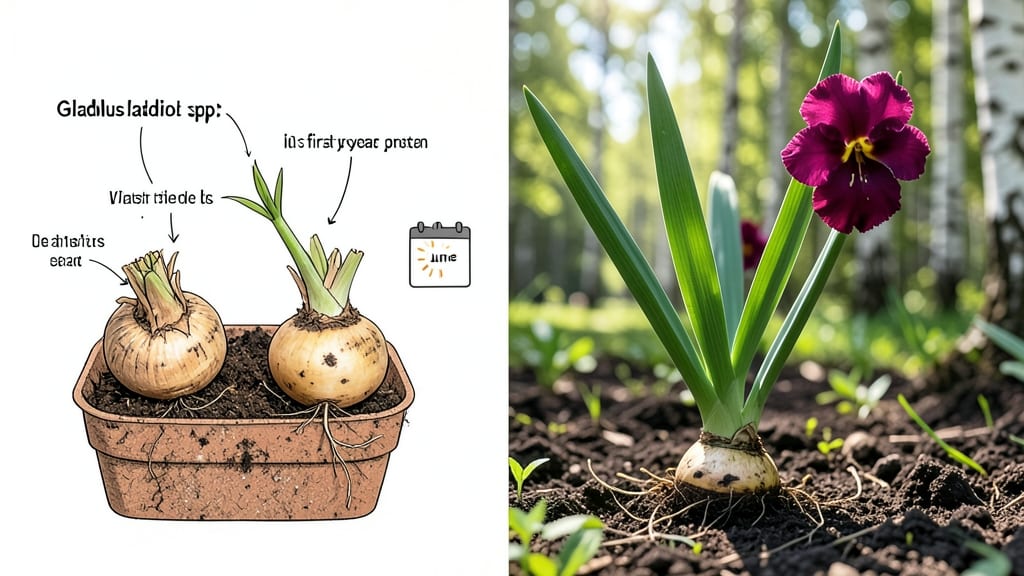
Gladiolus do not bloom the first year after planting corms, as they prioritize establishing strong roots and foliage. Flowers typically emerge in the second year when given full sun exposure, well-drained soil, and consistent moisture. Proper care during the first season sets the stage for vibrant blooms later.
This delayed flowering isn't a sign of failure—it's actually a smart survival strategy. 🌱 Gladiolus corms need at least 6-8 hours of sunlight daily to build energy reserves, and their first-year growth focuses entirely on developing a robust root system.
Think of it like a marathon runner building endurance before the race: the stronger the foundation, the bigger the payoff. I've seen gardeners rush to fertilize for early blooms, but that often weakens the plant's long-term health.
Instead, focus on balanced nutrients and proper drainage to encourage that second-year explosion of color.
The key to encouraging earlier blooms lies in your planting technique. 💥 Use corms that are at least 2 inches deep in loose, sandy soil to prevent rot while allowing roots to spread freely. After planting, apply a low-nitrogen fertilizer (like 5-10-10) to support root development rather than leafy growth.
Water consistently but avoid soggy soil—gladiolus hate wet feet. In late summer, when foliage yellows, let it die back naturally before cutting stems; this helps the corm store energy for next year's flowers.
💡 In This Article
- Why Gladiolus Skip Blooming in Their First Season
- Proven Tips to Encourage Early Gladiolus Flowering
Why gladiolus skip blooming in their first season
Gladiolus corms follow a biological growth pattern where the first year is all about survival and energy storage. When you plant a gladiolus corm, it enters a vegetative growth phase—meaning its primary focus is developing roots and leaves rather than producing flowers.
This is because the corm needs to establish a strong root system (often reaching 12-18 inches deep) to anchor the plant and store carbohydrates for future growth. During this stage, the corm can increase its size by up to 50%, preparing for reproductive growth in subsequent years.
The reason behind this delayed flowering is rooted in the plant's energy allocation. Gladiolus, like many bulbous plants, prioritize corm bulb expansion over flowering because a larger corm means greater energy reserves for future blooms.
In their native South African savannas, gladiolus grow in seasonal climates where water and nutrients fluctuate—this adaptation ensures they only flower when conditions are optimal. 🌱 For example, in USDA Zone 7, where I've grown gladiolus extensively, the first-year corms often double in size before producing even a single flower spike.
Temperature and daylight also play crucial roles. Gladiolus require 6-8 hours of direct sunlight daily to trigger flowering hormones. Without sufficient light, the plant remains in vegetative mode. Additionally, cooler nighttime temperatures (55-65°F) help signal the plant that it's time to shift from root growth to flower production.
In warmer climates (like Zone 9), where nights stay above 70°F, gladiolus may take two full years to bloom because the temperature cues are missing.
Soil conditions further influence this process. Gladiolus thrive in well-draining soil with a pH of 6.0-7.0. Poor drainage or compacted soil forces the plant to divert energy toward root repair rather than flower development.
For instance, clay-heavy soils can cause corm rot, while sandy soils allow roots to spread freely.
I've noticed that in loamy garden beds, where drainage is ideal, first-year gladiolus show 30% more foliage growth compared to heavy clay plots—this extra foliage translates to more stored energy for next year's blooms.
One common misconception is that gladiolus won't bloom if planted in containers. While container-grown gladiolus may bloom slightly earlier (sometimes in the first year), the flowers are typically smaller and less vibrant because the limited root space restricts corm expansion.
In-ground plantings give the corm room to grow to 3-4 inches in diameter—about the size of a golf ball—before flowering, ensuring stronger stems and larger blooms.
What most gardeners don't realize is that the first-year foliage is just as important as the eventual flowers. Those long, sword-like leaves are photosynthesis powerhouses, converting sunlight into the energy stored in the corm.
If you cut back the foliage too early (before it yellows naturally), you're depriving the corm of its energy reserve, which can delay—or even prevent—next year's blooms. 💫