
Blooming
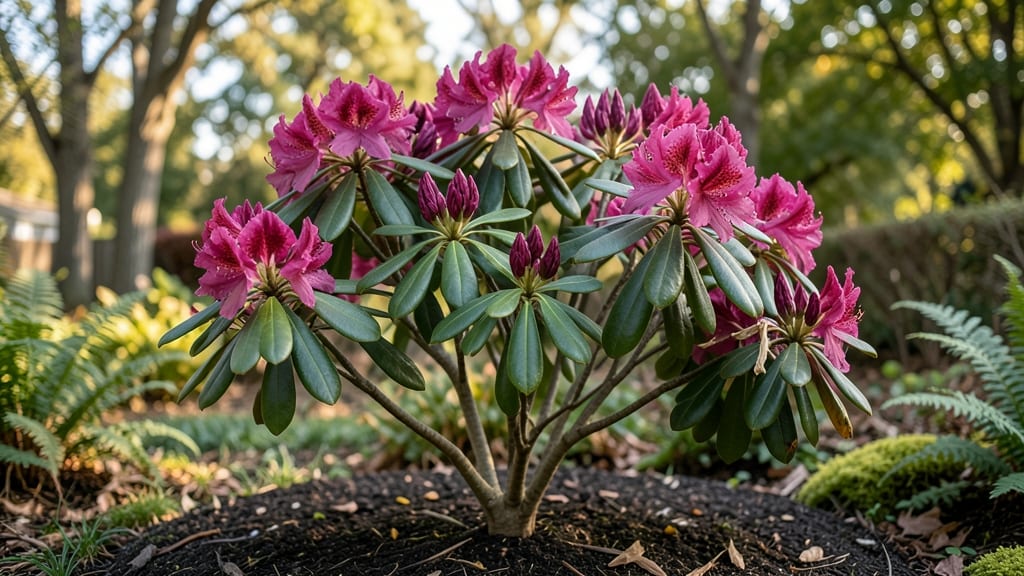
Rhododendrons do not bloom all summer; most varieties flower for 2–4 weeks in spring, with some late-season bloomers extending into early summer. Light exposure, climate, and species type determine bloom duration and timing, never continuous summer flowering.
Rhododendrons are seasonal showstoppers, not year-round performers. 🌸 Their blooming cycles are tightly linked to environmental cues—like daylight length and temperature shifts—which trigger flower buds to open in synchronized bursts. For example, Rhododendron catawbiense typically peaks in late spring, while Rhododendron 'PJM' azalea might linger into June.
The key to longer displays lies in selecting varieties that align with your climate's natural rhythms and providing consistent care to support their energy demands.
What many gardeners overlook is how light conditions influence reblooming potential. While rhododendrons won't flower continuously, those in partial shade (morning sun, afternoon dappled light) often produce a second, smaller flush of blooms later in the season.
The trade-off? Full sun exposure can stress the plant, shortening its overall flowering window. Think of it like training for a marathon—your rhododendron needs the right conditions to perform at its best, but it won't run forever.
💡 In This Article
- Rhododendron Bloom Seasons by Variety
- Extending Rhododendron Bloom Time with Light and Care
Rhododendron bloom seasons by variety
The science behind rhododendron blooming lies in their evolutionary adaptation to seasonal cues. These plants rely on vernalization—a cold period followed by warming temperatures—to trigger flower bud formation. Most varieties follow a 2-4 week bloom window in spring when daytime temperatures reach 50-65°F and nights stay above 40°F.
For instance, Rhododendron catawbiense typically blooms in late April to early May, while Rhododendron 'Elizabeth' azalea peaks in early June. The timing difference stems from genetic variations in their photoperiod sensitivity—some need 12-14 hours of daylight, others thrive with 14-16 hours.
Daylight hours act as the primary regulator. When days lengthen beyond 14 hours, most rhododendrons complete their bloom cycle and enter a vegetative phase. This explains why you won't see continuous flowering—the plant conserves energy for leaf growth and next year's buds. 🌿 The exception?
Some hybrid varieties like Rhododendron 'Nova Zembla' produce a secondary bloom in late summer if given ideal conditions, though these flowers are typically smaller and less abundant. This reblooming ability stems from their genetic inheritance of azalea traits, which are more adaptable to varying light conditions.
Temperature plays a secondary but critical role. Buds form during cool winter months (35-45°F nights), and any warm spell above 50°F can prematurely open buds, reducing their lifespan. This is why rhododendrons in warmer climates often bloom earlier but for shorter durations.
For example, in USDA Zone 7, blooms may appear in March, while in Zone 5, they wait until May. The plant's internal clock—controlled by florigen hormones—syncs with these environmental signals to determine bloom timing and duration.
Variety selection becomes crucial for extending visual interest. Early bloomers like Rhododendron 'PJM' (April) can be paired with late bloomers like Rhododendron 'Cunningham's White' (June) to create a staggered display. This strategic planting mimics nature's succession planting, where different species bloom at different times to maximize pollinator support.
The trade-off? Each variety requires specific microclimates—some prefer morning sun and afternoon shade, while others tolerate full sun with consistent moisture.
What most gardeners miss is how soil chemistry affects bloom duration. Rhododendrons thrive in acidic soil (pH 4.5-6.0), where aluminum and manganese become available for flower development. In alkaline soils, these nutrients bind and become unavailable, shortening the bloom cycle.
This is why a simple soil test can reveal why your rhododendron's flowers fade faster than expected. The plant isn't just reacting to light and temperature—it's responding to a complex interplay of environmental factors that determine its energy allocation between flowers and foliage.
Consider this: A Rhododendron maximum in optimal conditions might produce 200-300 flowers per stem, but only for 10-14 days. The same plant in suboptimal conditions might produce 100 flowers that last 7-10 days.
The difference isn't just quantity—it's the plant's ability to sustain energy production through photosynthesis during the bloom period. This is why mulching with pine needles or oak leaves (which slowly acidify the soil) can extend bloom duration by 2-3 days per variety.