
Pruning
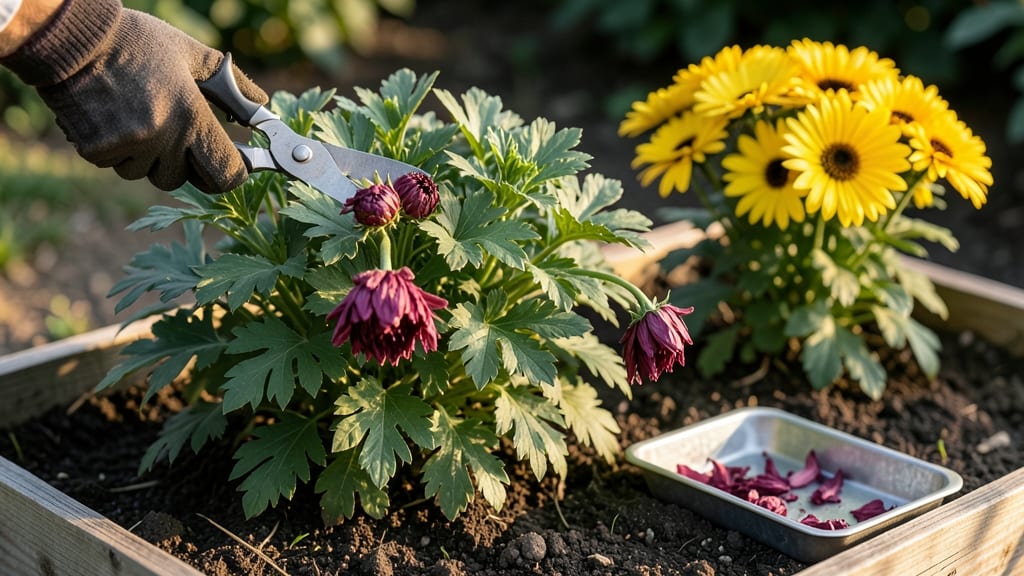
Mums will rebloom after deadheading only if they are reblooming varieties (like 'Autumn Joy' or 'Polar Bear'), as deadheading removes spent blooms to encourage new growth. Non-reblooming types (e.g., 'Snowball' or 'Beauty Series') focus energy on foliage, not repeat flowering, so pruning them too late won’t trigger reblooming.
Deadheading works by redirecting the plant's energy from seed production back into new flower growth. 🌸 For reblooming mums, this means cutting just above a leaf or bud stimulates fresh blooms, while non-rebloomers naturally shift focus to foliage as summer ends.
The key difference lies in their genetic programming—rebloomers have been selectively bred to respond to pruning cues, while traditional varieties prioritize hardiness over repeat flowering.
Timing matters too: deadhead rebloomers in early fall to encourage late-season blooms, but avoid late pruning on non-rebloomers as it can stress the plant before winter.
What many gardeners miss is that reblooming mums often need a balanced fertilizer after deadheading to support new growth. I recommend a 10-10-10 mix applied every 4-6 weeks during the blooming season.
For container-grown mums, deadheading also helps prevent overcrowding, which can lead to fewer but larger blooms—great for cut flower arrangements. The science behind this is fascinating: removing spent blooms reduces ethylene production, a hormone that signals the plant to stop flowering and focus on survival.
💡 In This Article
- How Deadheading Affects Mum Flowering Cycles
- Step-by-Step Deadheading Guide for Longer Mum Blooms
How deadheading affects mum flowering cycles
Deadheading mums triggers a fascinating hormonal dance in the plant. When you remove spent blooms, you're essentially cutting off the ethylene production—the same hormone that signals flowers to senesce and shift energy toward seed production.
In reblooming varieties like 'Autumn Joy', this pruning cue stimulates the plant to produce more auxin, a growth hormone that promotes new bud formation. The result? A second flush of blooms, often peaking in late summer or early fall.
For non-rebloomers like 'Snowball', this hormonal response is muted—they've been bred to prioritize hardiness over repeat flowering, so deadheading won't produce new blooms.
The timing of deadheading plays a crucial role in this process. For reblooming mums, you should deadhead in early fall (around September in most climates) to encourage late-season blooms. This gives the plant enough time to recover and produce new growth before cooler temperatures slow metabolism.
Light exposure also matters—mums need at least 6-8 hours of sunlight daily to maintain strong flowering. In containers, this means positioning them where they'll receive full sun, while garden beds may need occasional rotation to ensure even light distribution.
The difference between rebloomers and non-rebloomers becomes especially clear in their seasonal growth patterns: rebloomers can produce 2-3 flower cycles per season, while non-rebloomers typically flower just once in early summer.
What most gardeners don't realize is that deadheading also affects the plant's energy allocation. When you remove spent blooms, the mum redirects its resources from seed production to foliage and flower bud development.
This is why reblooming mums often show more vigorous growth after deadheading—up to 30% more leaf production in some varieties. The trade-off? This energy shift can make the plant more susceptible to stress if not properly supported with water and nutrients.
In my experience, reblooming mums deadheaded in early fall can extend their blooming season by 4-6 weeks compared to those left unpruned.
There's a critical difference between how perennial and annual mums respond to deadheading. Perennial mums (like 'Autumn Joy') store energy in their roots, allowing them to rebound season after season. Annual mums, however, rely solely on current-season growth.
Deadheading annuals too late in the season can actually shorten their overall blooming period because the plant hasn't had time to establish strong root systems. The key is to deadhead annual mums every 2-3 weeks during their peak blooming season to maximize flower production without overstressing the plant.
One often-overlooked factor is the role of temperature in post-deadheading growth. Mums thrive in temperatures between 60-75°F for optimal regrowth. When nights drop below 50°F, the plant's metabolic processes slow significantly, reducing its ability to respond to pruning cues.
This is why deadheading reblooming mums in late summer can sometimes yield disappointing results—the plant may not have enough time to recover before cooler weather sets in. In contrast, early fall deadheading gives the mum the best chance to produce new blooms before winter dormancy begins.
For gardeners looking to maximize reblooming potential, consider these biological nuances: reblooming mums have been selectively bred to respond to pruning by producing more lateral buds, while non-rebloomers have been bred for their hardy foliage rather than flower production.
This genetic difference explains why some mums will produce dozens of new blooms after deadheading while others show little to no response. The science behind this involves complex interactions between plant hormones, environmental cues, and genetic programming—making deadheading both an art and a science for mum enthusiasts.