
Blooming
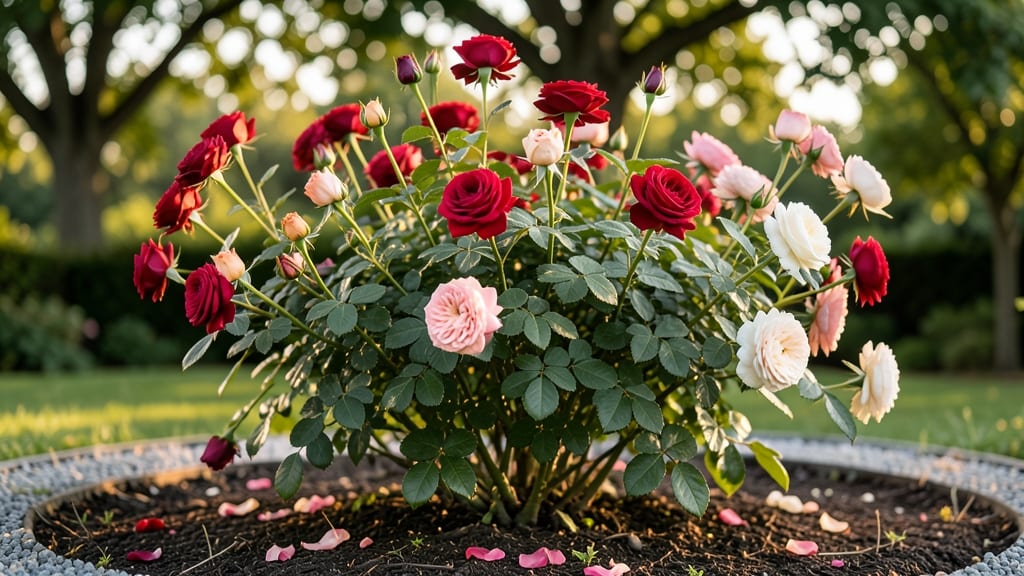
Michigan roses bloom from late May through October**, with early varieties like hybrid teas opening in May and late-season climbers lasting until frost. The state's Zone 5-6 climate affects both bloom duration and winter hardiness.
Michigan's growing season creates a stunning rose display when you know which varieties to plant. 🌹 Early bloomers like David Austin English roses often push through spring's last frost by late May, while climbing roses may not reach peak bloom until July.
The state's northern zones mean late-season blooms can extend into October, especially with repeat-flowering varieties that respond well to Michigan's summer warmth. What's fascinating is how the first frost date (typically mid-October) becomes your natural deadline for enjoying those final blooms.
For gardeners, understanding these patterns means planning pruning cycles around Michigan's spring thaw timing—usually late April to early May—when you should remove dead wood but avoid cutting back too aggressively before new growth appears.
The key to maximizing blooms lies in matching varieties to your specific microclimate, whether you're in Detroit's Zone 6 or the Upper Peninsula's Zone 4b.
💡 In This Article
- Michigan Rose Bloom Seasons by Variety Types
- Optimizing Rose Blooms in Michigan Gardens
Michigan rose bloom seasons by variety types
Michigan's rose bloom seasons unfold differently depending on the variety, with climbing roses often showing the longest display.
These varieties typically begin blooming in early July and can continue until the first hard frost in October, sometimes even later in sheltered microclimates. 🌸 What sets them apart is their ability to produce multiple flushes of flowers throughout the season, unlike once-blooming varieties that put all their energy into a single spring display.
The hybrid teas, Michigan's most popular variety, usually bloom from late May through September, with peak performance between June and August. These roses are prized for their single, high-centered blooms that make stunning cut flowers.
The timing aligns perfectly with Michigan's last spring frost dates, which typically occur between May 10-25 depending on location—Detroit gardens often see blooms starting around May 15, while northern areas may wait until early June.
Shrub roses offer a different experience, with many varieties producing continuous blooms from June through October. The Knock Out® roses, for example, are particularly well-suited to Michigan's climate, blooming nearly nonstop once they establish themselves.
These varieties thrive in Michigan's Zone 5-6 conditions and often survive winters with minimal protection, making them ideal for gardeners seeking low-maintenance beauty.
One fascinating aspect is how repeat-flowering varieties respond to Michigan's summer heat. When daytime temperatures reach 80°F or higher, these roses often produce their most abundant blooms, with the flowers opening in the morning and lasting for several days.
This timing coincides with Michigan's peak summer tourism season, making them popular choices for public gardens and commercial landscapes.
For gardeners in northern Michigan (Zones 4b-5a), late-season blooms may be more limited due to earlier frost dates. However, varieties like Dr. Huey and John Cabot have proven particularly hardy, often producing secondary blooms in September when temperatures remain mild.
The key difference between northern and southern Michigan gardens lies in the chill hours requirement—most roses need 500-1,000 hours below 45°F annually, which Michigan's climate reliably provides.
What most gardeners don't realize is how soil temperature affects bloom timing. Roses typically won't break dormancy until the soil reaches 50°F at 4-inch depth, which usually happens by mid-April in southern Michigan but may wait until late April or early May in northern regions.
This soil temperature threshold explains why some varieties in the Upper Peninsula might bloom 2-3 weeks later than those in Ann Arbor or Detroit.