
Blooming
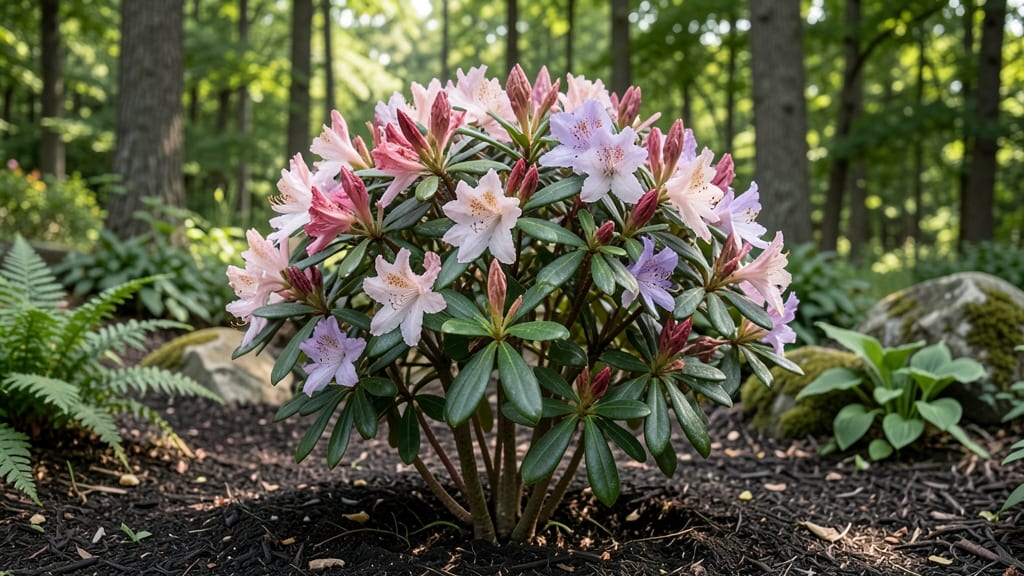
Azaleas bloom in Michigan between late April and early June, with timing heavily influenced by frost-free periods and daytime temperatures consistently reaching 60°F.
Michigan's variable climate creates a narrow but critical window for azalea blooms, often just 2-3 weeks long. 🌸 The key trigger is 500-700 chilling hours (below 45°F) during winter, followed by warm spring days that break dormancy.
Southern Michigan gardens typically see flowers 1-2 weeks earlier than northern regions due to milder winters. Last year's frost patterns also play a role—early springs can push blooms forward, while late frosts may delay or damage buds entirely.
For gardeners, this means planning around mid-April frost dates and selecting varieties like 'Girard's Pink' that thrive in Michigan's shorter growing season. Mulching with 3-4 inches of wood chips helps regulate soil temperature, while avoiding late-spring pruning preserves next year's flower buds.
💡 In This Article
- How Michigan’s Climate Affects Azalea Bloom Timing
- Best Azalea Varieties for Michigan’s Short Growing Season
How Michigan’s climate affects azalea bloom timing
Azaleas enter bloom when they’ve completed their winter dormancy phase, which requires 500-700 chilling hours below 45°F. Michigan’s climate delivers this through cold winters, but the timing varies by region.
Southern Michigan (like Ann Arbor or Detroit) typically accumulates chilling hours earlier than northern areas (like Traverse City or Marquette), creating a 1-2 week bloom difference between south and north.
This is why azaleas in southeastern Michigan often start blooming in late April, while northern gardens may not see flowers until early May. 🌸
The real trigger for blooming isn’t just chilling hours—it’s the combination of frost-free soil and daytime temperatures consistently above 60°F for at least 3-5 days. Azalea buds form the previous summer, but they need warm spring air to break dormancy.
In Michigan, this usually happens when the last spring frost (typically around April 15 in southern areas) has passed. Soil temperatures also play a role—roots need to warm to 50°F before buds will open. This is why late frosts in April can delay blooms or even kill emerging flowers.
Last year’s frost patterns create another layer of complexity. A mild winter followed by an early spring can push azaleas into bloom 2-3 weeks earlier than average.
For example, the 2021 bloom season in Michigan started in early April after a warm March, while 2020 saw delays due to late April frosts. Gardeners in Michigan’s USDA Zone 5-6 areas should monitor Michigan State University’s frost prediction maps for real-time adjustments.
Planting azaleas near south-facing walls or using lightweight frost cloth can help protect early blooms from late-season cold snaps.
Even within Michigan, microclimates matter. Urban areas like Detroit experience the urban heat island effect, which can warm soil and air by 2-5°F compared to rural regions, potentially triggering earlier blooms. Meanwhile, gardens near the Great Lakes may see delayed blooming due to lake-effect cooling that lingers into May.
To maximize bloom time, choose varieties like ‘Girard’s Pink’ or ‘Bowl of Beauty’, which are bred to handle Michigan’s shorter growing season and variable frost patterns.
One often-overlooked factor is soil moisture during dormancy. Azaleas need consistently moist (but not soggy) soil in late winter to prevent bud desiccation. In Michigan’s dry springs, supplemental watering in March-April can help ensure buds stay plump and ready to bloom.
The pH of your soil (ideally 4.5-6.0) also affects nutrient uptake—acidic soils help azaleas absorb phosphorus, which is critical for flower development. Testing soil pH in fall and amending with sulfur or peat moss can give azaleas a head start for next year’s blooms. 🌿
For gardeners planning ahead, tracking degree-day accumulations (a measure of heat energy) can predict bloom timing with 90% accuracy. Michigan State University’s Enviro-weather tool provides real-time data on these accumulations, helping you time pruning, fertilizing, and pest control.
Remember: azaleas in Michigan typically bloom for just 2-3 weeks, so planning around this window ensures you don’t miss their vibrant display.